







Summary:
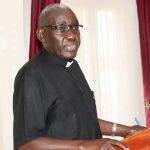
Dr. Zepher Karyabakaabo, Director of Policy, Research, and Programming at the Uganda AIDS Commission, reported that Kabale District ranks third in the region, with a prevalence rate of 5.5%.
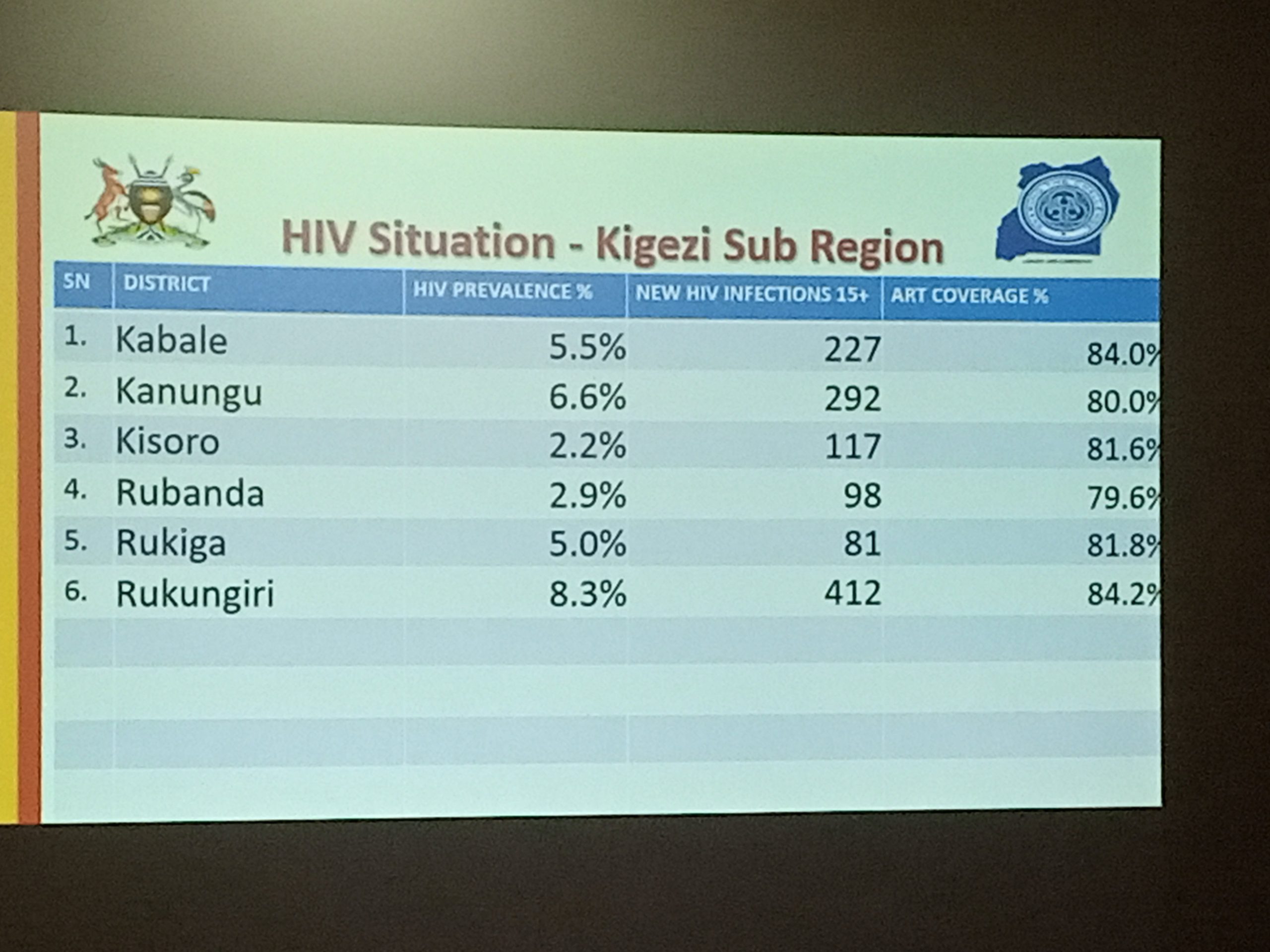
KABALE: District currently leads the Kigezi region in HIV infection rates, with a prevalence of 8.3%, according to the 2023/2024 report from the Uganda AIDS Commission. It is followed by Kanungu at 6.6%.
These findings were presented on Wednesday during a meeting of HIV communication implementers for the Kigezi region, held at Cephas Inn Hotel in Kabale Municipality.

The meeting brought together District Health Educators, District HIV Focal Persons, selected District Health Officers, and District Communications Officers.

In his address, Dr. Zepher Karyabakaabo, Director of Policy, Research, and Programming at the Uganda AIDS Commission, reported that Kabale District ranks third in the region, with a prevalence rate of 5.5%. Rukiga follows at 5.0%, while Rubanda and Kisoro rank fifth and sixth with rates of 2.9% and 2.2%, respectively.
Dr. Karyabakaabo also provided an update on the national HIV situation as of December 2023, revealing that 1,433,000 people in Uganda are living with HIV. This includes 858,000 women, 495,000 men, and 80,000 children.
On a positive note, he highlighted that new infections have significantly declined from over 90,000 in 2010 to 28,000 in 2023, bringing Uganda closer to its goal of ending new HIV infections by 2030.
Regarding the National HIV Communication Strategy, Dr. Karyabakaabo emphasized the importance of engaging all stakeholders, including religious leaders, healthcare workers, civil society organizations, and political leaders.
He stressed the need for collaboration in spreading awareness and ensuring the effective dissemination of HIV-related messages to curb the disease.
Addressing concerns about potential declines in HIV care following the US government’s previous decisions under President Donald Trump, Dr. Karyabakaabo reassured attendees that the US government has since restored critical aspects of HIV care.
This includes the provision of antiretroviral drugs (ARVs), laboratory services, and community-based HIV treatment services.
Michael Masiko, the Regional Coordinator for the Uganda AIDS Commission in Western Uganda, informed participants that the Ministry of Health has introduced new measures to strengthen HIV/AIDS services.
These measures, communicated to all District Health Officers and heads of hospitals and health centers, ensure that HIV/AIDS care is fully integrated into routine healthcare services.