







The government has issued new Standard Operating Procedures (SOPs aimed at fast-tracking the approval and implementation of externally financed projects, as Uganda grapples with rising public debt, persistent project delays and escalating borrowing costs.
The July 2025 SOPs for the Approval, Acquisition, Implementation and Performance of Externally Loan-Financed Government Projects, published last week by the Ministry of Finance, Planning and Economic Development (MoFPED), significantly cut parliamentary processing timelines for loan requests and impose stricter performance thresholds on ministries, departments and agencies (MDAs).
Under the new guidelines, Parliament will be required to process loan requests within 25 days, down from the 45 days provided under the Rules of Procedure of the Parliament of Uganda.
The SOPs also bar MDAs from contracting new loans if more than 30 percent of their ongoing externally funded projects have received more than one extension.
For projects seeking additional financing, accounting officers must now demonstrate at least 70 percent disbursement of existing funds and 50 percent physical progress against approved implementation plans.

“The timeframe for which the responsible centres must conclude the clearance processes shall be strongly adhered to, to not exceed 212 days,” the SOPs state.

The guidelines further require that all externally financed projects be cleared internally at MoFPED before political consideration.
“The Ministry of Finance will ensure that projects and programmes to be funded externally using loans are presented to the Top Technical and Top Management of the Ministry by the respective MDAs’ technical and political heads for clearance prior to presentation to the Prime Minister and the Secretary General of NRM for further consideration,” the document reads.
The reforms are grounded in the Public Finance Management Act (PFMA), 2015, which under Section 36 requires prior parliamentary approval for all government borrowing and mandates the Minister of Finance to ensure that public debt remains sustainable.
Amendments to the PFMA in 2020 further require the minister to present an annual Medium-Term Debt Management Strategy to Parliament, outlining borrowing risks and mitigation measures.
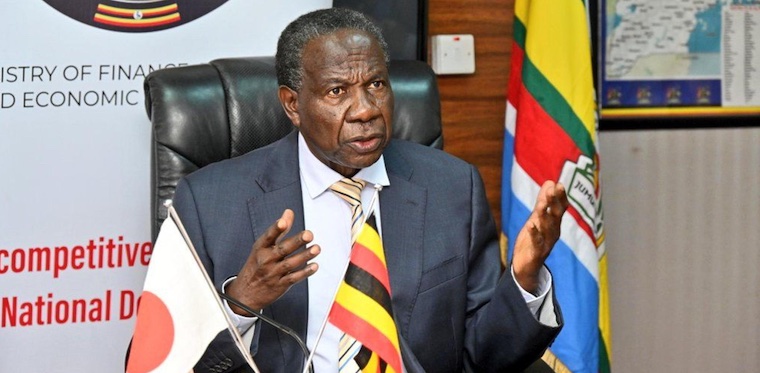
In his foreword to the SOPs, Finance Minister Matia Kasaija said existing legal and policy tools had failed to address inefficiencies in externally funded projects.
“Despite using various legal and policy instruments such as the Public Financing Investment Strategy (PFIS), Government has been experiencing high borrowing costs, delays in negotiations for financing and project completion, cost overruns and overlapping of activities during project implementation, leading to delayed economic benefits and public outcry,” Kasaija wrote.
He said tightening procedures and enforcing timelines would improve value for money and restore public confidence in government borrowing.
The SOPs come amid mounting fiscal pressure. According to MoFPED data, Uganda’s public debt stood at Shs119.4 trillion as of September 2025, with Shs 11.961 trillion in undisbursed loans continuing to attract commitment fees and interest.
Parliamentary records (Hansard) show that lawmakers approved loans worth Shs 30.458 trillion in 2025 alone, prompting repeated warnings from oversight committees over weak absorption capacity and poor project readiness.
International lenders have also raised concerns. The World Bank’s Uganda Economic Update has consistently warned that rising reliance on both concessional and non-concessional external borrowing could elevate the country’s risk of debt distress if project execution remains weak.
The SOPs draw heavily from a 2023 Cabinet paper on the performance of externally financed projects, which identified systemic bottlenecks including delayed acquisition of rights of way, weak environmental and social safeguards, inadequate feasibility studies, insufficient counterpart funding and procurement delays.
Other challenges cited include limited technical capacity within MDAs, slow fulfilment of loan effectiveness conditions, managerial lapses and stringent lender requirements.
To address these gaps, the new guidelines require early environmental clearance under the National Environment Act, 2019.
“No financing agreement will be signed before Environmental and Social Impact Assessment (ESIA) requirements are fulfilled,” the SOPs stipulate.
MDAs must also complete Resettlement Action Plans (RAPs) and secure at least 50 percent of the required Right of Way (RoW) before loan acquisition.
For road and infrastructure projects, the SOPs allow flexible land acquisition approaches, including community consent arrangements.
“Communities benefit from these projects and most of the time are willing to surrender part of the land for development because they derive value from these projects,” the guidelines note.
Where projects involve government land, rights of way must be secured through inter-agency consent agreements or Cabinet decisions, depending on the scale of investment.
The SOPs prescribe strict timelines across government: MDAs have up to 110 days for submissions and responses to the Development Committee; MoFPED is allocated 10 days for negotiations and internal reviews; the Prime Minister and NRM Secretary General have 15 days; Cabinet, the Attorney General and the Solicitor General each have 15 days; Parliament has 25 days and MoFPED must sign financing agreements within seven days of approval. No specific timeline is set for presidential consideration.
Kasaija warned that failure to comply would undermine the reforms. “All the institutions named are expected to comply with the timelines and deadlines,” he said, adding that predictability would reduce cost variations and protect Uganda from volatile global financing terms whose validity often expires within six months.
The finance minister also urged MDAs to prioritise projects that enhance foreign exchange earnings and fiscal sustainability. He cited strategic sectors including gold, coffee, fish maw, iron ore, oil and gas, and medicinal cannabis, alongside agriculture, tourism, energy and transport infrastructure.
The SOPs are aligned with National Development Plan III (2020/21–2024/25) and are expected to carry into NDP IV, both of which emphasise efficient public investment as a key driver of growth under constrained fiscal conditions.
Policy analysts say the new rules could improve transparency and accountability in public borrowing, but caution that their effectiveness will depend on MDA capacity, enforcement discipline and political will, particularly as Uganda heads into an election cycle typically marked by heightened spending pressures.