








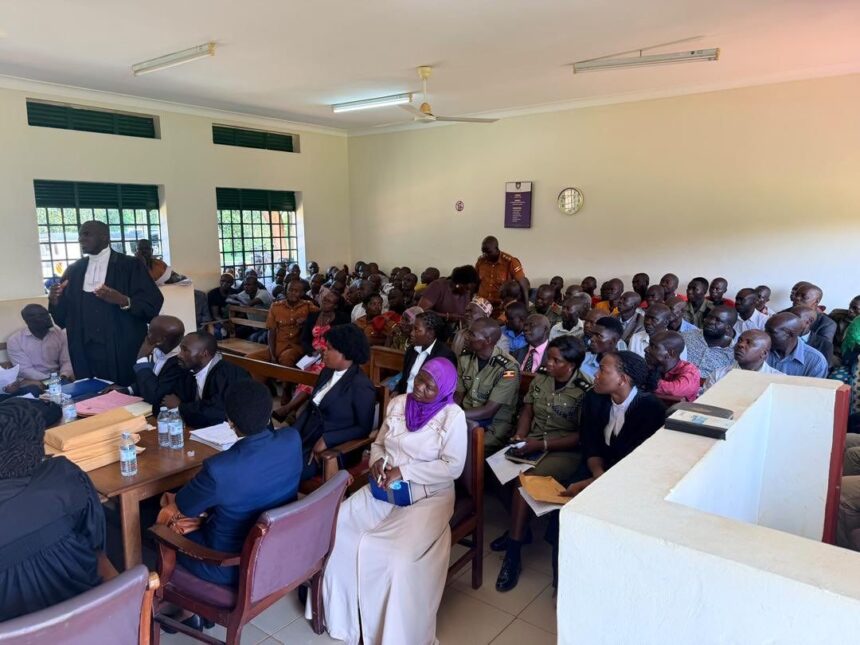

The Mbale High Court has opened its first criminal session at Pallisa Chief Magistrate’s Court, bringing judicial services closer to residents who previously had to travel to Mbale to have their cases heard.
The month-long session, which commenced on Monday, November 2, 2026, is being presided over by Justice Lawrence Tweyanze and will handle 52 criminal cases.
Although Pallisa is gazetted as a High Court station, it is yet to be operationalised. The session is the first High Court criminal sitting at Pallisa Chief Magistrate’s Court in its more than 20 years of existence.
The cause list comprises 24 defilement cases, 16 murder cases, seven rape cases, four aggravated robbery cases and one aggravated trafficking case.
Speaking during a pre-session stakeholders’ meeting, Justice Tweyanze commended the Judiciary leadership for facilitating the session, saying taking judicial services closer to the people would improve access to justice and ease the burden on litigants.

He said the session would also help reduce case backlog and promote timely and fair dispensation of justice.

Justice Tweyanze urged stakeholders to observe discipline, punctuality and procedural timelines, noting that effective justice delivery requires professionalism and cooperation among institutions.
He said the court had a responsibility to ensure that guilty persons are held accountable while innocent people are promptly exonerated.
The judge also encouraged accused persons who committed the offences to consider plea bargaining as a way of expediting the disposal of cases.
He expressed optimism that the session would be concluded by the end of November, or even earlier, depending on the cooperation of stakeholders.
Stakeholders ready for session
During the pre-session meeting, chaired by Justice Tweyanze and moderated by Pallisa Chief Magistrate Lydia Kambedha, representatives of the justice sector assessed their preparedness and coordinated arrangements for the proceedings.
Officials from the Office of the Director of Public Prosecutions said prosecution files were ready and arrangements were underway to ensure witnesses attend court.
Defence lawyers also confirmed that they had consulted their clients and were prepared to represent them during the proceedings.
Police and prison authorities affirmed their logistical readiness but raised concerns over challenges, including prison congestion.
Welfare and probation officers, meanwhile, outlined arrangements to support witnesses and victims, particularly children expected to testify in defilement cases.