






The East African Community (EAC) is developing an integrated regional payment and settlement system aimed at reducing member states’ dependence on the United States (US) dollar and lowering the cost of cross-border transactions.
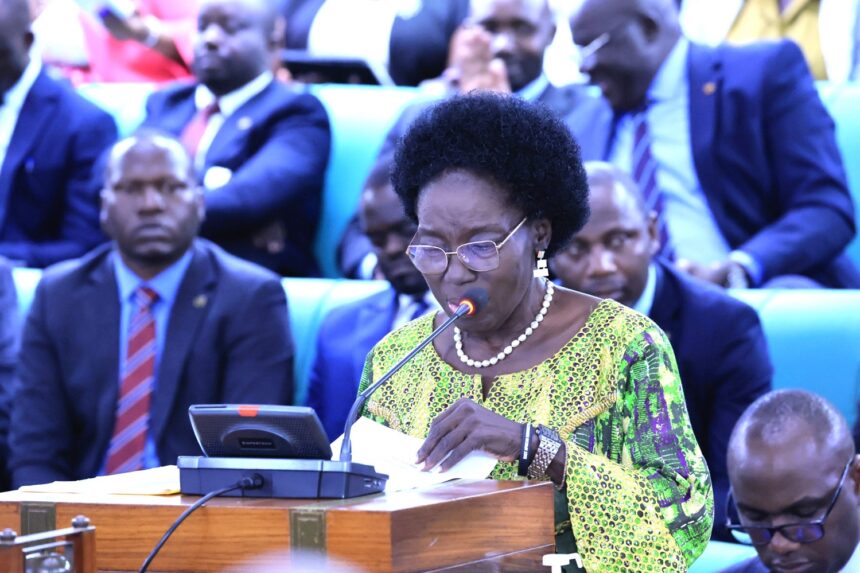
The First Deputy Prime Minister and Minister for East African Community Affairs, Rebecca Kadaga, revealed this while presenting a statement on the implementation of the East African Payment System (EAPS) during Tuesday’s plenary sitting on November 3, 2026.
Kadaga said the proposed integrated system would enable individuals and businesses to transfer money securely, instantly and affordably across EAC member states using bank accounts, mobile money wallets and other authorised digital payment channels.
“A fully integrated payment and settlement system will reduce the cost of doing business, deepen intra-EAC trade and provide an important foundation for the proposed East African Monetary Union and eventual single currency,” she said.
She explained that the existing East African Payment System connects the national Real-Time Gross Settlement systems of Uganda, Kenya, Tanzania and Rwanda, enabling commercial banks to transfer funds across borders and settle transactions in the respective countries’ currencies.

The currencies currently supported include the Uganda shilling, Kenya shilling, Tanzania shilling and Rwanda franc.

However, Kadaga said Burundi, South Sudan, the Democratic Republic of Congo and Somalia were not yet fully integrated into the platform, limiting its ability to provide comprehensive payment services across the regional bloc.
“To address these challenges, the EAC adopted the Cross-Border Payment System Masterplan in 2025. The masterplan provides for expansion and modernisation of EAPS, harmonisation of payment-service-provider licensing and regulation, and increased use of partner states’ currencies in regional transactions,” she said.
Kadaga called on the Ministry of Finance, Planning and Economic Development, Bank of Uganda, commercial banks, mobile network operators and financial technology companies to work closely with her ministry to ensure effective implementation of the masterplan.
She said Parliament also had a critical role in harmonising Uganda’s payment-system laws with regional frameworks, allocating resources for digital and financial infrastructure, and monitoring the country’s implementation of EAC commitments.
The Shadow Minister for East African Community Affairs, Hakim Kizza, welcomed the initiative but urged government to champion the establishment of a central bank-backed liquidity facility to ensure commercial banks have sufficient regional currencies to facilitate cross-border transactions.
Kizza said the facility would guarantee the availability of Kenyan, Tanzanian and Rwandan currencies, reducing traders’ forced reliance on the US dollar.
“Despite the rhetoric of local currency settlement, traders are still forced to convert to the US dollar for cross-border transactions due to liquidity shortages in regional currencies at commercial bank level,” he said.
He cited the example of a Ugandan trader purchasing goods from Kenya, who, he said, is often forced to convert Uganda shillings into US dollars before converting the money into Kenya shillings.
According to Kizza, the double conversion attracts additional charges and generates substantial profits for commercial banks at the expense of traders.
Meanwhile, Kazo District Woman Representative Molly Kamukama said the attainment of the proposed EAC single currency would be one of the key measures in making the regional payment system more effective.
Speaker of Parliament Jacob Marksons Oboth called for regular updates on the progress of EAC integration and increased public awareness of the regional bloc’s objectives.
Oboth said Parliament had organised a marathon in November to promote awareness of regional integration and urged the Ministry of East African Community Affairs to provide lawmakers with a comprehensive status report.
“We need to know the status of our integration, generally. We have organised a marathon in November to create awareness. We request the Minister of EAC to prepare a status report on the integration, highlighting challenges and opportunities,” he said.