






At least 6,800 residents in seven villages in Rakai District are set to benefit from improved access to safe and clean water following a $116,728 (about Shs477.5 million) grant awarded to Africa Community Technical Service (ACTS Uganda) by the Government of Japan.
The grant, provided under Japan’s Grant Assistance for Grassroots Human Security Projects (GGP), will fund the construction of a gravity-flow water supply system comprising 37 public water points.
The project seeks to address persistent water shortages in the beneficiary communities, where many households still spend considerable time and effort searching for safe water for domestic use.
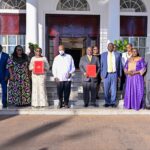
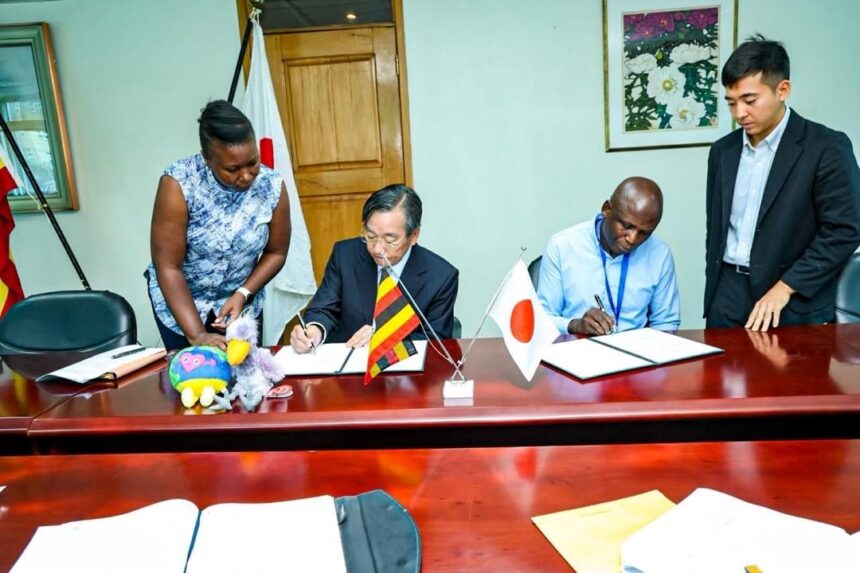
The grant agreement was signed on November 9, 2026, at the Embassy of Japan in Kampala, in the presence of Japan’s Ambassador to Uganda, Takuya Sasayama, and ACTS Uganda Executive Director Richard Musinguzi.
Speaking at the signing ceremony, Musinguzi said ACTS Uganda had conducted assessments during both the dry and rainy seasons to establish the water needs of the communities and identify a sustainable water source.
He said the project would be implemented over 12 months, during which the organisation would protect the water source and construct the necessary infrastructure, including a sedimentation tank for water treatment and filtration, a 50-cubic-metre reservoir and distribution pipelines.

The system will use gravity to supply water to seven villages, five schools and seven trading centres, benefiting approximately 6,800 people.
Beyond improving access to clean water, the project will also focus on sanitation, hygiene education and economic empowerment to ensure long-term benefits for the communities.
ACTS Uganda will conduct sanitation and hygiene awareness campaigns in communities and schools while equipping residents with practical entrepreneurship skills to improve household incomes.
Musinguzi said baseline assessments had revealed low household income levels, prompting the organisation to incorporate livelihood development into the project.
He said community members would receive practical training in making bar soap, liquid soap, sandals, bags and other products that could generate income at household level.
The integrated approach is intended to address water poverty while improving public health, strengthening community capacity and creating opportunities for economic empowerment.
ACTS Uganda is a non-profit organisation that works with rural communities to establish sustainable water, sanitation and hygiene (WASH) systems.
Since 1982, the organisation has focused on improving access to clean water through the construction of gravity-flow water systems, complemented by sanitation and hygiene education.
Based in Mbarara, ACTS Uganda is registered as a non-governmental organisation in Uganda and Canada. Its mission is to end water poverty, improve health and restore dignity.
The support from the Government of Japan is expected to contribute significantly to improving the quality of life of rural communities in Rakai District.
Through the partnership, ACTS Uganda will work with communities and local stakeholders to ensure that access to clean water is accompanied by improved sanitation, hygiene, livelihood opportunities and sustainable management of water facilities.