


In a bid to revive a stalled judicial probe into one of Uganda’s most protracted and violent land conflicts, Parliament has approved Shs 7.59 billion in supplementary funding for the Bart Katureebe Commission of Inquiry, prompting renewed pleas from local leaders in Amuru District for swift action to prevent further bloodshed.
The allocation, part of a larger Shs 8 trillion supplementary budget passed on December 2, 2025, aims to enable the commission, appointed by President Yoweri Kaguta Museveni in April 2023, to resume operations hindered by financial constraints.
The Apaa land dispute, spanning approximately 40 square kilometers in its core contested area but intersecting with the broader East Madi Wildlife Reserve of about 827-831 square kilometers, has pitted Acholi communities in Amuru District against Madi communities in neighboring Adjumani District, with overlapping claims from the Uganda Wildlife Authority (UWA).

This fertile tract, home to an estimated 50,000 people, including at least 23,000 Madi and Bantu settlers, has been a flashpoint for tribal clashes since 2009, when the government resettled families displaced by the Lord’s Resistance Army (LRA) insurgency.

The conflict’s roots trace back further to colonial-era evictions in 1911 by British authorities to combat tsetse flies, and it escalated in 2005 with UWA’s re-gazetting of the area as a wildlife reserve.
Local leaders have voiced mounting frustration over the government’s delayed response, warning that inaction could exacerbate the violence that has claimed at least 57 lives since 2012, according to community records.
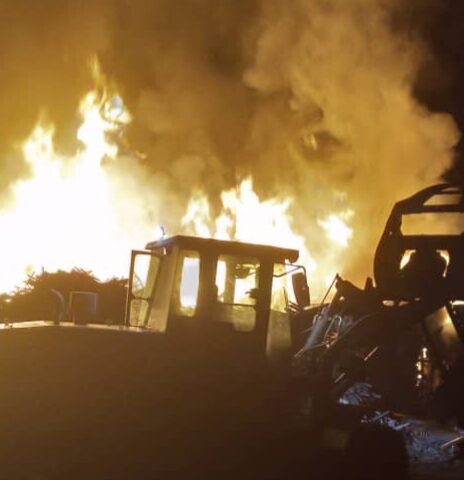
Wilson Acuma, the Gaji Parish Chairperson (LC 2) in Amuru District, described a recent attack in a phone interview: “On Thursday, December 11, 2025, unknown assailants numbering 24 armed with machetes, spears, bows, and arrows attacked Gaji village and killed a farm worker, and looted several sacks of groundnuts.”

He added, “Dozens of people have been debilitated and injured while nearly 800 huts burnt down thus forcing dozens of families into displaced homes. The government must show good political will and urgency to resolve the conflict over Apaa land ownership between the Acholi and their Madi counterparts from neighboring Adjumani District.”
Acuma highlighted the broader humanitarian toll, noting that countless livestock have been looted and livelihoods disrupted across Apaa’s 18 parishes, affecting healthcare, farming, trade, commerce, transportation, and education. “We lack clean and reliable water sources especially for over 10 community schools, the health center, and market. Many of the schools need rehabilitation and it would be a great intervention if the government can act and improve on the social services,” he echoed.
The commission, chaired by retired Chief Justice Bart Magunda Katureebe and comprising Justice Alice Mpagi Bahigaine, Justice Steven George Engwau, Joyce Gunza Hasasa, and Dr. Fred Henry Bateganya, was tasked with engaging community leaders, elders, and local governments in areas such as Aber, Zoka, and Kampala to forge a lasting solution.

Unlike prior inquiries led by former Prime Minister Dr. Ruhakana Rugunda and the late Speaker of Parliament Jacob Oulanyah, which yielded no tangible results due to lacking judicial powers, the Katureebe panel operates under the Commissions of Inquiry Act (Chapter 166), granting it High Court-like authority to summon witnesses, compel evidence, and issue warrants. This legal framework empowers the commission to investigate matters of public concern, including land disputes, with the potential for enforceable recommendations.
Amuru District Resident District Commissioner Osborn Geoffrey Oceng weighed in on the security situation, confirming ongoing “pocket incidents of insecurity orchestrated by criminal elements” but noting that Uganda People’s Defence Forces (UPDF) deployments have repulsed many attacks in villages like Acholiber, Oyanga, Luuru, Corro, Punodyang, Omwodokodi, Kalacut, and Lutoya.
“The previous two Rugunda and Oulanyah Commissions of inquiry failed on their work because they never had judicial powers. Now that funding is available, the Bart Katureebe Committee has powers of the High Court and we pray their inquiry yields results as soon as possibly it can,” Oceng stated.
The push for the commission followed appeals from area MPs, as noted by Anthony Akol, Chairperson of the Acholi Parliamentary Group and Kilak North County Representative: “The creation of the Judicial Commission of Inquiry followed an appeal from the area MPs to President Yoweri Kaguta Museveni to ensure the Apaa conflict is mitigated and peace is restored in the area.”
However, critics question the timing amid Uganda’s 2026 election cycle. Human rights lawyer Stella Kimjange Lajiri argued that the funding release could be politicized: “Many key players who should soberly spearhead the conflict resolution of Apaa conflict such as Norbert Mao, Gen. Moses Ali, area MPs, and Local Council leaders are busy campaigning and seeking re-election.
This means, while the funds have been availed, the timing is very wrong.”James Pilli Leku, former Local Council V Chairperson of Adjumani District, urged compensatory measures: “Government should use part of the funds allocated to the Commission to compensate families that have lost their loved ones, livelihoods, and suffered displacement. Such families are in pain and anguish yet they largely remain unattended to.”
Adjumani District Woman Representative Jesca Ababiku emphasized adherence to official declarations: “The 2017 ministerial declaration is a key official confirmation recognizing Apaa as part of Adjumani District, and therefore President Yoweri Museveni should ensure this position is well communicated and respected in solving the raging land conflict. President Museveni is the only key to ending the protracted Apaa land conflict.”

These declarations stem from a 2015 Parliamentary Select Committee report, which documented a Ministry of Lands, Housing, and Urban Development boundary demarcation exercise between September 13-18, 2015, placing Apaa in Adjumani District. On October 23, 2017, the Minister of Local Government formally affirmed Apaa’s placement in Mungula Parish, Itirikwa Sub-County, Adjumani District, not Labala Parish, Pabbo Sub-County, Amuru District.
President Museveni has publicly affirmed this based on colonial maps, though on-ground contests persist, involving UWA’s conservation claims under the Uganda Wildlife Act (2019), which regulates protected areas.
Broader legal context includes Uganda’s 1995 Constitution (Article 237), which vests land ownership in citizens while allowing government trusteeship for public resources, and the Land Act (1998, Cap 227), which governs customary tenure prevalent in Apaa and mandates fair compensation for compulsory acquisitions.
Human Rights Watch has called for resolutions guided by international standards on equitable compensation and evictions. Recent developments in 2025 show tentative reconciliation efforts between Acholi and Madi communities, including a February peace initiative, but violence resurged in March, prompting President Museveni’s renewed pledges during an April visit to Adjumani.
As the commission gears up, stakeholders like Acuma express skepticism given past failures, despite local ties in government: “Despite the Ministry of Justice being headed by a son of the soil, and judiciary by Chief Justice Alfonse Owiny-Dollo Chigamoi, government intervention and political goodwill to end Apaa mayhem has never been prioritized to restore peace and harmony.”
This funding injection offers a potential turning point, but in a region scarred by post-LRA trauma and mistrust, accountability will hinge on transparent implementation. Critics argue that without binding enforcement and depoliticized dialogue, Apaa’s cycle of violence, fueled by impunity and resource competition, may persist, underscoring broader challenges in Uganda’s land governance amid climate pressures and population growth.
The Source Reports.
We come to you.
Want to send us a story or have an opinion to share? Send an email to [email protected] or WhatsApp on +256742996036.