


Summary:
- President Museveni acknowledged that, following his orders and intelligence reports, some State House staff members have been arrested and charged with various offences.
KAMPALA: President Yoweri Kaguta Museveni has addressed recent social media allegations that have stirred public attention, calling them a mix of partial truths, falsehoods, and malicious intent.
President Museveni acknowledged that, following his orders and intelligence reports, some State House staff members have been arrested and charged with various offences.
However, he emphasized that the truth of these charges will be revealed during court proceedings.

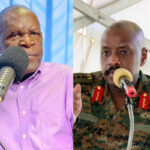
What concerns him most, however, is the unjust inclusion of the names of Abu Mukasa, a key NRM supporter and investor, and Prossy Nalweyiso, a veteran of Uganda’s resistance struggle, in these online accusations.

President Museveni was quick to defend both individuals, outlining their significant contributions to Uganda’s development and warning Ugandans about the dangers of falling prey to misinformation and blackmail.
Abu Mukasa, a long-time NRM supporter, has played a vital role in attracting foreign investments to Uganda, something that seems to have drawn the ire of what Museveni describes as “foreign and local parasites” who benefit from Uganda’s economic challenges.
According to President Museveni, Mukasa has been instrumental in mobilizing billions of dollars in foreign investments, a feat that makes him a target for those seeking to stifle Uganda’s economic growth.
“One of Mukasa’s major contributions was linking Uganda with Vittol, a multi-billion-dollar fuel supply company. At a time when Uganda was grappling with overpriced petroleum products, Mukasa’s efforts helped secure a deal where Vittol offered to sell petroleum at USD 61.5 per tonne, diesel at USD 83, and kerosene at USD 79.25. This was a stark contrast to the prices offered by corrupt local suppliers who had inflated the prices of petroleum to USD 97.5, diesel to USD 118, and kerosene to USD 114”. He said.
“Abu Mukasa’s offence seems to be that he brought affordable fuel prices to Uganda, threatening the profits of those who have long exploited our country,” said Museveni.
He added that Mukasa also introduced Uganda to Sheikh Maktoum, a prominent UAE investor who has attracted further investments in air cargo, gold refining, and produce exports.
President Museveni noted that Uganda is now reaping the benefits of these relationships, with the Minister of Energy repeatedly ordering fuel companies to lower their prices, threatening to shut down the operations of those who refuse to comply.
In a country that has struggled with high fuel prices and a monopolized energy sector, Mukasa’s interventions are seen as transformative. “We will know them by their fruits,” Museveni quoted from the Bible, in reference to the economic gains brought by Mukasa’s efforts.
He warned against the spread of false information aimed at driving away investors who are crucial to Uganda’s economic future.
President Museveni also strongly defended Prossy Nalweyiso, one of the long-serving members of the NRM who played a crucial role in Uganda’s liberation.
While some detractors may point to her lack of formal education, President Museveni reminded the public that most of the NRA fighters who helped liberate Uganda were far less educated than Nalweyiso.
“The uneducated freedom fighters liberated both the uneducated and the educated Ugandans, who had failed to address the country’s governance and constitutional issues,” he said.
President Museveni urged Ugandans to consider the role of individuals like Nalweyiso in solving the country’s past problems.
“In 1986, Uganda was plagued by shortages of essential goods like soap, salt, paraffin, and sugar. The country was also riddled with black-market smuggling (magendo), speculative trading (kusamula), and a corrupt forex black market (kibaanda)”. He said.
According to the President Museveni, the solution to these crises came from the very people who had limited formal education but were rich in patriotism and resolve, such as Nalweyiso.
“Yes, there are still problems like unemployment and poverty that we are dealing with,” President Museveni admitted, “but we were able to address the challenges of the past, and we are now addressing the current ones.”
Nalweyiso’s critics, he said, overlook the NRM’s long-standing practice of combining the talents of both educated and modestly educated Ugandans.
President Museveni pointed out that while political commissars and intelligence officers were often graduates of Makerere University, like Aronda, Muntu, and Matsiko, many combat commanders—such as Saleh, Kashaka, and Musisi—had less formal education but were equally vital to the movement’s success.
The lesson, according to the President Museveni, is that Uganda’s resistance movement needs patriots, whether they are educated or not. He cautioned that while educated patriots contribute positively to the nation, educated traitors are a poison that threatens the country’s progress.
President Museveni believes that the real issue driving the misinformation campaigns is Uganda’s robust economic growth, which has been propelled by sound strategic decisions and the efforts of the NRM government.
He cited the resolution of the Bujagali dam issue, which had been blocked by the 6th Parliament in 2002, as a pivotal moment in Uganda’s economic recovery.
Since then, the economy has attracted significant investments from China, India, the UAE, the Middle East, Europe, and Ugandans themselves.
“Uganda’s agriculture is strong, and we are moving towards irrigation. Our security forces, especially the UPDF, guarantee peace, which is essential for sustained growth,” Museveni said.
President Museveni warned that those opposed to Uganda’s progress are now resorting to online blackmail, spreading false stories about investors like Sheikh Maktoum in hopes of scaring them away.
“These parasites hope to disrupt Uganda’s progress by sowing fear and demanding bribes,” he said. “We will deal with them using the law, but Ugandans must remain vigilant and recognize these blackmailers for what they are.”
The Role of Patriotism and Self-Reliance
Museveni concluded by emphasizing the importance of self-reliance and patriotic initiatives. He recounted how he first met Nalweyiso in Kikunyu in 1981 during the NRA resistance struggle.
Similarly, he spoke of his first meeting with Abu Mukasa in Washington, where Mukasa was working for Harris, an American military radio supplier. Mukasa’s journey, Museveni explained, began with his initiative to offer grass-cutting services to an American general, who later introduced him to the company.
“Such initiatives by our young people are exactly what Uganda needs,” said Museveni, praising Mukasa’s entrepreneurial spirit.
He urged Ugandans to not be swayed by envy, hatred, or greed but instead focus on building the nation and securing its economic future.
Uganda’s progress, he declared, is inevitable, and the country must unite to move forward.