
Summary:
- Speaker Among further stated that the EOC’s mandate does not extend to scrutinizing MPs’ and parliamentary staff salaries.
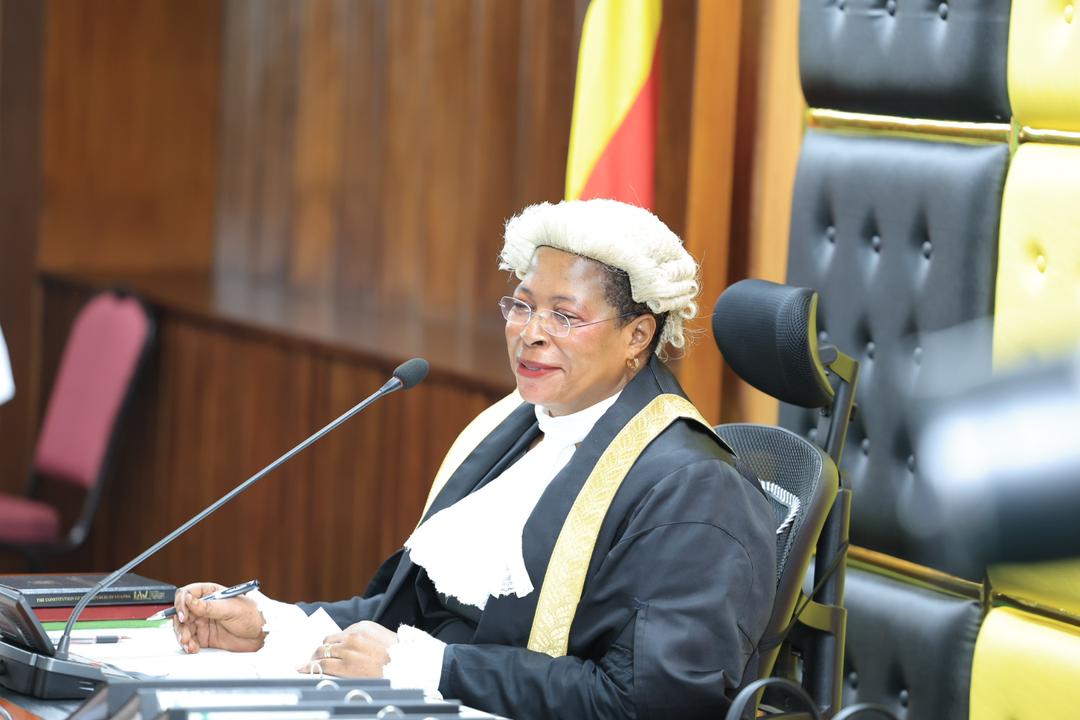
KAMPALA: The Speaker of Parliament, Rt. Hon. Anita Annet Among, has declined requests by the Equal Opportunities Commission (EOC) and the Public Service Ministry to submit a report detailing the salaries of Members of Parliament (MPs) and parliamentary staff.
She argued that Parliament is an independent body, separate from these entities, and tasked the Attorney General with reaffirming this independence.
“I received information from my Clerk [Adolf Mwesige] indicating that the Equal Opportunities Commission and Public Service had written to request a report on how much each Member of Parliament and the staff at Parliament are paid. I believe people are forgetting the principle of separation of powers,” said Among during a plenary session. “The Uganda Parliamentary Commission operates independently; we do not fall under the jurisdiction of the Equal Opportunities Commission or the Public Service Ministry. We are not civil servants, and such requests undermine our autonomy. Attorney General, it is high time you made this clear.”

Speaker Among further stated that the EOC’s mandate does not extend to scrutinizing MPs’ and parliamentary staff salaries. Referring to Article 85 of the Constitution, which outlines the emoluments of MPs, she questioned the legality of the Commission’s actions. “Is it correct for the Equal Opportunities Commission to exceed its powers and investigate matters outside its jurisdiction?” she asked.

Attorney General Kiwanuka Kiryowa supported Among’s position, arguing that the EOC’s focus is on addressing marginalization based on gender, age, disability, and historical or cultural discrimination. He stated that investigating parliamentary salaries falls outside its scope.
“The mandate of the Equal Opportunities Commission is restricted to addressing marginalization. Extending it to investigate salaries of MPs and staff is beyond their jurisdiction. If we allow this, they might overreach, behaving like a High Court or Court of Appeal,” Kiryowa said. “We shall advise them to stick to their primary mandate, which is to promote affirmative action.”
Kira Municipality MP Ssemujju Nganda challenged the arguments presented by both the Speaker and the Attorney General. He contended that the EOC must conduct comparisons to identify disparities and vulnerabilities effectively.
“Vulnerabilities are often established through comparison. If the Equal Opportunities Commission cannot compare parliamentary salaries with others in the same environment, how will they assess marginalization?” Ssemujju questioned. “Are you suggesting they compare Uganda’s Parliament with institutions in Kenya or Rwanda instead?”
In response, Kiryowa reiterated that the EOC’s mandate is specific and does not allow for unrestricted comparisons. “They can compare only within the context of marginalization due to gender, disability, or other historical factors. Extending this to unrestricted salary analysis is inappropriate,” he argued. “Equal Opportunities was designed to ensure fair treatment not to mandate uniformity in wealth or privileges.”
The debate underscored ongoing tensions between the independence of Parliament and the oversight roles of other government agencies, raising questions about the limits of accountability and autonomy within Uganda’s governance framework.