
Summary:
- Beyond legal issues, the directors highlighted additional challenges, including governance complexities influenced by local political interference and the structural composition of hospital boards.
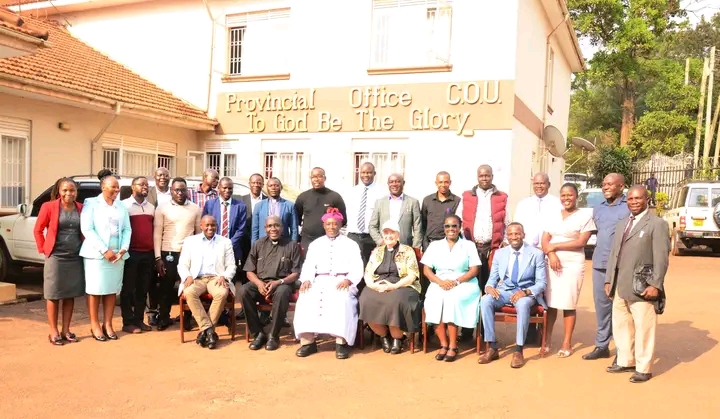
NAMIREMBE: Medical Directors of Church of Uganda-founded hospitals have raised concerns about the growing number of medico-legal challenges threatening the financial sustainability of their institutions.
During a meeting held on Tuesday at the Provincial Secretariat in Namirembe, the Medical Directors expressed alarm over the increasing litigation from patients—many of whom, they noted, file lawsuits with little legal merit.
They revealed that hospitals are being forced to divert significant resources toward legal battles, depleting funds that could have been used to improve specialized health services.

Beyond legal issues, the directors highlighted additional challenges, including governance complexities influenced by local political interference and the structural composition of hospital boards.

Another pressing issue raised was land grabbing, which has posed a significant threat to the stability of Church-founded health facilities. However, the directors commended the Church of Uganda’s ongoing efforts to resolve these land disputes.
They acknowledged the Church’s collaboration with the Ministry of Lands, Housing, and Urban Development in a mass registration initiative aimed at securing land ownership across the province, ensuring long-term institutional stability.
Healthcare Milestones and Innovations
Despite these challenges, the Medical Directors celebrated key achievements made possible through support from the Church and its partners.
These include: a new three-bed dialysis unit at Rugarama Hospital in Kabale Municipality, Digitization of health services in multiple facilities and Strategic development plans to enhance healthcare delivery.
They also reported progress in specialized disease treatment, subsidized medical services, medical camps, research collaborations, and local research capacity-building.
Furthermore, the establishment of a Good Samaritan Fund has enabled hospitals to support vulnerable patients. Several Church-run hospitals have also gained international recognition for their contributions to healthcare.
In his address, the Archbishop of the Church of Uganda, the Most Rev. Dr. Stephen Samuel Kaziimba Mugalu, urged Medical Directors to prioritize mental health services in their facilities.
He pointed to the escalating mental health crisis in Uganda—exacerbated by the COVID-19 pandemic—and emphasized the Church’s role in offering holistic care.
Archbishop Kaziimba stated. “We must nurture the whole person—body, mind, and spirit. The Church has a historic role in providing quality healthcare to underserved populations, and we remain committed to ensuring equitable access, especially in rural communities.”
He also called on the directors to uphold professionalism, ethical standards, and compassion in patient care.
“Your work is not just a profession; it is a ministry. Uphold high standards of integrity and let every patient interaction reflect Christ’s love and compassion,” he urged.
Rev. Canon William Ongeng, the Provincial Secretary of the Church of Uganda, echoed the Archbishop’s sentiments, encouraging Medical Directors to emulate God’s goodness in their work.
He highlighted the Church of Uganda’s comprehensive public health programs, including health education, HIV/AIDS management, malaria prevention, Water, Sanitation, and Hygiene (WASH), and sexual and reproductive health. Additionally, the Church oversees quality assurance, medical logistics, clinical services, and health research.
Currently, the Church of Uganda oversees 256 health facilities nationwide, including: 15 hospitals, 6 Health Centre IVs, 119 Health Centre IIIs and 114 Health Centre IIs.
These facilities, including Sir Albert Cook Hospital in Mengo Uganda’s first hospital are strategically distributed across various regions. The Church also supports 33 community-based HIV/AIDS and health initiatives across its 39 dioceses.
Dr. Tonny Tumwesigye, Executive Director of the Uganda Protestant Medical Bureau (UPMB), which oversees Church-run health facilities, urged Medical Directors to embrace collaboration by sharing successes and challenges within their respective hospitals.
“Networking allows us to learn from one another, replicate best practices, and develop collective solutions. Together, we can amplify our impact and ensure our hospitals remain beacons of hope and healing,” he emphasized.
Meanwhile, Rev. Dr. Berry White, Board Chair of the Provincial Board of Health, called for financial integrity and sustainability in hospital management.
She urged directors to clear outstanding debts, cautioning against leaving financial burdens for future hospital leaders.
“Good stewardship requires wise resource management,” she said. “Clearing debts isn’t just a financial obligation it’s a moral responsibility to uphold the trust placed in us by the Church and the communities we serve.”
Despite facing legal and governance challenges, Church of Uganda-founded hospitals continue to make significant strides in improving healthcare services. With a strong focus on collaboration, financial integrity, and holistic care including mental health these institutions remain steadfast in their mission to serve communities across Uganda.