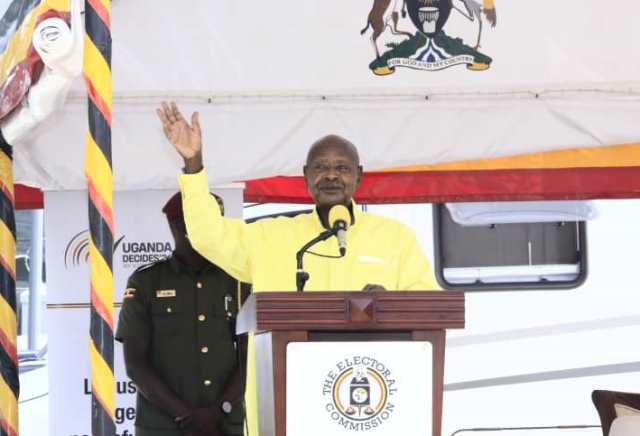

Born Yoweri Kaguta Museveni Tibuhaburwa on September 15, 1944, in Ntungamo District, Museveni today ranks among the world’s longest-serving non-royal heads of state. He has ruled Uganda since January 1986, making him the third-longest serving leader in that category.
Raised in a cattle-keeping family of the Hima ethnic group, Museveni’s father, Amos Kaguta, reportedly served in the King’s African Rifles during World War II. The family name “Museveni” is said to have been inspired by his father’s battalion, the Seventh, known in Swahili as Saba Saba.
Museveni attended Kyamate Primary School, Mbarara High School, and Ntare School before enrolling at the University of Dar es Salaam in Tanzania. There, he studied Political Science and Economics under the influence of radical scholars such as Walter Rodney.
He embraced Marxist and pan-Africanist thought, founded the University Students’ African Revolutionary Front, and even trained with Mozambique’s FRELIMO fighters.
His university thesis, which examined Frantz Fanon’s ideas on revolutionary violence, foreshadowed his later reliance on armed struggle.

Entry into Politics and the Bush War

In the 1970s, Museveni entered Uganda’s turbulent political scene, first fighting to oust Idi Amin and later founding the Front for National Salvation (Fronasa). He played a prominent role in the 1979 Uganda–Tanzania war that toppled Amin.
Following the disputed 1980 general elections, where his Uganda Patriotic Movement lost to Milton Obote’s Uganda People’s Congress, Museveni denounced the polls as fraudulent and launched a five-year guerrilla war.
His Popular Resistance Army later merged with other rebel groups to form the National Resistance Army (NRA) and its political wing, the National Resistance Movement (NRM).
On January 29, 1986, the NRA captured Kampala, ending the short-lived Tito Okello junta. Sworn in as President, Museveni promised a “fundamental change” built on his Ten-Point Programme of democracy, unity, and self-reliance.
Reforms and Regional Influence
His early years in power won international praise. Backed by the International Monetary Fund (IMF), Museveni’s economic reforms stabilized Uganda’s battered economy, restored investor confidence, and initially improved human rights.
Regionally, he positioned himself as a military power broker, intervening in Rwanda’s civil war, the Congo conflicts, and other crises in the Great Lakes region. These moves earned him recognition as a strategic ally of the West, while also drawing criticism for allegedly fueling instability.
Challenges and Controversies
Domestically, Museveni’s government fought a brutal two-decade war against Joseph Kony’s Lord’s Resistance Army in northern Uganda, displacing millions and drawing accusations of abuses by both rebels and state forces.
Over time, Museveni consolidated his hold on power. Parliament removed presidential term limits in 2005 and scrapped the age cap in 2017, effectively paving the way for indefinite rule.
Once hailed as a reformist, he has since faced growing criticism for shrinking civic space, repressing dissent, and militarising civilian life.
The 2021 elections, which handed him a sixth term with 58.6 percent of the vote, were marred by reports of ballot-stuffing, mass arrests, pre-election violence, and a nationwide Internet shutdown. International observers condemned the process, deepening concerns about democratic decline.
Despite delivering macroeconomic stability, Uganda struggles with corruption, high youth unemployment, and slow social progress.
In 2025, the country ranks 163rd in nominal GDP per capita and 157th on the Human Development Index. Now 81, Museveni continues to cast himself as Uganda’s guarantor of peace and independence.
To supporters, he is a liberator who brought stability. To critics, he is an entrenched autocrat clinging to power. Despite repeated calls for succession planning, he has not indicated a clear heir, leaving uncertainty about the country’s political future.