
Between 2026 and 2030, Ugandan taxpayers will be required to contribute more than UGX 2.368 trillion towards wages for police officers and staff of the Uganda Police Force (UPF).
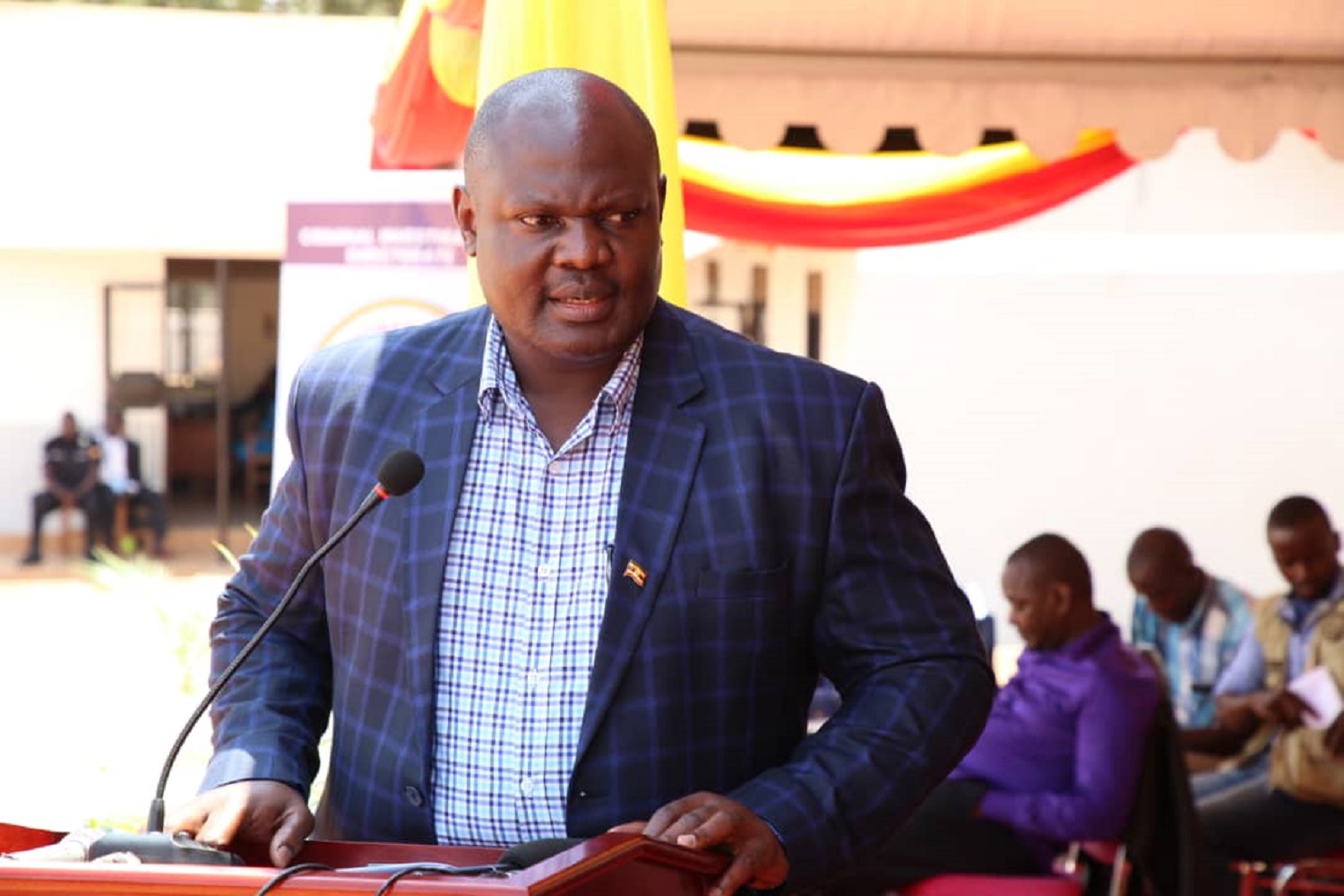
This was revealed by Aggrey Wunyi, Undersecretary at the Uganda Police Force, while appearing before Parliament’s Committee on Defence and Internal Affairs on 23 January 2026 during the consideration of the Force’s 2026/27 National Budget Framework Paper.
Wunyi told the committee that the Police had submitted medium-term wage projections indicating that UGX 550 billion will be required in the 2026/27 financial year.
The wage bill is projected to rise to UGX 578 billion in FY 2027/28, UGX 606 billion in FY 2028/29, and UGX 634 billion in FY 2029/30, assuming recruitment is maintained on a replacement basis.
“We have given a projection of what we shall require as wage over the medium term. In the next financial year, 2026/27, we shall require UGX 550 billion. The following year, assuming we recruit on a replacement basis, we shall require UGX 578 billion,” Wunyi said.

Although he commended Parliament for its support that enabled the Force to increase its personnel to 58,000 officers following the recruitment of 10,000 officers ahead of the 2026 general elections, Wunyi stressed the need to maintain recruitment on a replacement basis due to high attrition levels.

“Now the police force, including the recruits, has increased to 58,000, but the police-to-population ratio remains high at 1:819, even with these numbers,” he said.
Wunyi added that annual attrition remains high, averaging over 1,000 officers, necessitating continuous replacement recruitment.
The Uganda Police Force also defended the need for sustained recruitment in order to fulfil a presidential directive requiring the establishment of a police station in each of the country’s over 2,000 sub-counties. Wunyi revealed that despite a request for UGX 241 billion to implement the directive, only UGX 50 billion was released.
“In this financial year, we were supposed to receive UGX 241 billion, out of which we received only UGX 50 billion. With that amount, we have managed to open 200 sub-county police stations,” Wunyi explained.
He added that full funding would significantly accelerate the rollout of the sub-county policing model across the country.
Meanwhile, the Police Force raised concern over planned budget cuts, particularly in the non-wage component, which is expected to reduce by UGX 43 billion. The cuts are likely to affect critical areas such as operational feeding, fuel, uniforms, staff training, and maintenance of transport equipment and CCTV systems.
Documents presented to Parliament indicate that the budget for police uniforms will drop from UGX 23 billion in FY 2025/26 to UGX 15.4 billion, while funding for staff training will fall from UGX 41 billion to UGX 23.4 billion.
Gen David Muhoozi, the Minister of State for Internal Affairs, warned that the reductions would affect basic items such as boots, uniforms, and headgear—at a time when the Force is seeking to professionalise its operations through improved identification, including badges and body cameras.
“We have been grappling with the issue of identity, especially the identification of arresting officers. In other countries, an officer in civilian clothes simply produces a badge. Body cameras are also important because often we are accused unfairly, yet there is no footage to tell the police side of the story,” Gen Muhoozi said.