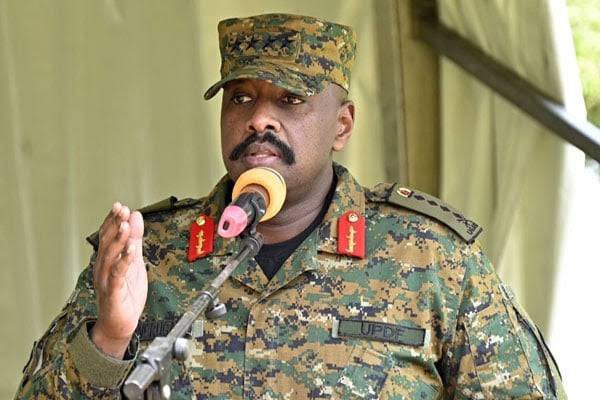

The Chief of Defense Forces of the Uganda People’s Defence Force, Gen. Muhoozi Kainerugaba, has announced that Ugandan troops will begin withdrawing from their positions in eastern Democratic Republic of the Congo, signaling a shift toward de-escalation and regional cooperation.
In a series of tweets posted on his official X- handle on Wednesday night, Gen. Kainerugaba said he had already issued orders for troops to pull out of Lubero, with the withdrawal expected to be completed by April 3, 2026.
He added that the broader plan involves a coordinated exit from all UPDF positions stretching from Lubero to Mahagi, in consultation with the government of the Democratic Republic of the Congo.
The army chief emphasized that the move is aimed at fostering lasting peace between Uganda and the DRC, describing Congolese citizens as “brothers and sisters.”
He noted that, while most operations have progressed successfully, a few outstanding issues remain in Ituri Province.

Gen. Kainerugaba also indicated that the pace of the withdrawal could depend on administrative changes in Ituri, stating that troops would leave Lubero within days if concerns regarding the province’s leadership are addressed.

He also expressed respect for DRC President Félix Tshisekedi, referring to him as a “big brother” and underscoring the importance of continued cooperation between the two countries.
The UPDF has been operating in eastern DRC in joint efforts with Congolese forces to combat armed groups and stabilize the region.
The development come amid mounting friction between Ugandan forces and Ituri’s military governor, Lieutenant General Johnny Luboya Nkashama, who has imposed restrictions on UPDF movements, including barring access to key border points and insisting operations remain strictly within the framework of a joint mission.
Ugandan officials view the measures as undermining their operational effectiveness, while Kinshasa has continued to back Nkashama, signalling a broader effort to assert control over security operations and limit foreign military influence in the region.
The UPDF entered eastern Congo in 2021 under Operation Shujaa, a joint campaign with Congolese forces targeting the Allied Democratic Forces (ADF), an Islamist-linked group blamed for attacks in both countries.
While the operation has scored some battlefield gains, violence has persisted, and tensions between partners have increasingly surfaced.
Nkashama, who has led Ituri under a state of siege since 2021, has also focused on pushing local militias into disarmament and reintegration programmes.
A Ugandan withdrawal could complicate efforts to contain the ADF and other armed groups, while exposing deeper geopolitical fault lines in eastern Congo, where multiple forces operate amid fragile coordination.
Neither the Congolese government nor its military had immediately responded to Kainerugaba’s remarks.