
The Ministry of Health has intensified its nationwide fight against malaria with the rollout of an ambitious mosquito net distribution campaign aimed at protecting millions of Ugandans and accelerating progress toward a malaria-free country.
The campaign, part of Uganda’s Malaria Elimination Strategic Plan and aligned with Uganda Vision 2040, targets one of the country’s leading public health challenges through large-scale prevention, treatment, and community engagement efforts.
Despite being preventable and treatable, malaria continues to place a heavy burden on Uganda. According to the Ministry, the country recorded more than 11.7 million malaria cases and 2,342 deaths in 2025, with over half of the fatalities occurring among children under five.
Uganda accounts for 4.7 percent of global malaria cases, highlighting the urgency for intensified interventions.
Under the 2026 campaign, the government plans to distribute 25.8 million Long-Lasting Insecticide-Treated Nets (LLINs) across 130 districts, in line with World Health Organization guidelines of one net for every two people. The initiative, valued at approximately USD 100 million (UGX 365 billion), is funded by the Government of Uganda, the Global Fund, and the United States Government.

Health experts emphasize that consistent use of mosquito nets remains one of the most effective preventive measures. Proper usage can reduce malaria transmission by up to 50 percent, cut illness and deaths by 25 percent, and significantly lower child mortality rates.

The distribution is being implemented in five phases throughout 2026. The first phase, completed in January, saw 3.4 million nets distributed across 20 districts, protecting an estimated 6.5 million people. The second phase, currently underway, targets more than 8.1 million Ugandans in 32 districts with 4.8 million nets. Subsequent phases will cover additional regions, including urban areas such as Kampala and Wakiso under a tailored urban strategy.
Beyond distribution, the Ministry is prioritizing community awareness and behavior change to ensure effective use of the nets. Local leaders, Village Health Teams, and partner organizations are conducting household visits, demonstrations, and follow-ups to promote proper usage and dispel misconceptions.
Dr. Richard Kabanda, Commissioner for Health Promotion, Education and Strategic Communication, urged the public to actively participate in the campaign by registering households, using mosquito nets correctly, seeking timely treatment for fever, and eliminating mosquito breeding sites around their homes.
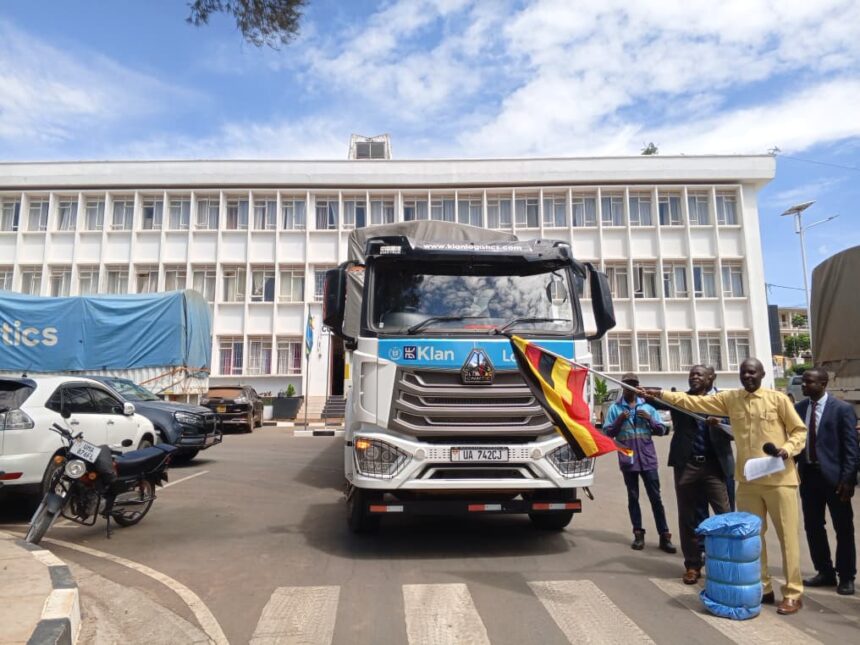
Meanwhile, the Mbarara City Health Department has received 171,750 insecticide-treated mosquito nets for free distribution to residents, alongside warnings against misuse.
Receiving the consignment on Thursday, City Health Focal Person Dorcus Twinabaitu said preparations for the exercise had been finalized.
She noted that the city received 3,435 bales, each containing 50 mosquito nets, and assured residents that distribution would target the rightful beneficiaries.
Mbarara City South Deputy RCC Gerald Tukamuheebwa cautioned that misuse of the nets could undermine government efforts to combat malaria, warning that diversion for unintended purposes would render the intervention ineffective.
Mbarara City Mayor Robert Mugabe Kakyebezi also urged beneficiaries to avoid misusing the nets for activities such as fishing and poultry rearing, emphasizing that they are strictly meant to protect lives.