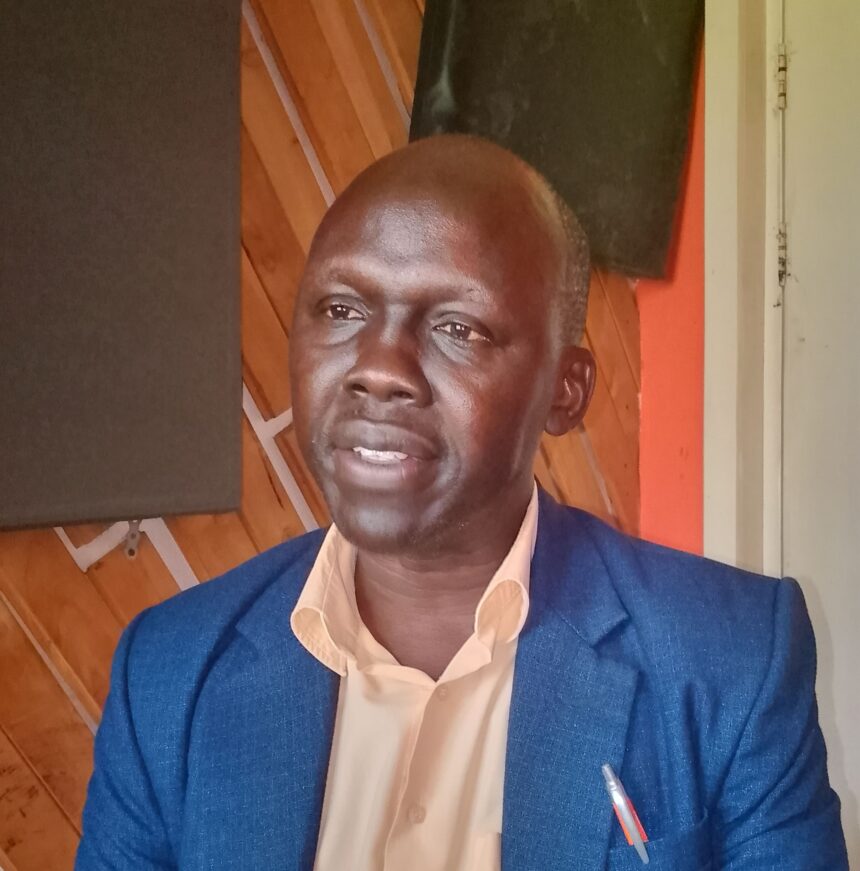

Pastor Alex Okello, Team Director of Mission Beyond Frontiers, has called on city and municipal authorities to strengthen waste management enforcement by penalizing individuals who fail to separate waste and those who recklessly dump garbage on streets.
Okello, a passionate evangelist and advocate for responsible waste management, expressed concern over the growing environmental, health, and safety risks posed by poor waste disposal practices across Uganda.
He cited a recent report by the Uganda Bureau of Statistics (UBOS), indicating that only between 8% and 40% of generated waste is safely collected and managed. The remaining waste is often dumped in drainage channels and wetlands, posing serious public health and environmental threats.
Okello revealed that last year, Mission Beyond Frontiers conducted a survey around Kabale Municipality to assess the effectiveness of waste management systems. During the exercise, the organization was alarmed to find street children at the Kirengyere Garbage Centre scavenging through unsorted waste with bare hands in search of metal scraps and plastics.
“We felt immense pain witnessing those homeless children, completely unaware of how harmful the waste could be to their lives,” he said.

He blamed the situation on weak enforcement of regulations that require waste sorting and separation at the source.

Okello emphasized the need for strict compliance with the National Environment (Waste Management) Regulations, S.I. No. 49 of 2020. He noted that Regulation 26 requires the segregation of hazardous domestic and municipal waste from non-hazardous waste, while Regulation 18(3) considers unsegregated waste hazardous and subject to penalties.
He advocated for the introduction of color-coded waste bins to improve sorting and recycling efforts.
“If we had separate containers for waste, red for hazardous materials, green for biodegradable waste, blue for glass, black for metals, and yellow for plastics that can be recycled, we could significantly reduce environmental degradation and life-threatening health risks caused by poor waste disposal,” he explained.
CUE IN OKELLO… ON COLOUR-CODED BINS… ENG//
The pastor further proposed tougher penalties for individuals who litter public spaces, especially in urban areas, and suggested the recruitment of enforcement “scouts” to monitor and penalize offenders.
He commended the Kampala Capital City Authority (KCCA) for deploying such personnel and urged other municipalities to adopt a similar model.
“Let our city and municipal authorities also deploy these scouts. If someone throws waste from a vehicle onto the street, they should record the vehicle’s number plate for fines. Part of the revenue collected could be used to sustain the work of these scouts,” he suggested.
CUE IN OKELLO… ON FINES… ENG//
Okello also proposed incorporating proper waste disposal education into school curricula, particularly at the primary level, arguing that early environmental education could help build a generation of responsible waste managers.
“The challenge largely stems from mindset issues. Adults are harder to influence, but children can be nurtured and raised as responsible waste managers,” he said. “If the younger generation grows up understanding the importance of proper waste disposal, future enforcement of laws may no longer be necessary.”
CUE IN OKELLO… ON CHILDREN… ENG//
Okello’s remarks echo concerns previously raised by Samuel Kazimba Mugalu, who has consistently criticized poor garbage disposal in Uganda. The Archbishop previously proposed a ban on polythene bags and plastic bottles in churches to reduce littering at places of worship.
UBOS reports indicate that Uganda’s waste management system continues to face mounting pressure due to rapid population growth and urbanization. Kampala alone generates an estimated 2,000 to 2,500 tonnes of waste daily, yet systemic inefficiencies and limited funding mean only about half is formally collected.
The city previously relied heavily on the Kiteezi Landfill, which reached capacity over time. Its collapse in August 2024 resulted in the deaths of 35 people.