
M23 rebels have rejected a recent report by Human Rights Watch (HRW) accusing the group and Rwandan military forces of carrying out forced recruitment and abusive detention of thousands of captured combatants and civilians in eastern Democratic Republic of Congo (DRC).
The 78-page report, published on Wednesday and titled “Death Was Everywhere: Arbitrary Detention, Killings, and Forced Recruitment by the M23 and the Rwanda Defence Force,” details allegations of widespread arrests, detentions, and human rights abuses in North and South Kivu provinces between mid-2024 and December 2025.
According to Human Rights Watch, detainees held at the Rumangabo and Tshanzu training camps in North Kivu were subjected to serious abuses, including murder, torture, corporal punishment, forced labor, and the recruitment of child soldiers. The organization stated that such actions could amount to war crimes and may warrant investigations into possible crimes against humanity.
HRW said its findings were based on interviews with 102 former detainees who reportedly escaped from the Rumangabo and Tshanzu camps, individuals deployed with M23 forces, or those who later surrendered to the Congolese army. Researchers also consulted witnesses, United Nations officials, military and intelligence personnel, diplomats, media sources, and M23 representatives. The report further relied on geolocated videos and photographs, satellite imagery, and 3D reconstructions to estimate the scale of detentions and transportation of individuals to the camps.
The rights organization alleged that since 2024, M23 rebels have intensified forced recruitment campaigns involving civilians and captured combatants.

“After the armed group captured large swaths of territory and key eastern cities in 2025, these efforts increased in areas under their control. Thousands of Congolese soldiers, Wazalendo militia allied with national forces, police, and civilians, including children as young as 12, were recruited, sometimes voluntarily, although often forcibly,” the report stated.

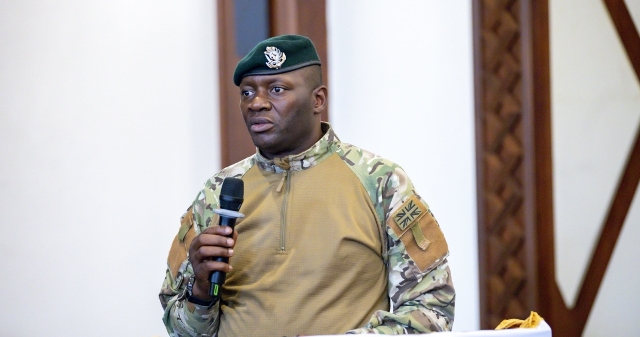
However, M23 spokesperson Lawrence Kanyuka dismissed the report, describing it as selective, inaccurate, and disconnected from realities on the ground.
Kanyuka argued that Human Rights Watch focused disproportionately on the AFC-M23 while overlooking alleged violations committed by forces allied to the Congolese government.
“Once again, this organization focuses its attention almost exclusively on the AFC-M23, while minimizing or completely ignoring the serious violations committed by the coalition forces of the Kinshasa regime. This variable-geometry approach raises serious questions about its impartiality and the credibility of its conclusions,” Kanyuka said.
He also rejected allegations of forced recruitment, insisting that the movement’s mobilization efforts have been public and voluntary.
“Our movement has always conducted a visible and public mobilization process, carried out in broad daylight, without concealment and widely documented by images and videos accessible to all. Presenting this voluntary mobilization as forced recruitment amounts to a questionable interpretation that does not withstand scrutiny of the facts,” he added.
Kanyuka further criticized what he described as unequal scrutiny by Human Rights Watch, pointing to reports and images allegedly showing children in uniform alongside forces allied to the Congolese government, as well as civilian casualties from bombings in areas such as Masisi and Minembwe.
He called for equal standards of investigation for all parties involved in the conflict and urged the public, media, international partners, and independent researchers to critically assess the report’s conclusions.
“The AFC-M23 reaffirms its commitment to respect for international humanitarian law and calls on HRW to adopt a truly independent, professional, and equitable investigation mechanism, in the interest of civilian populations and the pursuit of truth,” Kanyuka stated.
The conflict in eastern DRC continues to draw international concern amid escalating violence, displacement, and allegations of human rights violations involving multiple armed groups and state actors.