







Uganda has registered a 64 per cent reduction in new HIV infections since 2010, with infections declining to about 34,000 in 2025, although young people, particularly adolescent girls and young women, continue to account for a significant proportion of new cases.
According to the latest national HIV estimates released by the Uganda AIDS Commission (UAC), young people aged between 15 and 24 years accounted for 38 per cent of the new infections recorded in 2025, with young women contributing about 77 per cent of infections in this age group.
The estimates indicate that Uganda has about 1.567 million people living with HIV, including approximately 1.496 million adults aged 15 years and above and 71,000 children aged below 15 years.
The national HIV prevalence among people aged 15 years and above stands at 5.9 per cent, while prevalence among women aged 15 to 49 years is 7.2 per cent compared to 3.5 per cent among men.
The South Western region has the highest HIV prevalence at eight per cent, followed by South Buganda at 7.3 per cent, North Buganda at 7.2 per cent and Mid North at 6.8 per cent. Karamoja and West Nile have the lowest prevalence at 1.3 per cent and 1.4 per cent respectively.

Fort Portal City has the highest reported prevalence at 16.7 per cent, followed by Kalangala at 12.1 per cent and Kabarole District at 10.7 per cent, according to programme data.

Speaking during a press briefing in Kampala on Tuesday to launch the 2026 National HIV and AIDS Symposium, the Acting Director General of Uganda AIDS Commission, Tom Etii, said the country had made significant progress in controlling the epidemic, reducing national HIV prevalence from about 18 per cent in the 1980s to the current 5.9 per cent.
Etii said Uganda was making progress towards the global 95-95-95 targets, with 85.3 per cent of adults living with HIV knowing their status, 99.1 per cent of those diagnosed receiving antiretroviral therapy (ART), and 96.5 per cent of those on treatment achieving viral suppression.
He, however, warned that the continued high number of new infections, particularly among young women, threatened the country’s ambition of ending AIDS as a public health threat by 2030.
“Young people aged 15 to 24 years account for 38 per cent of the total new HIV infections, with young women alone accounting for about 10,000 new infections,” Etii said.
The estimates further show that mother-to-child HIV transmission has reduced by 78 per cent since 2010, with approximately 4,400 children acquiring HIV in 2025.
AIDS-related deaths have also declined by 66 per cent since 2010 to approximately 19,000 in 2025.
Etii attributed the progress to Uganda’s multi-sectoral approach to HIV prevention, testing and treatment, as well as government leadership and support from development partners.
He said the country needed to strengthen HIV prevention interventions, particularly among adolescent girls and young women, retain mothers on treatment during pregnancy and breastfeeding, and address gaps in identifying people living with HIV.
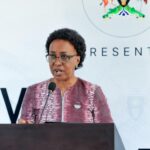
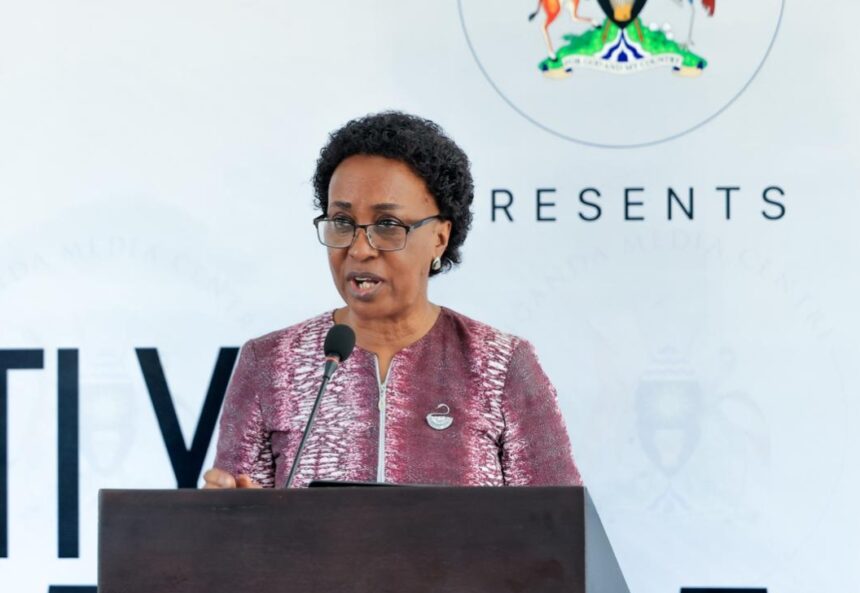
The Uganda AIDS Commission Board Chairperson, Canon Dr Ruth Senyonyi, said although the country had maintained access to essential HIV services despite external financing challenges, the number of new infections remained unacceptably high.
Dr Senyonyi said the government and its partners needed to strengthen domestic financing to sustain HIV programmes as the country gradually transitions from donor-dependent funding.
She said the upcoming symposium would provide an opportunity for researchers, policymakers, civil society organisations and other stakeholders to review progress, share scientific findings and identify sustainable interventions to address remaining gaps.
The three-day 2026 National HIV and AIDS Symposium will take place from November 16 to 18 at Mbarara University of Science and Technology’s Pharmacology Grounds under the theme, “Sustainable Interventions to End AIDS as a Public Health Threat by 2030”.
The symposium will feature the Annual Joint AIDS Review, a scientific meeting, a financing dialogue, the Philly Lutaaya Memorial Day lecture and a partnership forum.
Dr Senyonyi said more than 120 research abstracts had been received for presentation during the scientific meeting, which is expected to provide evidence to guide HIV prevention and treatment programmes.
She added that discussions would also explore Uganda’s efforts towards developing an HIV cure, including the scientific, ethical and social considerations surrounding research in the area.
The symposium is being organised by Uganda AIDS Commission in partnership with Mbarara University of Science and Technology and will be presided over by the Minister for the Presidency, Milly Babalanda.
The symposium will precede the national AIDS Marathon scheduled for November 29 at Kololo Ceremonial Grounds in Kampala as part of activities leading to World AIDS Day.