







A deepening hunger crisis at Uganda’s premier institution, Makerere University, has left students skipping meals, missing examinations, collapsing from exhaustion, and in some cases requiring hospitalisation as the examination period unfolds in November 2026.
Reports circulating on social media and in local outlets describe students struggling to concentrate, losing weight, and developing health complications simply because they cannot afford regular food.
One widely shared post claimed students were “dying of hunger” and collapsing in exam halls, highlighting a stark contrast with statements made by Vice Chancellor Prof Barnabas Nawangwe roughly two years earlier, when university officials publicly denied that any students were going hungry.


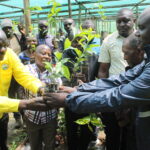
The immediate trigger for institutional action was mounting evidence that hunger was directly interfering with academic performance. On 11 November 2026, Makerere University partnered with the Rotary Club of Makerere Passport to launch the Food for Peace programme.
The initiative initially targets 206 students identified through a needs assessment conducted by the Makerere Rotary Peace Centre. These students, drawn from both government- and privately sponsored ranks, receive free meals at participating halls of residence during the examination period so they can sit papers without an empty stomach.

Prof Nawangwe, who also serves as president of the Rotary club, openly acknowledged the severity of the situation, stating that the university had “noticed some being taken by ambulance to hospital just because of hunger.”

He framed the programme as a temporary but necessary intervention to protect academic integrity while longer-term solutions are sought.At the heart of the crisis is the inadequacy of financial support relative to living costs in Kampala. Government-sponsored students receive a living/meal allowance of approximately USh 530,000 per semester.
Spread across a typical 120-day semester, this equates to roughly USh 4,400 per day. A single modest meal near campus—rice, chapati, chips and beans—can cost around USh 3,500, while protein options such as offals (USh 4,000), stewed beef (USh 5,000), chicken (USh 8,000) or fish (USh 10,000) quickly exhaust the daily allocation.

Many students therefore rely on cheap street food such as plain chapati, Rolex or cassava, or simply skip meals altogether. Privately sponsored students, whose families have already stretched resources to cover tuition and rent, face similar or greater pressures when home remittances are irregular or insufficient.
Student leaders have been vocal. Guild President Gracious Kadondi, herself a government-sponsored student, noted that the allowance arrives at the beginning of the semester and is often exhausted by examination time.
Innocent Kisembo, chairperson of the College of Humanities and Social Sciences, described the USh 530,000 figure as “too little to push someone for the entire semester.”
Third-year student Denise Kainomugisha told reporters she routinely attends lectures on an empty stomach and returns to her hostel hoping she has both food supplies and cooking gas. She observed that without a side hustle or consistent parental support, many students simply “get used to not eating the whole day.”This is not an entirely new problem.
In 2018 the university discontinued direct meal provision in halls after caterers demanded higher payments amid rising commodity prices and switched to cash allowances following a student survey. In late 2024, delayed disbursement of those allowances sparked protests by government-sponsored students.
University officials at the time dismissed some starvation claims as inaccurate, and several student leaders were briefly suspended before the suspensions were lifted. Those earlier episodes, combined with the current reports of hospitalisations and missed exams, have prompted renewed scrutiny.
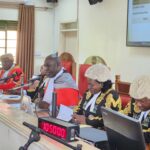
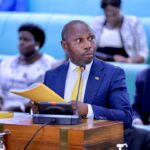
Parliamentary attention has also been drawn; Deputy Speaker Thomas Tayebwa directed the Committee on Education and Sports to examine student living allowances.
The Food for Peace programme offers immediate relief for a few hundred students, and Rotary International Director Emmanuel Katongole has pledged annual support.
Yet student leaders and commentators argue that 206 beneficiaries represent only a fraction of those affected at a university with tens of thousands of students. They call for a permanent student food bank, an emergency welfare fund, and a review of allowance levels and disbursement timing so that support lasts through examinations.
Prof Nawangwe has also warned that food insecurity can expose vulnerable students, particularly young women, to exploitation.For now, the contrast remains striking: an institution that once denied the existence of hungry students is now publicly feeding starving candidates so they can finish their examinations.
Whether the current emergency response evolves into sustained welfare reform will determine how many future Makerere students can focus on their studies rather than their next meal.