Summary:
Adeke argues that a leaner Parliament would improve debate quality and ensure more effective representation.
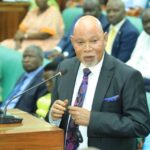
KAMPALA: The Shadow Minister for Public Service, Adeke Anna Ebaju, has proposed reducing the size of Uganda’s Parliament by ensuring each district is represented by two MPs, one male and one female. She argues that Uganda’s parliamentary representation is disproportionately high compared to countries with much larger populations, such as Nigeria and India.
Her proposal, outlined in the Alternative Policy Statement for the Public Service Sector (2025/26), highlights the financial burden imposed on taxpayers by the current parliamentary size.

“With 529 MPs, Uganda’s Parliament is unnecessarily large. In contrast, India, with a population of 1.38 billion, has only 552 MPs, each representing approximately 2.5 million people. China, the world’s largest parliament with 2,980 legislators, has a population of 1.439 billion, with each legislator representing around 482,000 people. Nigeria, with 206 million people, has 360 MPs, each representing about 570,000 constituents,” she explained.

In comparison, Uganda, with a population of 48.66 million, has 529 MPs, meaning each legislator represents only 91,984 people. Adeke argues that a leaner Parliament would improve debate quality and ensure more effective representation.
“We propose that each district elects one male and one female MP, or that each MP represents at least 200,000 people, considering constituency size. These measures would reduce Parliament’s size by 50%,” she added.
Ministers Should Not Serve as MPs
Adeke, who also serves as Soroti District Woman MP, is advocating for a separation of powers by barring MPs from serving as Cabinet Ministers. She asserts that the dual role creates conflicts of interest, making it difficult for Parliament to effectively hold the Executive accountable.
“Ministers should not be MPs. If an MP is appointed to Cabinet, they should resign their parliamentary seat before assuming office. The Legislature must conduct oversight on the Executive, and it is impractical for MPs who are also Ministers to scrutinize themselves,” she argued.
Her proposals seek to enhance governance efficiency, strengthen legislative independence, and reduce the financial strain on taxpayers.