


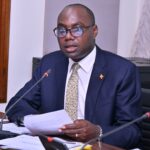




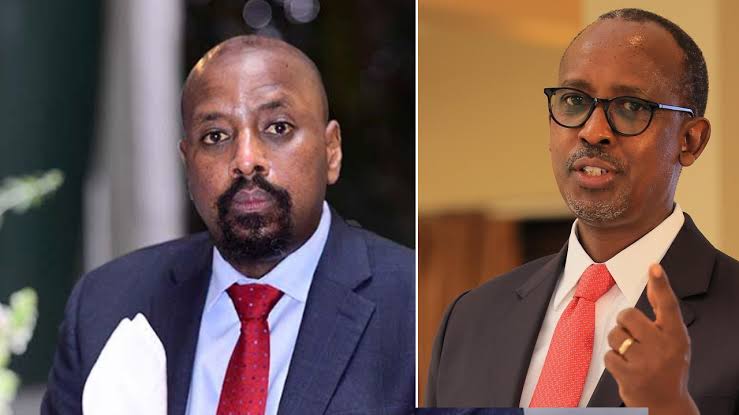

Uganda’s succession debate is becoming more complicated, and a new name is increasingly being dragged into the conversation: Odrek Rwabwogo, President Yoweri Museveni’s son-in-law, businessman, presidential adviser and chairman of the Presidential Advisory Committee on Exports and Industrial Development (PACEID).
For years, Rwabwogo appeared to be comfortable operating behind the scenes, away from the explosive politics surrounding Gen Muhoozi Kainerugaba.
But as the battle over who takes over from Museveni increasingly shifts from whispers to open declarations, his name is suddenly being positioned in a political equation that could have far-reaching consequences for the ruling establishment.

Born on September 17, 1969, in Naama village, Kiruhura District, Rwabwogo’s story is one of personal struggle, education and political connections.
He reportedly lost both parents at the age of 16, grew up around rural farming life, later studied at Makerere University and obtained a master’s degree in Media and Journalism from Cardiff University in Wales.

His entry into the powerful Museveni family came in 2002 when he married Pastor Patience Rwabwogo, the President’s daughter. That relationship would eventually place him within one of Uganda’s most influential political circles, although he has largely maintained a different public image from the increasingly outspoken Muhoozi.

Rwabwogo’s ambitions, however, are not entirely new. In August 2015, he surprised sections of the NRM establishment by attempting to contest for the party’s vice chairmanship representing Western Uganda.
The bid was blocked, but it exposed his interest in party politics and raised questions about whether he was quietly testing his political weight.

After the 2021 elections, Museveni appointed him Senior Presidential Advisor on Special Duties and placed him at the helm of PACEID, a platform intended to push Uganda’s export growth, industrial development and private-sector investment.
The position gave him access to business leaders, diplomats, technocrats and international economic networks — precisely the circles that could matter in a future political transition.
The real drama, however, began when his relationship with Muhoozi’s political ambitions appeared to deteriorate. In 2026, Rwabwogo reportedly became increasingly critical of personality-driven politics, publishing commentary and videos advocating institutional discipline and restraint.
Muhoozi responded with attacks, including declaring PACEID illegal and ordering the arrest of its secretariat head, Matthew Bagonza, in August.That confrontation raised a bigger question: was Rwabwogo simply defending his institution, or was he becoming an alternative political centre within the First Family?
His emergence is not without baggage. Allegations concerning grazing land in Nshaara, Kiruhura, linked to a proposed Chinese beef-processing project, as well as disputes surrounding billions of shillings associated with export and coffee interventions, have attracted criticism.
Those accusations remain politically contested and would likely follow him into any national leadership campaign.By late October and November, speculation intensified after PACEID references reportedly disappeared from his X profile and amid claims of closed-door discussions involving the First Family and the NRM leadership.
Whether these developments signal retreat, reconciliation or a calculated political repositioning remains unclear.But the question is no longer simply whether Muhoozi is the only person being prepared for succession.
Could Rwabwogo be emerging as the civilian alternative — a softer, more diplomatic and business-oriented face of the same establishment, potentially acceptable to sections of the NRM, technocrats and international partners?And if that happens, would Ugandans see him as a genuine alternative to military-style politics, or simply another member of the Museveni family being positioned to inherit power?
Uganda may be debating the personality of its next leader, but the bigger battle is whether the country is ready to break away from family-based succession altogether.Because replacing a general with a son-in-law may change the packaging of power — without necessarily changing who controls it.