




In 2007, President Yoweri Museveni made a bold decision to deploy the Uganda People’s Defence Forces (UPDF) to Somalia, a country then engulfed in prolonged conflict and instability.
The deployment followed the formation of Somalia’s Transitional Federal Government (TFG) in Nairobi, Kenya, between October and November 2004, after nearly two years of peace talks mediated by the Intergovernmental Authority on Development (IGAD). At the time, the TFG was operating from Kenya’s capital, Nairobi.
The TFG brought together several rival factions in Somalia, except the radical Islamist group Al-Shabaab, which controlled large parts of the country and posed a major threat to efforts to restore peace and stability.
Somalia had remained virtually ungovernable for years and was widely regarded as a graveyard for foreign forces attempting to enforce peace. Various armed groups, particularly Al-Shabaab, continued to terrorise the population, making the country one of the most dangerous places in the world.
The United States had experienced the difficulties of military intervention in Somalia in 1993 when its forces clashed with militias allied to the late Mohamed Farrah Aidid in Mogadishu during the operation popularly known as “Black Hawk Down”. Eighteen American soldiers were killed, while more than 80 others were wounded. The US subsequently withdrew its forces, leaving Somalia struggling with continued instability.

Against this background, Somalia was widely regarded as a failed state. Therefore, when President Museveni decided to deploy the UPDF to help restore peace, few believed the mission would succeed. Many commentators, particularly from the political opposition and academia, predicted that the Ugandan forces would fail.

Among the critics was opposition politician and journalist Semujju Nganda, who, while appearing on the Kiriza Oba Ggaana talk show on Central Broadcasting Services (CBS) FM, reportedly expressed strong reservations about the deployment.
Semujju reportedly pledged to slaughter a chicken for every UPDF soldier who died in what he considered a misguided military intervention in Somalia.
He viewed the UPDF as hired soldiers who would inevitably be defeated by Al-Shabaab and other armed groups, arguing that Uganda’s military could not succeed where the United States had failed.
His remarks attracted widespread criticism, with many Ugandans and political figures condemning them as insensitive to the soldiers risking their lives and the families they would leave behind.
However, President Museveni, guided by his commitment to Pan-Africanism and convinced of the UPDF’s capabilities, proceeded with the deployment despite the criticism.
The Ugandan forces subsequently made significant contributions to efforts to restore peace in Somalia. In 2007, the UPDF helped push Al-Shabaab out of Mogadishu following intense fighting, marking an important milestone in the mission.
Over the years, the forces participated in several military operations that helped weaken the militants’ grip on strategic locations. Buula Burde in Hiraan, south-central Somalia, was liberated in March 2014. Bariire, a strategic town in Lower Shabelle, was also recaptured during joint operations, including Operation Silent Storm.
Other areas, including Awdheegle, Sadiid, Anole, Mubarak and Darusalaam in Lower Shabelle, were subsequently liberated from Al-Shabaab militants.
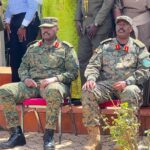
On November 2, 2026, the first batch of UPDF soldiers returned home, marking the beginning of the force’s return following the conclusion of Uganda’s deployment in Somalia.
Their return is a moment of pride for the country, given the difficult conditions under which they served and the contribution they made towards Somalia’s security and stability.
Somalia has since registered improvements in business activity, while Mogadishu is increasingly positioning itself as an international commercial centre. Reconstruction efforts in different parts of the country are also continuing, reflecting the progress made in restoring stability.
Other countries, including Burundi, Kenya, Djibouti, Ethiopia and the United States, later joined the international efforts to restore order in Somalia. However, Uganda was among the first countries to undertake the high-risk military operations that laid the groundwork for subsequent interventions.
The mission, however, came at a heavy cost. Several Ugandan soldiers lost their lives in the line of duty, and their sacrifice remains an important part of the country’s contribution to the peace process.
Among the darkest moments was the May 26, 2023, attack on the UPDF base at Bulo Marer in Lower Shabelle, which became the deadliest single incident involving Ugandan forces during the deployment.
During the attack, Al-Shabaab militants reportedly used suicide car bombs before storming the fortified base, which was manned by Ugandan troops under the African Union Transition Mission in Somalia (ATMIS). President Museveni later confirmed that 54 Ugandan soldiers had died in the attack.
Another major incident occurred on September 1, 2015, when Al-Shabaab militants attacked the UPDF base at Janaale. The assault, which coincided with the anniversary of the death of former Al-Shabaab leader Ahmed Godane, involved hundreds of militants who launched a coordinated attack on the Ugandan outpost.
The attackers destroyed a strategic bridge to disrupt reinforcement and escape routes, resulting in heavy casualties and leaving some personnel missing.
Despite such setbacks and the enormous sacrifices made, the UPDF remained committed to its mission of fighting Al-Shabaab and supporting efforts to restore stability in Somalia.
As Uganda welcomes its soldiers home, their contribution to the peace process deserves recognition and appreciation.
And perhaps, after nearly two decades, Semujju Nganda should now reflect on his earlier remarks. The UPDF has returned from Somalia, having played a significant role in a mission many once considered impossible. The chicken he promised to slaughter for every fallen soldier remains a reminder of the scepticism that surrounded the deployment.
The writer, Obed K. Katureebe, works with the Uganda Media Centre.