
KAMPALA: The Ministry of Finance, Planning, and Economic Development has announced that Uganda’s economy is projected to grow by an impressive 6.4% in the 2024/25 financial year up from GDP growth rates of 5.6% and 5.8% recorded in the first two quarters of the previous fiscal year.
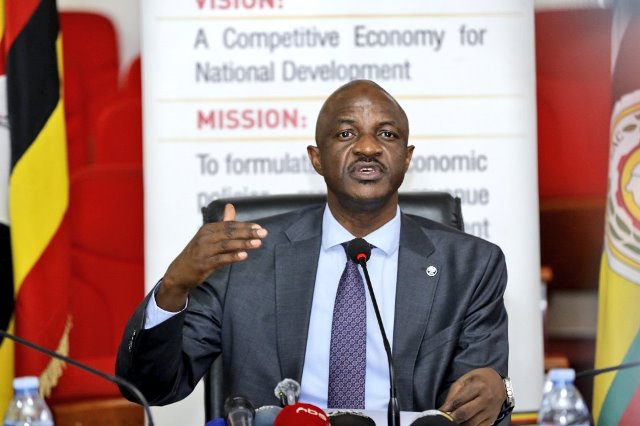
Speaking during a press briefing on Fourth Quarter (Q4) expenditure allocations on Tuesday, Permanent Secretary Ramathan Ggoobi attributed the projected growth to strong performances in agriculture, manufacturing, and the services sectors.
Ggoobi emphasized the government’s strategic focus on these sectors as a foundation for sustainable development and job creation.
“Our commitment to fostering growth in agriculture and manufacturing is unwavering. These sectors not only provide employment but also contribute significantly to our GDP,” Ggoobi stated.
The government has released Shs 19.79 trillion for Q4, bringing the total national budget for FY 2024/25 to Shs 76.422 trillion. This allocation aims to ensure adequate funding for essential services and development priorities.

Of the total Q4 release, Shs 8.903 trillion has been allocated to wages and recurrent expenditures ensuring timely payment for public servants and the continuity of essential services.

“Timely payment of wages is essential for maintaining morale and productivity within the public sector. We value our civil servants and are committed to supporting them,” Ggoobi remarked.
Another Shs 2.677 trillion has been designated for development projects, targeting infrastructure improvement and economic diversification.
“Infrastructure development is a cornerstone of our economic strategy. By investing in roads, schools, and healthcare facilities, we are laying the groundwork for a prosperous future,” he said.
Ggoobi noted that investments in infrastructure are especially crucial as Uganda seeks to attract foreign investment and enhance regional trade.
“We aim to position Uganda as a hub for trade and investment in East Africa. This requires a deliberate effort to improve our infrastructure and foster a business-friendly environment,” he explained.
Addressing concerns about delayed payments, Ggoobi stressed the importance of eliminating domestic arrears to maintain trust and efficiency in the public sector.
“Delays in payments can disrupt service delivery and ripple across the economy. Our goal is to ensure all service providers are paid promptly to support uninterrupted operations,” he said.
To promote transparency and accountability, the Ministry of Finance is encouraging citizens to access detailed budget information via its website and the Budget Call Centre.
“Transparency builds trust. By making budget data accessible, we empower the public to hold us accountable for the management of public funds,” Ggoobi stated.
The government is also implementing a Ten-Fold Growth Strategy aimed at transforming Uganda’s economy and raising living standards. The strategy focuses on boosting productivity, encouraging innovation, and enabling business growth.
“Our vision is to see Uganda become a middle-income country by 2040. Achieving this requires collaboration among the private sector, civil society, and government,” Ggoobi declared.
As part of its broader strategy, the government is working to foster entrepreneurship and innovation, particularly among the youth.
“We want to empower our youth to start businesses and drive economic growth. By improving access to finance and training, we can unlock their potential,” Ggoobi said.
In addition to economic initiatives, the government is prioritizing social investments in education and healthcare to build a skilled workforce and enhance quality of life.
“Education is the foundation of our future. We must ensure our children have access to quality education and healthcare to thrive,” he emphasized.
Ggoobi acknowledged the challenges posed by global economic uncertainties and climate change but expressed confidence in the government’s resilience and preparedness.
“We are aware of the external risks to our economy. But with sound, sustainable policies, we are building resilience and preparing to overcome future shocks,” he concluded.