
Members of Parliament have called for urgent and stringent measures to protect Lake Bunyonyi, citing growing concerns over pollution and environmental degradation.
The Shadow Minister for Water and Environment, Hon. Christine Kaaya (NUP, Kiboga District Woman Representative), criticized government interventions as inadequate, arguing they fail to tackle the root causes of the lake’s deteriorating condition.
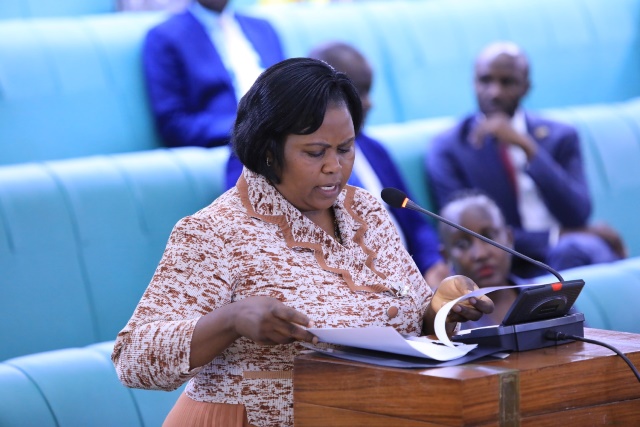
Speaking during Thursday’s plenary on 11 September 2025, Kaaya responded to the statement by the State Minister for Environment regarding the brownish cloud, foul odour, oily film, and white cream reported on the lake. She described the government’s explanation as insufficient.
“While we commend the ministry for finally acknowledging this crisis after weeks of public outcry, the government’s rapid assessment is shallow and reactive, failing to address years of neglect that allowed preventable human activities to push the lake to a tipping point,” she said.
Kaaya emphasized that human activities, including mining, poor waste management, and weak regulation, have worsened the lake’s condition.

“The minister attributes the brownish cloud and turbidity primarily to natural lake turnover triggered by rainfall and temperature variations. While this process occurs in many Ugandan lakes, it is exacerbated by human factors that the government has failed to regulate adequately,” she said.

She highlighted iron ore extraction in Kigezi as a major threat.
“Mining in the Kigezi sub-region has caused extensive erosion, wetland destruction, and direct siltation into Lake Bunyonyi, posing a glaring threat to the ecosystem,” Kaaya warned.
The shadow minister also criticized government measures as short-term and unclear.
“The proposed actions, such as regular assessments, community sensitization, and treatment upgrades, are welcome but insufficient and belated. Sensitization alone has proven ineffective without enforcement,” she added.
Kaaya proposed additional measures, including halting mining and quarrying in the lake’s catchment until full environmental audits are completed, restoring wetlands and shorelines through community-led initiatives, investing in decentralized waste management systems, and requiring lakeside businesses to install treatment facilities.
She also called for stronger climate adaptation policies to protect all major water bodies.
“The degradation of Lake Bunyonyi reflects broader environmental mismanagement. Adopting these alternatives can restore the lake’s ecological integrity, safeguard livelihoods, and set a precedent for proactive stewardship across Uganda’s water systems,” she said.
Kaaya urged Parliament to debate the issue urgently and hold government accountable through a select committee inquiry.
Speaker of Parliament, Anita Among, tasked the government with providing a comprehensive report on all water bodies, emphasizing the urgency of action.
“We need a comprehensive statement on all the water bodies. Fish are dying. Give us regular updates on actions being taken,” she said.
In response, the State Minister for Environment, Hon. Aisha Sekindi, pledged to submit a detailed report by the end of the month.
“Madam Speaker, this requires thorough scientific research. It is not something that can be completed within one week,” she explained.