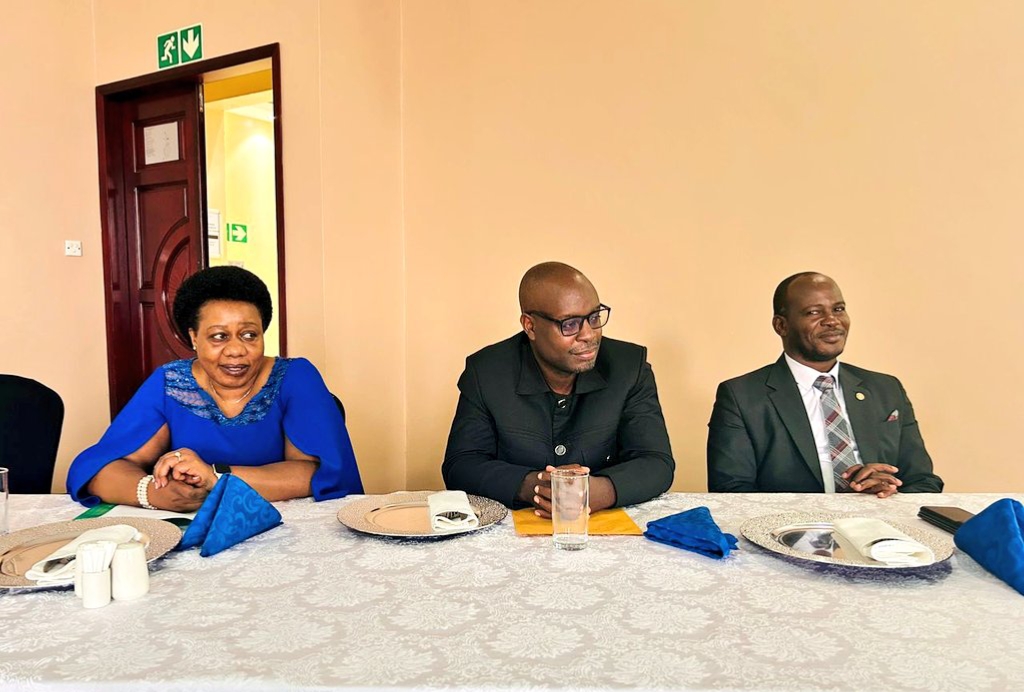

The Executive Director of the Center for Constitutional Governance (CCGEA), Dr. Sarah Bireete, has called on young people to take an active role in shaping global diplomacy, describing them as “the new actors in international problem-solving.”
Dr. Bireete made the remarks on October 8, 2025, while delivering a keynote address at Nkumba University’s Diplomatic Dinner held at Protea Hotel Entebbe under the theme, “Youth Diplomacy: Shaping the Future of Global Engagements.”
She applauded Nkumba University for providing a platform to engage students on what she termed a timely and relevant topic, emphasizing that young people are not just inheriting the world but are already influencing its direction.
“It is important to note that young people don’t just inherit the world, they are already shaping it,” Dr. Bireete said.
Highlighting the demographic and digital strength of young people, Dr. Bireete described them as a critical force in driving global change.

She noted that with over 1.8 billion people aged between 15 and 35, the current generation represents the largest youth population in history, a demographic she believes has the power to transform global governance.

“Diplomacy is no longer only for ambassadors. Young people are the new actors in global problem-solving,” she emphasized. “Youth diplomacy is the practice of young people engaging in international dialogue, negotiation, and cooperation to promote peace, development, and shared understanding.”
Dr. Bireete further observed that the youth’s digital fluency and creativity position them as natural connectors and innovative thinkers in tackling global challenges such as peacebuilding, sustainability, technology, and inclusion.
“When young people connect across borders, peace becomes more than a treaty, it becomes a shared reality,” she said, urging students to embrace their role in promoting unity and global leadership. “You are not too young to lead. You are the generation that must connect nations.”
She also highlighted the power of social media in amplifying youth diplomacy, citing online youth-led campaigns advocating for peace in Sudan, environmental justice, and education reform as examples of how digital engagement can shape global conversations and influence policy.
However, Dr. Bireete pointed out challenges limiting effective youth participation, including limited access to official diplomatic platforms, underfunding, lack of mentorship, tokenistic inclusion, political repression, and digital misinformation.
In her appeal, she called for collective action from all stakeholders:
“To the youth, be informed, be involved, and be innovative. To leaders, create space, not speeches, for youth participation. To institutions, invest in youth diplomacy as a strategic priority, in classrooms, online communities, and youth networks.”
In his closing remarks, Nkumba University Vice Chancellor Prof. Jude Lubega commended both the guest speaker and participants for embracing the spirit of diplomacy, describing it as “the fuel that keeps world peace a reality.”
Prof. Lubega praised Dr. Bireete for her insightful presentation, noting that her message provided students with practical guidance on applying diplomatic thinking in addressing global issues.
“Her elaboration was well tailored to guide young minds to consider diplomatic approaches in all their deliberations,” Prof. Lubega remarked.
The Diplomatic Dinner, organized by the Nkumba University School of Social Sciences, brought together students, diplomats, and key players in global security to discuss the evolving role of youth in international relations and the future of global cooperation.