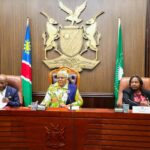
Kabale University has officially launched a new campus in Kisoro District after taking over the former Kisoro Primary Teachers College, a move aimed at expanding access to higher education and stimulating socio-economic development in the area.
The teachers’ college, established in 1982 in Busamba Ward, Southern Division of Kisoro Municipality, had remained abandoned and fallen into disrepair following the national phase-out of Grade III teacher training programmes in 2019.
Speaking at the handover ceremony, Kabale University Vice Chancellor, Prof. Joy Constance Kwesiga, commended the Government of Uganda for allocating the institution land to facilitate the university’s expansion.
“As requested by the people of Kisoro, Kabale University will initially introduce health-related programmes, with other courses to follow,” Prof. Kwesiga said. “We have officially taken over the land and shall take the necessary steps to ensure academic programmes begin as soon as approval is granted by the National Council for Higher Education.”
She revealed that the Kisoro campus will offer diploma and certificate programmes in health disciplines, including nursing, laboratory technology, and health sciences, in response to the pressing needs of the local community.

Prof. Kwesiga added that the university’s expansion strategy is community-driven, citing the earlier takeover of the former teachers’ training college in Rukungiri, where education and agriculture programmes commenced last year.

“We must respond to the needs of the people. That is why our programmes are aligned with what communities like Kisoro require,” she said, noting that Kabale University currently has over 7,000 students and continues to grow steadily while prioritising quality education.
The Assistant Commissioner for Teacher Education and Training at the Ministry of Education and Sports, Dr. Annet Mugisha Kajura, praised Kabale University for its consistent development and commitment to national education goals.
She highlighted the economic benefits the new campus will bring to Kisoro, including increased demand for housing, food supplies, and other local services.
Dr. Kajura also urged residents to support the institution, saying collaboration between the community and government would ensure long-term success and expanded academic offerings.
Kisoro District leaders welcomed the development with optimism. LC5 Chairperson Abel Bizimana described the launch as the culmination of a four-year struggle to attract a higher institution of learning to the district.
He appealed to Kabale University to consider offering scholarships to students from Kisoro and to prioritise qualified local residents for employment opportunities.
“This campus will reduce the cost of education for our people, especially in-service students who struggle with transport and accommodation,” Bizimana said, warning against resistance to development and calling for unity in advancing the district.
The Mayor of Kisoro Municipality and newly elected LC5 Chairperson, Richard Ndyana, also expressed happiness at Kisoro receiving its first diploma-awarding institution, describing it as a milestone for education in the region.
The former Kisoro Primary Teachers College was established on 2 July 1982 through the merger of study centres in Rubanda and Seseme National Community College. It trained Grade II and licensed teachers under both in-service and pre-service programmes. The institution sits on approximately 13 acres of land, including a demonstration primary school established in 1988. Additional land was acquired by the Ministry of Education and Sports in 2003.
Kabale University, which began in 2002 following a vision by the Kigezi Development Association in 1995, became a public university after receiving its charter in 2014 and full accreditation from the Uganda National Council for Higher Education in 2015.
With the launch of the Kisoro campus, Kabale University is expected to play a key role in transforming education, health training, and economic activity in the district and the wider southwestern region.