
Journalists in South Western Uganda, Kabale District have called on the Financial Intelligence Authority (FIA) to intensify investigations and expand training on combating corruption and illicit financial activities in the country.
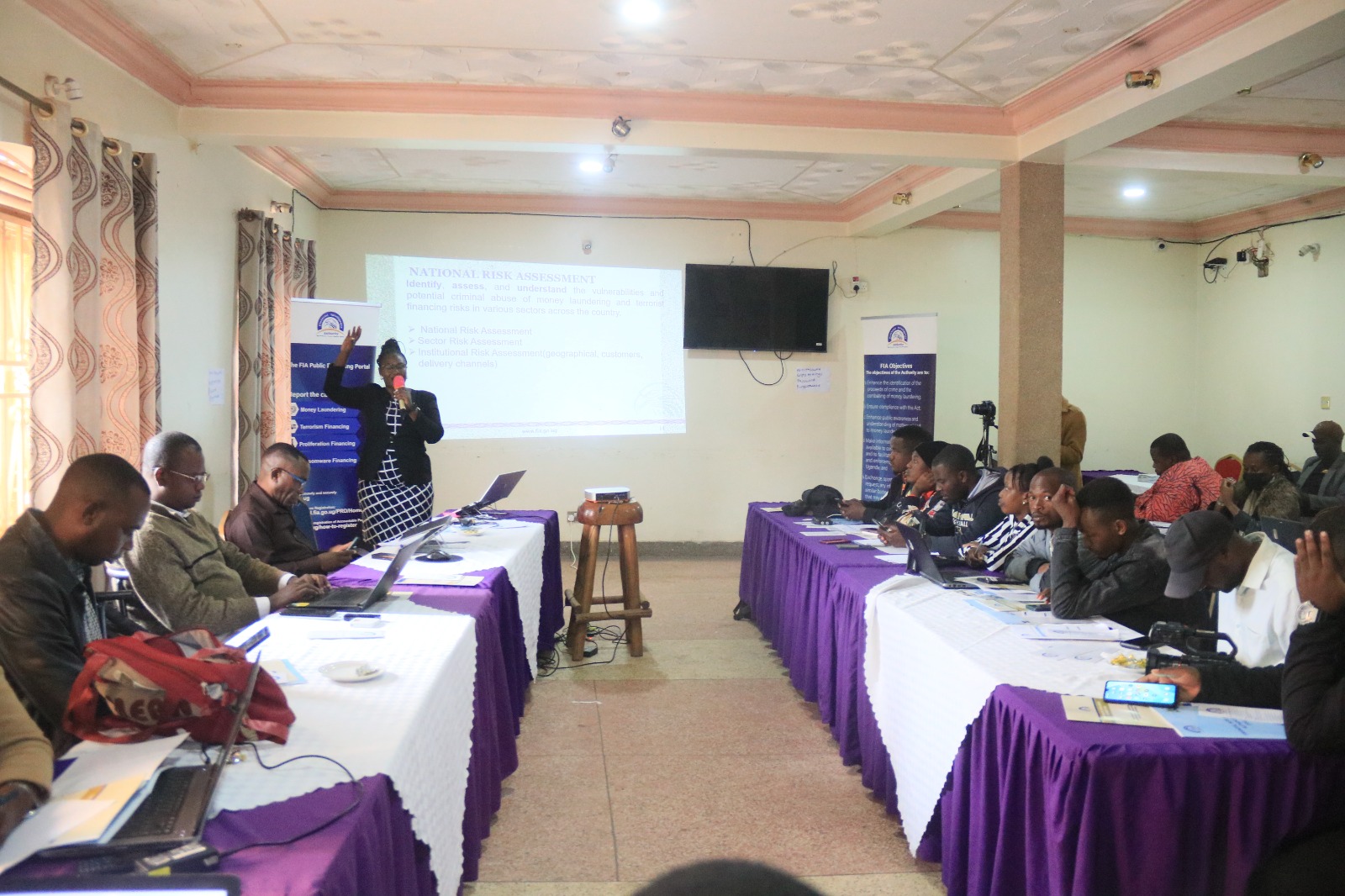
The appeal was made on Thursday during a one-day training workshop for media practitioners held at Kings Hotel in Kigongi, Kabale Municipality, organized by the FIA. The authority, established in 2013, is mandated to combat money laundering and the financing of terrorism in Uganda.
During the workshop, several journalists raised concerns about suspicious sources of wealth and urged the authority to investigate various sectors they believe could be linked to illicit financial flows.
Naboth Isaac Niwagaba, a journalist with Hope Radio, called on the FIA to investigate the sources of money used to finance election campaigns.
He cited an example of a former presidential aspirant who reportedly distributed money and food items to voters across villages nationwide during the election period.

According to Niwagaba, some voters allegedly received at least Shs 3,000 each during campaign activities. He also urged the authority to probe possible cases of terrorism financing.

Libino Byamukama, a journalist with the online platform Eye TV, appealed to the FIA to investigate the rapid growth of some churches.
He alleged that certain churches begin operating in poor structures made of plywood, but within a short time their pastors are seen driving expensive vehicles and constructing large buildings while many of their followers remain poor.
Byamukama also raised concerns about individuals who establish non-governmental organizations claiming to support vulnerable groups such as the Batwa, yet allegedly divert the funds for personal businesses.
Kweronda Ambrose, a journalist with Diocese of Kigezi Revival Radio, called on the FIA to investigate some Members of Parliament who donate large sums of money to communities that appear to exceed their official monthly earnings. He noted that such actions could indicate possible corruption and require scrutiny into the source of the funds.
Twijukye Javura, a journalist with Rubanda FM, questioned why some hotels accommodate visitors without recording their personal details. He warned that the practice could allow terrorists or money-laundering suspects to conceal their identities.
Meanwhile, Kabale District Commercial Officer Erasmus Natumanya asked the FIA to conduct more sensitization programs targeting the growing number of Savings and Credit Cooperative Organizations (SACCOs) in the Kigezi sub-region. He said many SACCO members still need to understand the roles and responsibilities of the Financial Intelligence Authority.
The Kabale Deputy Resident District Commissioner (DRDC), Michael Muramira Kyakashaari, commended journalists for their role in exposing financial crimes such as money laundering. He cited a recent incident in which several youths were allegedly recruited with promises of employment.
Kyakashaari explained that the recruits were first asked to pay Shs 150,000 for training in food and nutrition. They were later instructed to ask their parents to pay additional fees ranging between Shs 1.7 million and Shs 2 million.
Monica Ndyamuhimbisa, the Principal Compliance and Outreach Officer at the FIA, said the authority has helped several organizations recover lost funds through collaboration with institutions such as the courts of law, the Inspectorate of Government (IGG), and the police.
She noted that Kabale District is rapidly developing and is strategically located near international borders. As a result, the FIA plans to conduct more public awareness campaigns on money laundering and terrorism financing. She encouraged journalists to report suspicious financial activities and act as whistleblowers in support of government efforts.
Meanwhile, FIA Training and Outreach Officer Didas Kamurungi revealed that the authority is currently investigating several politicians accused of excessive spending during the recently concluded election campaigns in the Kigezi sub-region.
However, he declined to reveal their identities due to the sensitivity of the investigations, assuring the public that anyone found guilty of money laundering will be exposed at the appropriate time.