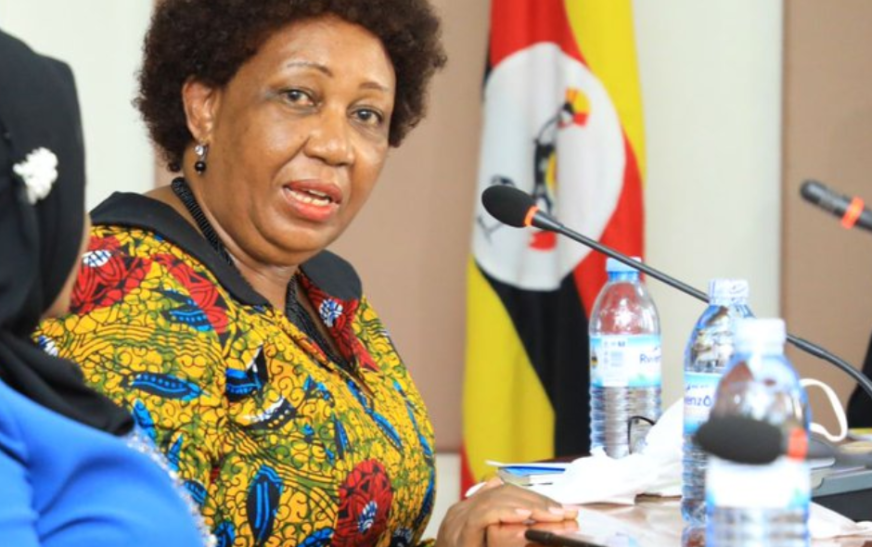

In every generation, societies are shaped by individuals who are willing to stand up for justice even when the path is difficult. Leadership in the field of human rights is particularly demanding, it requires courage to defend the vulnerable, resilience to endure criticism, and determination to pursue fairness in complex circumstances.
During this Women’s Month, it is fitting to reflect on leaders who embody these values. Among them is Mariam Wangadya, the Chairperson of the Uganda Human Rights Commission, whose stewardship continues to influence the country’s human rights landscape.
Human rights leadership is rarely comfortable. The responsibility involves speaking for those whose voices are often unheard and ensuring that institutions remain accountable to the people they serve. As Chairperson of the Commission, Wangadya oversees an institution established under the Constitution of Uganda with the mandate to promote and protect the rights and freedoms of all Ugandan’s.
Yet her role extends beyond administration. It is about stewardship of justice. Each complaint registered by the Commission, every investigation undertaken, and every tribunal hearing conducted represents the story of a citizen seeking fairness and dignity. Under Wangadya’s leadership, the Commission continues to serve as a platform where individuals can seek redress and hold institutions accountable for violations of fundamental rights.
Over the years, Wangadya has consistently used her voice to highlight pressing human rights concerns in Uganda. She has advocated for the protection of women and girls, members of minority communities, and citizens affected by abuse of authority. Her leadership has also been visible during national and international commemorations, including the United Nations International Day in Support of Victims of Torture, where she has spoken firmly against the persistence of torture and other forms of cruel treatment.

Her message has been clear: human rights violations do not occur only in state institutions. They can also happen in homes and communities. Acts such as severe beatings, humiliation, and exploitation erode the dignity of individuals and weaken the moral fabric of society. By highlighting these everyday injustices, Wangadya reminds citizens that protecting human dignity is not solely the responsibility of government agencies—it is a shared duty of the entire society.

Beyond advocacy, Wangadya has emphasized the need to nurture a culture of human rights across the country. She has repeatedly called for human rights education in schools, workplaces, and communities, arguing that respect for human dignity must become part of Uganda’s national identity. Her perspective reflects a broader understanding of human rights—not merely as legal obligations, but as values that guide how people treat one another in everyday life.
Her efforts have not gone unnoticed internationally. In 2025, the European Union delegation in Uganda recognized her work with a certificate of appreciation for her commitment to defending citizens’ rights and strengthening accountability within public institutions.
The recognition underscored her role in advancing conversations around freedom of expression, equality, and access to justice—principles that remain central to any democratic society.
Still, leadership in the human rights arena rarely comes without controversy. Navigating national debates around security, governance, and civil liberties can place human rights defenders in the center of intense scrutiny.
At various moments, Wangadya has faced criticism while guiding the Commission through complex national discussions. Yet she has consistently defended the institution’s constitutional mandate, even when confronted with public attacks or political pressure.
Such moments illustrate the delicate terrain of human rights leadership—balancing institutional independence, legal obligations, and the expectations of a diverse public.
Ultimately, the story of Mariam Wangadya is a reminder that leadership is defined not only by position but by purpose. It is about safeguarding the dignity of others and ensuring that justice remains accessible to all citizens.
For young women and girls across Uganda, her journey offers a powerful example: that women can lead national institutions, shape public policy, and influence the direction of justice in society.
As Women’s Month is commemorated, it is important to celebrate not only the achievements of women leaders but also the values they represent—courage, integrity, and service.
Wangadya’s leadership at the Uganda Human Rights Commission serves as a powerful reminder that the pursuit of human dignity requires persistence and conviction.
When women step forward to lead that struggle, they inspire societies to move closer to justice, equality, and hope for all.