









Health officials in Kabale District have raised concern over persistent new HIV infections among young women, even as the district registers strong progress in treatment and viral suppression.
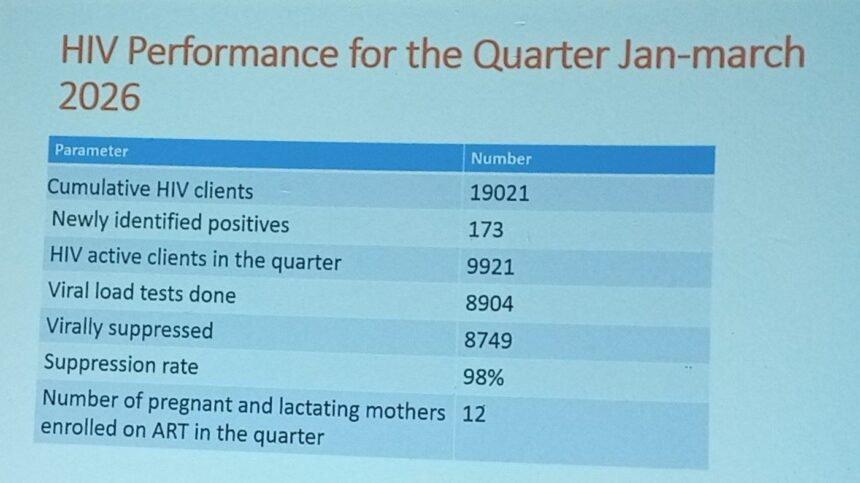
Between January and March 2026, the district recorded 173 new HIV cases, with the majority, 75 infections, occurring among females aged 20 to 39 years, a trend experts say points to a deeply vulnerable demographic.
The figures were presented during the quarterly HIV coordination committee meeting at the District Health Department boardroom.
District Health Educator Alfred Besigensi said 17,462 people were tested during the period, resulting in a 1 percent positivity rate. He noted that Kabale has a cumulative total of 19,021 people living with HIV, with 9,921 active clients currently in care.
Despite the new infections, the district has achieved a 98 percent viral load suppression rate among 8,749 clients on treatment, an indicator of effective adherence and service delivery.

However, District Health Officer Dr. Gilbert Arinaitwe Mateeka warned that the continued rise in new infections, particularly among young women, underscores gaps in prevention efforts.

He linked the trend to poverty-driven behaviours such as transactional and cross-generational sex, as well as the influence of high-risk groups including commercial sex workers, long-distance truck drivers, and other vulnerable populations.
Mateeka also cited alcohol and substance abuse, stigma, and untreated sexually transmitted infections as key factors fueling transmission.
Principal Assistant Secretary Gordon Manzi urged stakeholders to prioritize economic empowerment initiatives, especially for women at risk, to reduce dependence on risky survival strategies.
Assistant Resident District Commissioner Nelson Atwongyeire emphasized the need for open conversations on sexual health, calling on parents to take a more active role in educating their children.
He also proposed the use of creative platforms such as music and school competitions to spread HIV awareness among young people.