
The Ministry of Finance, Planning and Economic Development (MoFPED) has unveiled a new approach to integrating climate adaptation and resilience investments into Uganda’s sovereign debt sustainability analysis, a move aimed at strengthening the country’s economic stability and credit profile amid escalating climate-related risks.
The initiative seeks to demonstrate how investments in resilience can positively influence economic growth, fiscal outcomes and Uganda’s creditworthiness, while providing evidence to support broader reforms in global financial systems.
According to an interim report released by the ministry, the approach is intended to make the economic returns of resilience investments more visible in sovereign debt dynamics and credit ratings. Officials say a better understanding of these benefits could unlock critical financing for countries vulnerable to climate shocks, such as Uganda.
Climate-related risks are increasingly being factored into debt sustainability analyses and sovereign credit ratings globally, often leading to higher borrowing costs and reduced fiscal space for vulnerable economies.
In Uganda, sectors such as agriculture and agro-industrialisation, which are central to the government’s Tenfold Growth Strategy, remain highly exposed to climate change and environmental degradation, posing a threat to long-term economic growth.

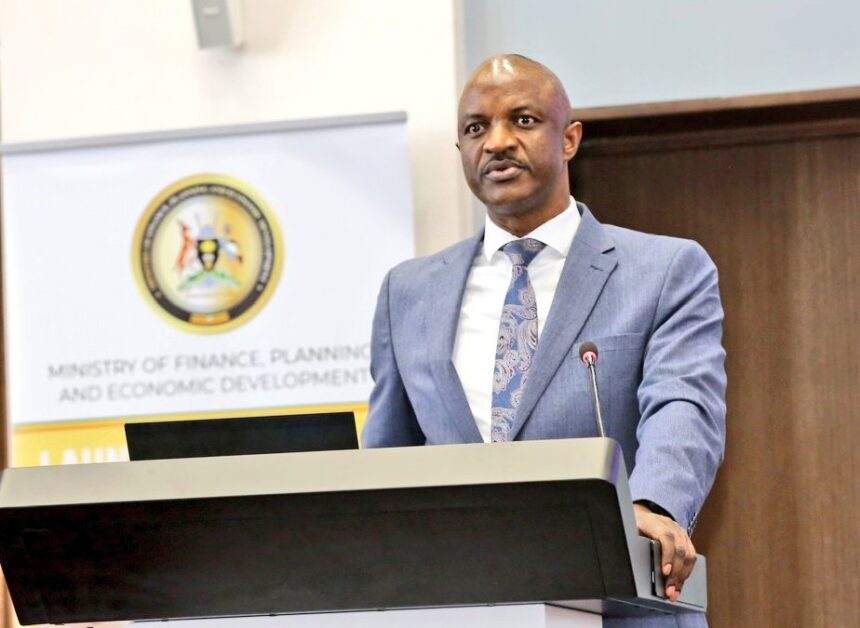
Speaking on the development, Permanent Secretary and Secretary to the Treasury (PSST), Dr. Ramathan Ggoobi, emphasized the need for Uganda to invest in climate adaptation and resilience measures to safeguard national development and maintain investor confidence.

“Uganda must invest in climate adaptation and resilience to safeguard its development and preserve its creditworthiness. These investments are essential for building long-term resilience against escalating climate, nature and terms-of-trade shocks,” Dr. Ggoobi said.
He noted that the international financial system still falls short in recognizing the long-term value of resilience investments, as sovereign risk assessments often focus only on the immediate fiscal costs without accounting for future economic gains.
“Sovereign risk assessments, which influence investment decisions, access to finance and the cost of capital, often capture only the upfront fiscal costs of these investments, without fully reflecting their long-term benefits,” he explained.
Dr. Ggoobi warned that this imbalance could lead to rising borrowing costs and shrinking fiscal space at a time when countries are making investments aimed at reducing future vulnerabilities.
“As a result, borrowing costs may rise and fiscal space may shrink precisely when countries are making investments that reduce future risks. This makes it harder for countries like Uganda to finance resilience on affordable terms,” he added.
Uganda, which currently serves as Co-Chair of the Coalition of Finance Ministers for Climate Action, has become the first country to pilot this approach, positioning itself as a global example of how adaptation and resilience investments can be incorporated into sovereign risk assessments.
“Our hope is that other countries will build on this work and join us in making the case for resilience investment. Together, we can help ensure relevant institutions recognise investment in resilience not just as a fiscal cost, but as an investment in sustainable growth, stability and development,” Dr. Ggoobi said.
The initiative is expected to strengthen Uganda’s case for affordable climate financing while enhancing its resilience against future climate and economic shocks.