
Government has suspended the ongoing Trade Order enforcement exercise that led to the forcible eviction of vendors from streets in several cities and municipalities, following growing complaints over violence and heavy-handed implementation.
However, the suspension does not allow already-evicted traders to return to the streets. Instead, it halts enforcement only in areas where the exercise had not yet been implemented, raising concerns that further displacement could still occur after ongoing consultations.
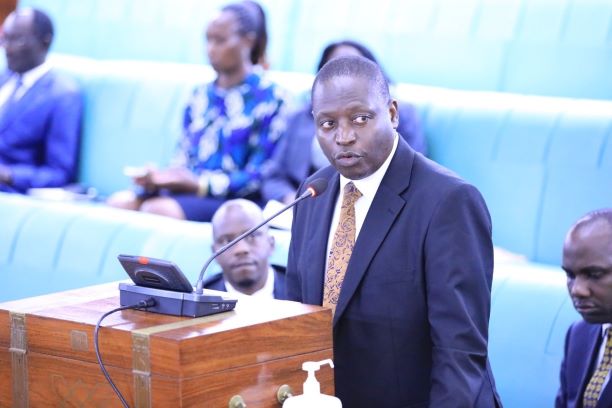
The Minister of State for Industry, David Bahati, announced the decision during the April 23, 2026 plenary sitting of Parliament in response to concerns raised by Bukooli Central MP Solomon Silwany over the plight of affected vendors.
“The Ugandans are outside, they are suffering, stuck, they do not know what to do,” Silwany said. “Authorities arrive abruptly, confiscate kiosks together with goods, and leave people in distress. What is the plan? What is the strategy?”
Bahati told Parliament that government had received numerous complaints, including from the Inter-Religious Council of Uganda, prompting a review of the directive.

“We have suspended the operation of the Trade Order until further consultations are undertaken,” he said. “We shall have a final meeting at the end of June, so that by early July, we can implement a refined and more acceptable approach.”

He acknowledged that the enforcement exercise had wrongly affected non-commercial entities, including places of worship, and issued an apology to religious leaders.
“A church or mosque should not be treated as a vending space,” Bahati said. “We regret the conduct of some enforcement personnel, including offensive remarks directed at religious groups.”
Kira Municipality MP Ibrahim Ssemujju Nganda criticised the operation, accusing government of deploying “goons” alongside security forces, and questioned the fate of livelihoods already disrupted.
“In my area, enforcement involved the military, police, technical officers, and also goons,” Ssemujju said. “The key question is: do people rebuild their businesses? Can government restore order with a human face?”
Erute South MP Jonathan Odur welcomed the suspension but faulted government for failing to consult stakeholders prior to implementation.
“This was a case of acting first and thinking later,” Odur said. “There was no consultation with key stakeholders. That is an indictment on how such operations are handled.”
Speaker of Parliament Anita Among also sought clarity on the implications of the suspension, particularly whether evicted vendors would be allowed to return to their former locations.
“Does suspension mean those removed will go back, or are we maintaining the status quo?” she asked. “Without clear communication, people may interpret this as a green light to return to the streets.”
Among urged government to intensify public sensitisation on the objectives of the Trade Order and ensure that local authorities are formally notified of the suspension.
She also cautioned against the use of force and irregular actors in enforcement.
“We are not opposed to order,” Among said. “But this must be done progressively and humanely. Vendors should be relocated to gazetted markets, and only those who refuse should be removed—and not through the use of goons.”
Clarifying the scope of the suspension, Bahati said enforcement would remain halted only in areas not yet covered, while maintaining the current status in places where evictions had already taken place.
“Those already relocated to markets will remain there,” he said. “We are continuing consultations to ensure a more effective and acceptable approach going forward.”