


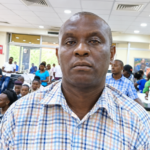





KAMPALA – The Minister of State for Trade, Industry, and Cooperatives, Hon. David Bahati has emphasized the ongoing commitment of the ministry to targeted initiatives aimed at supporting Small and Midsize Enterprises (SMEs) in the industrial sector throughout 2024.
Speaking at a press conference in Kampala on Thursday, Minister Bahati underscored the importance of SMEs, emphasizing their proximity to the people and their role in bringing manufacturing closer to the local communities.
He outlined the ministry’s plan to assess the current state of SMEs, identify production challenges, and devise tailored solutions to facilitate their expansion in the upcoming year.
Minister Bahati reflected on his deliberate efforts in 2023, in alignment with President Museveni’s guidance, to visit various factories and engage with industry leaders to better understand their operations and address their concerns. Expressing the informative nature of these visits, he announced the continuation of this nationwide program in 2024.
Providing insight into the performance of the manufacturing sector, Bahati revealed a growth of 3.9% in the 2022/23 fiscal year, up from 2.2% in 2021/22. This growth generated direct employment for over 2 million individuals and contributed significantly to tax revenue, accounting for 24% of the total collections, equivalent to 5.97 trillion Ugandan Shillings.

Minister Bahati highlighted the government’s commitment to industrial financing by capitalizing the Uganda Development Bank with 1.5 trillion UGX. giving assurance to Manufacturing investors of access to funding at an interest rate not exceeding 12%.

Minister Bahati added “Funding opportunities for Micro Small Enterprises have been made available through the Microfinance Support Center (890 million UGX), the Emyoga program (480 million UGX), and PDM-supported SACCOs (2.2 trillion UGX)”.
Ensuring sustainable electricity supply, Minister Bahati emphasized the government’s efforts in creating a favorable regulatory environment and providing incentives for diversifying the country’s power generation mix.
Uganda’s power generation currently comprises Hydro (1,123.59 MW), Thermal (100 MW), Cogeneration from bagasse (63.9 MW), and Grid-connected Solar (60 MW), totaling 1,347.49 MW.
Statistics from the Uganda Bureau of Statistics (UBOS) indicate that the industrial sector contributed 27.4% to the GDP in 2022. Specific contributions came from mining and quarrying (1.1%), manufacturing (16.5%), electricity (1.4%), water (2.3%), and construction (6.5%).