








Summary:
Alicia van den Boom of the German Embassy emphasized Germany’s long-standing commitment to environmental sustainability in East Africa.
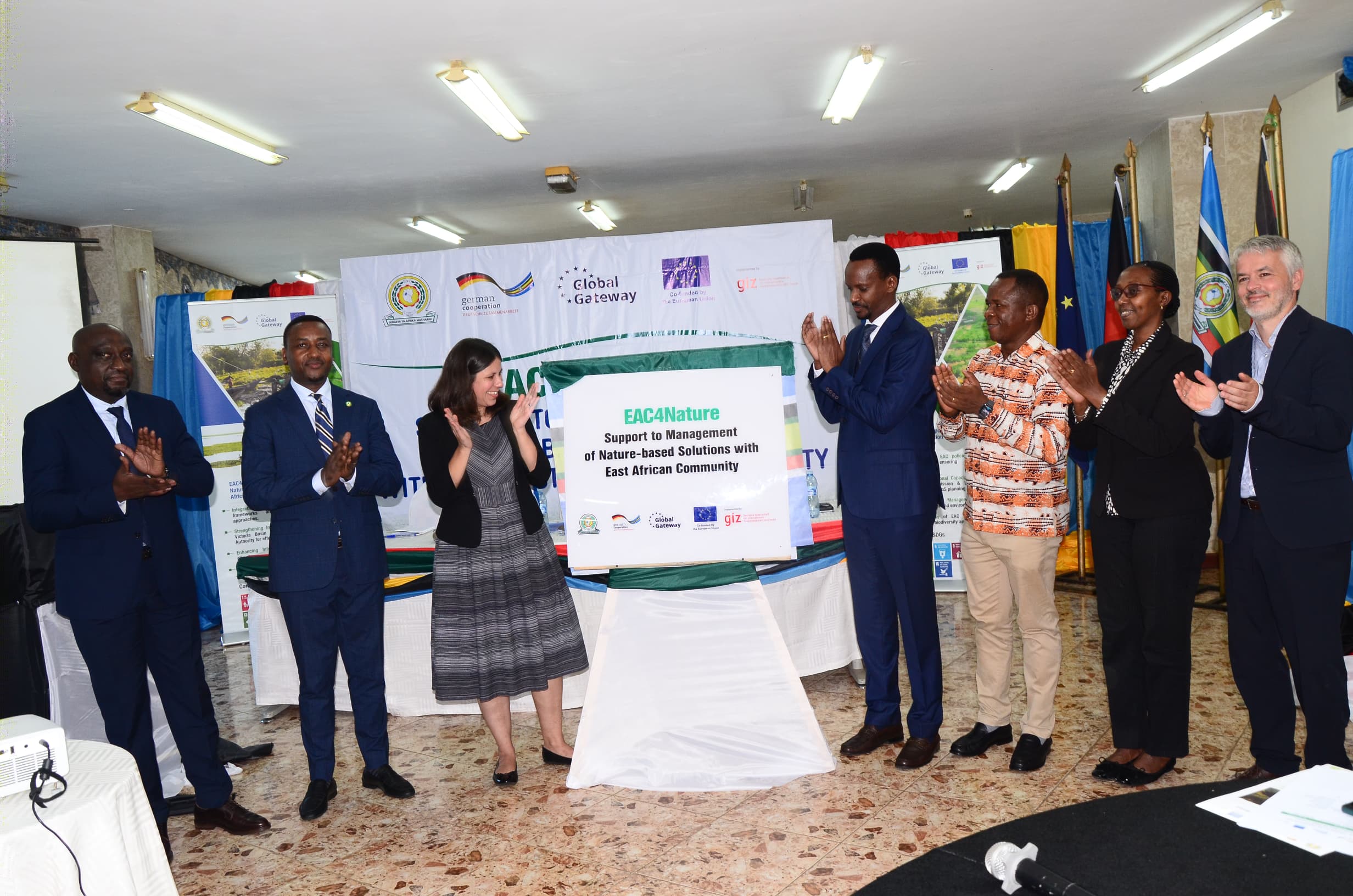
KAMPALA: The East African Community (EAC) has officially launched the EAC for Nature project, a transformative initiative aimed at tackling climate change and promoting sustainable development across the region.
The launch event, held on Monday, brought together key stakeholders, including the Deputy Executive Secretary of the Lake Victoria Basin Commission (LVBC) and Alicia van den Boom, Head of Operations at the German Embassy in Kampala.

Strengthening Regional Climate Action
Backed by the German government through GIZ, the initiative seeks to enhance regional cooperation in addressing pressing environmental challenges.

The project focuses on strengthening climate resilience and supporting sustainable livelihoods through nature-based solutions, particularly in the Lake Victoria and Lake Tanganyika basins.
Speaking at the launch, a representative of Dr. Masinde K. Bwire, Executive Secretary of the LVBC, reaffirmed the region’s commitment to climate action.
He highlighted key achievements, including, the drafting of the State of the Basin Report, assessing the health of Lake Victoria’s ecosystem, mid-term review of the LVBC’s Strategic Plan (2021–2026) and Securing funding from partners such as the World Bank to support sustainable development initiatives across East Africa.
Alicia van den Boom of the German Embassy emphasized Germany’s long-standing commitment to environmental sustainability in East Africa.
She highlighted that the new initiative builds on previous efforts to implement nature-based solutions that align with the region’s ecosystems.
“Germany is proud to partner with the EAC in advancing these solutions, which promise long-term benefits not only for conservation but also for the economic stability of the region,” she stated.
She also underscored the urgency of climate action, pointing to unprecedented heat waves, erratic rainfall, and severe flooding in Lake Victoria, which continue to threaten livelihoods.
The EAC for Nature project, she explained, will enhance water resource management, protect communities from climate-related disasters, and ensure sustainable incomes.
The project is set to strengthen the role of regional commissions in tackling climate-related challenges, particularly in agriculture, water resources, and energy. The involvement of key partners, including the World Bank and the European Union, further enhances its potential impact.
Beyond environmental conservation, the initiative is expected to improve the livelihoods of millions by promoting sustainable land-use practices and ecosystem conservation.
As part of the launch, discussions also focused on the upcoming COP29 Conference, where the EAC plans to present a unified regional stance on climate action.
The launch of EAC for Nature marks a significant milestone in the region’s climate action efforts. Stakeholders expressed optimism about future collaborations and the tangible impact of this ambitious initiative, which aims to build a more climate-resilient and sustainable future for East Africa.