
Summary:
Minister Baryomunsi reiterated that if necessary, the government would halt infrastructure projects, such as road construction, or reduce salaries of government employees to fill the funding gap.
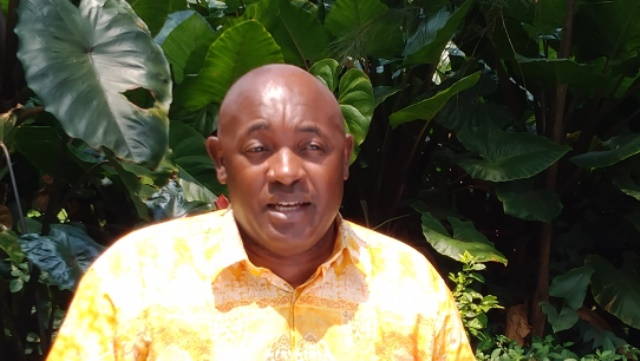
KABALE: The Minister of ICT and National Guidance, Dr. Chris Baryomunsi, has assured Ugandans that the government is prepared to fully support HIV treatment programs, even if all donors withdraw their funding.
His statement follows an executive order issued by U.S. President Donald Trump, which has suspended USAID operations in several countries, including Uganda.

Dr. Baryomunsi emphasized that the government would reorganize the national budget to ensure the continuation of HIV/AIDS treatment.

“Even if donors cut funding for HIV/AIDS treatment, the government will not allow these programs to collapse. We will prioritize the health of our citizens above all else,” he said.
He reiterated that if necessary, the government would halt infrastructure projects, such as road construction, or reduce salaries of government employees to fill the funding gap.
“We will not turn a deaf ear and let over one million Ugandans on antiretroviral (ARV) treatment suffer because donors have withdrawn support,” Dr. Baryomunsi stated.
He further assured that President Trump’s executive order suspending USAID operations would not affect the availability of HIV drugs and treatment for those living with HIV/AIDS.
CUE IN MINISTER BARYOMUNSI…….ON FUNDING…….ENG//
Meanwhile, the Ministry of Health has confirmed that approximately 1,000 individuals have lost their jobs due to the funding freeze triggered by President Trump’s executive order. Despite this, Dr. Diana Atwine, the Ministry’s Permanent Secretary, noted that the Ministry has already assessed the human resource gaps and estimated the necessary funding to address them.
“This assessment will be part of a memo that the Minister of Health, Dr. Jane Ruth Aceng, will present to the Cabinet,” Dr. Atwine revealed.
She added that organizations affected by the funding suspension are actively managing the situation. “Those who qualify will be given priority for future opportunities,” she said.
The U.S. government had been contributing approximately $300 million annually through PEPFAR for antiretroviral medicines, laboratory supplies, and human resources. In comparison, the Ugandan government allocates around Shs50 billion for procuring ARVs.
“PEPFAR was responsible for supplying ARVs to private sector facilities, including mission hospitals, while the Ugandan government focused on public healthcare facilities. About 40 percent of our patients—roughly 400,000 people—receive their medicines from private healthcare providers. This is why ensuring continuity of care for those previously supported by PEPFAR is critical,” Dr. Atwine explained.