
Summary:
On Friday, High Court Justice Musa Ssekaana ordered the immediate arrest and imprisonment of Isaac Ssemakadde for two years.
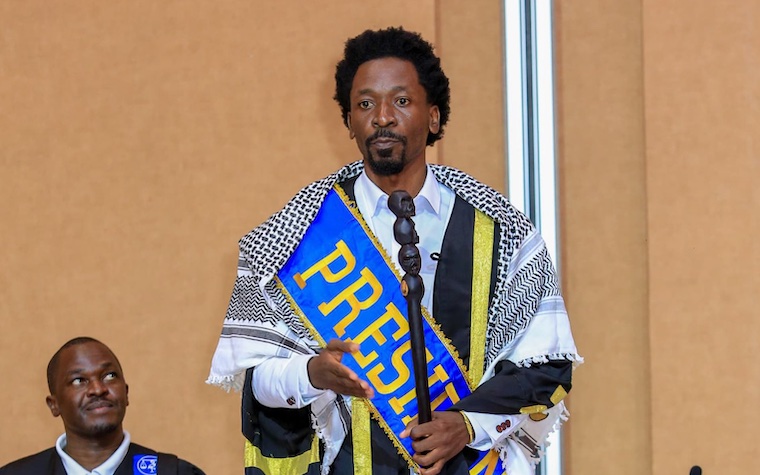
KAMPALA: The sentencing of Isaac Ssemakadde, President of the Uganda Law Society, to two years in prison for contempt of court has raised profound constitutional and procedural concerns.
This case originated from an application by Hashim Mugisha, who alleged that Ssemakadde made derogatory remarks about Judge Musa Ssekaana on his X (formerly Twitter) handle. Astonishingly, the same judge presided over the contempt proceedings and delivered the ruling, raising serious questions about judicial impartiality.

The Right to a Fair Hearing

Denis Kusaasira, a senior partner at ABMAK Associates, points to Article 28(1) of the Ugandan Constitution, which guarantees every individual the right to a fair, speedy, and public hearing before an independent and impartial tribunal. This right is absolute and further reinforced by Article 44(c), which deems it non-negotiable.
The Constitution (Recusal of Judicial Officers) (Practice) Directions, 2019, were introduced to operationalize these constitutional guarantees. These guidelines emphasize the importance of judicial impartiality, requiring judges to recuse themselves in cases where their impartiality may reasonably be questioned, even in the absence of actual bias.
Violation of Judicial Impartiality
Rule 6(1) of the 2019 Directions clearly states that a judge must refrain from participating in proceedings where their impartiality may reasonably be doubted. This standard is based on the perception of a reasonable observer, aiming to preserve public confidence in the judiciary.
In this case, the alleged contempt stemmed from remarks directed at the presiding judge himself. When a judge becomes the subject of a controversy in their own court, it is difficult, if not impossible, to maintain the appearance of impartiality, regardless of their personal intentions or conduct.
The issue at hand is not whether Judge Ssekaana acted with actual bias, but whether his continued involvement in the case created a reasonable apprehension of bias. The principle that justice must not only be done but must also be seen to be done is central to the legitimacy of judicial decisions.
Violation of Natural Justice
The fundamental principle of nemo judex in causa sua (no one should be a judge in their own cause) was violated in this instance. This principle prohibits a judge from presiding over a case in which they have a personal interest or are directly implicated.
By handling a case in which he was the subject of the alleged contempt, Judge Ssekaana undermined the constitutional guarantee of a fair hearing under Article 28(1). Given that this right is non-negotiable under Article 44(c), no exceptions or compromises should have been made.
The Erosion of Public Trust
Beyond the individual case, this situation raises broader concerns about public trust in the judiciary. Judicial impartiality is not just a legal requirement; it is a cornerstone of public confidence in the justice system. When impartiality is called into question, it casts doubt on both the fairness of the process and the legitimacy of the outcome.
A more appropriate course of action would have been for Judge Ssekaana to recuse himself and allow another judge to handle the matter. Such an approach would have demonstrated a commitment to fairness, preserved the integrity of the proceedings, and reinforced public trust in the judiciary.
Upholding Judicial Integrity
The judiciary must take deliberate steps to reinforce constitutional principles and the 2019 Directions. This includes fostering a culture where judicial recusal is seen not as a weakness but as a strength—a demonstration of the judiciary’s commitment to fairness and the rule of law.
The right to a fair hearing is the foundation of justice. It is not merely a procedural formality but a substantive guarantee that protects the integrity of the judicial process. Upholding this right is essential to preserving the rule of law and maintaining public confidence in the judiciary.
The Sentence and Its Implications
On Friday, High Court Justice Musa Ssekaana ordered the immediate arrest and imprisonment of Isaac Ssemakadde for two years.
Justice Ssekaana emphasized the importance of maintaining the dignity of the judiciary, arguing that Ssemakadde’s position as an experienced lawyer and President of the Uganda Law Society demands a higher level of responsibility.
The two-year custodial sentence is intended to send a strong message to those who might consider undermining judicial authority.
However, the circumstances surrounding this ruling raise critical concerns about the fairness of the judicial process and the necessity of safeguarding constitutional rights in all legal proceedings.