
Summary:
- Resty Balinda, the Secretary for Gender in Kabarole District, emphasized that safeguarding land rights, especially for women, remains a significant challenge due to the region’s rapidly growing population, traditional norms, and delays in the justice system.
KABAROLE: Kabarole District leaders and land experts have expressed concerns that insecure land tenure systems across most parts of the district could hinder communities from adopting climate adaptation measures and modern agricultural practices, such as irrigation.
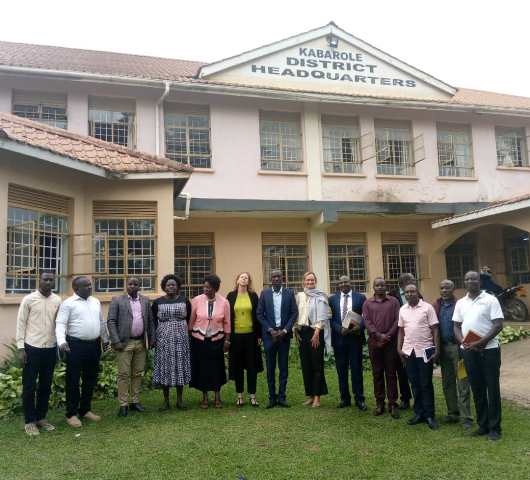
These concerns were highlighted during a stakeholders’ meeting on land governance held at the Kabarole District headquarters in Kitumba on Wednesday.
Resty Balinda, the Secretary for Gender in Kabarole District, emphasized that safeguarding land rights, especially for women, remains a significant challenge due to the region’s rapidly growing population, traditional norms, and delays in the justice system.

Stephen Rubaihayo, the Chief Administrative Officer (CAO) of Kabarole, noted that the intersection of land governance and climate change adaptation is a pressing challenge that requires urgent attention and collective action.

To address these issues, Heleen Saaf, the Country Director of Cordaid Uganda, announced the launch of the Agricultural Governance Results Improvement Project (A-GRIP). The project aims to explore land management solutions in Kabarole District.
Eng. Ronnie Bashabe, the Senior Expert in Results-Based Financing at Cordaid, added that the project will support communities by issuing Customary Certificates of Land Ownership to help smallholder farmers make better use of their land.