
KABALE – The Kabale District LC5 Chairperson, Nelson Nshangabasheija has emphasized the district’s commitment to prioritizing infrastructure development, human capital enhancement in education and health, water and sanitation, and agro-industrialization in the upcoming fiscal year 2024/25.
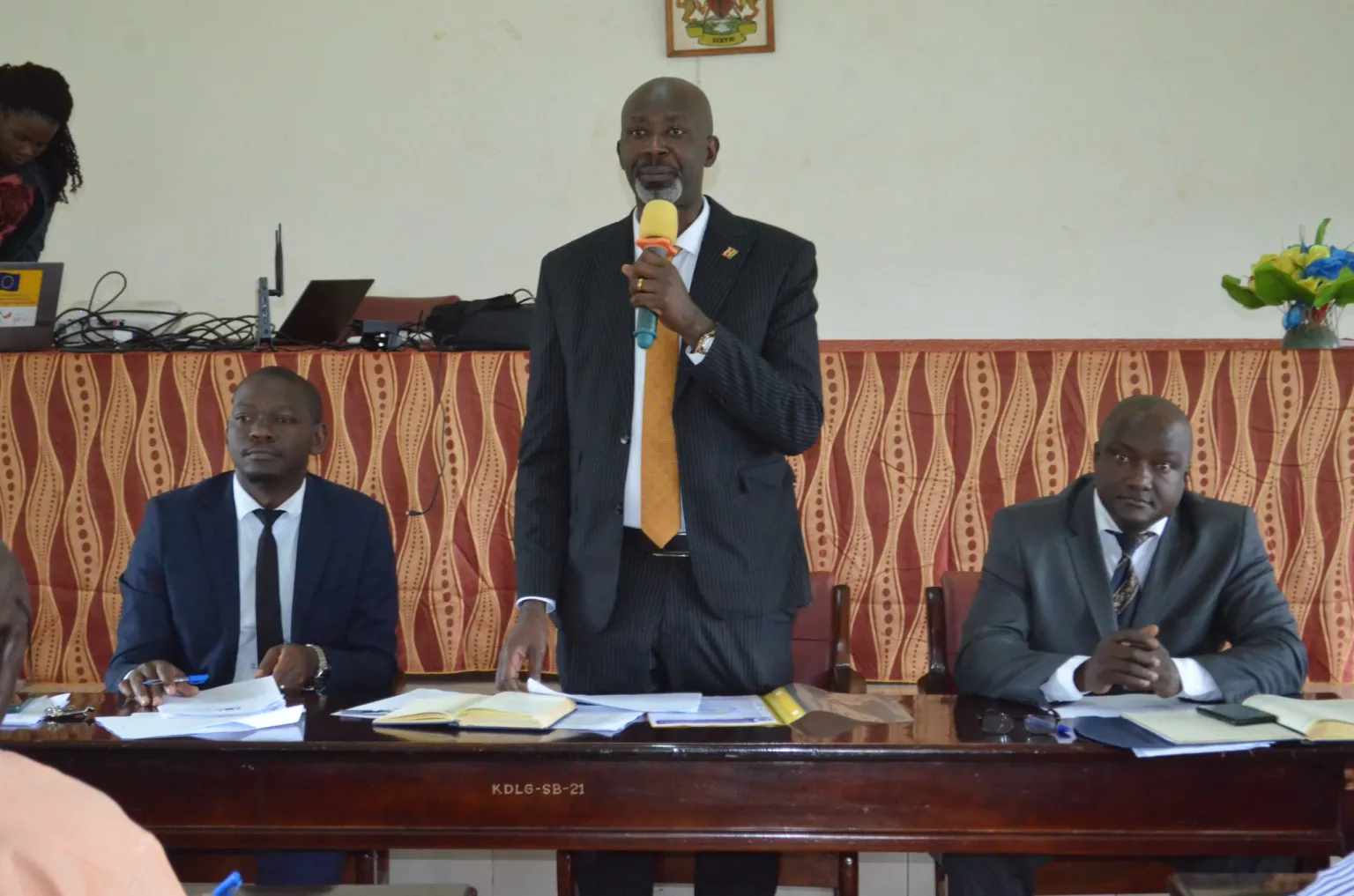
Nshangabasheija conveyed this message yesterday during the district’s budget consultative meeting for the financial year 2024/25 held at Rukiiko hall at kabale District headquarters in Kabale Municipality. The meeting revolved around the theme “Full Monetization of Uganda’s Economy through Commercial Agriculture, Industrialization, Expanding and Broadening Services, Digital Transformation, and Market Access.”
Highlighting the agriculture sector, he underscored a focus on commodities directly contributing to household food security and export revenue.
Adhering to the guidance of the Local Government Act, Cap 243 (Section 35 (1)), Nshangabasheija emphasized the significance of the conference in the planning and budgeting process. Stakeholders shared key investment priorities and interventions, shaping the district work-plan and budget for the financial year 2024/2025.
Nshangabasheija urged all stakeholders to foster a collaborative working relationship, emphasizing the importance of improved and sustainable service delivery to the people of Kabale District.

In the same budget meeting, Fred Kalyesubula, the Kabale District Chief Administrative Officer, outlined key policy issues in the first budget call circular for the 2024/2025 fiscal year. These included the Intergovernmental Fiscal Transfers Program for Results (UGIFT), staff recruitment, Local Government Performance Assessment for 2023, and the automation of local revenue processes through the Integrated Revenue Administration System (IRAS).

Kalyesubula also mentioned the district’s consideration of creating new administrative units in the fiscal year 2024/25. He disclosed that the preliminary resource envelope for the fiscal year amounted to 40,950,706,359 shillings. This figure included 38,831,837,359 shillings as central government transfers, 862,557,000 shillings in locally raised revenues, and 1,004,589,000 shillings in external funding.