
Residents in Katakwi District have attributed poor service delivery in key sectors such as education, health, and road infrastructure to the misuse of public funds by civil servants.
As the fight against corruption intensifies, the Inspectorate of Government (IG) has introduced new strategies aimed at combating the vice.
Mary Amangoro, a resident of Katakwi, said several issues require urgent attention from the Inspector General of Government, particularly regarding the distribution and management of government funds meant to improve community services.
“We are concerned that the Parish Development Model funds have not yet reached the community. Many people are uncertain whether they will ever receive the money,” Amangoro said.
She added that residents were initially instructed to open bank accounts with Opportunity Bank to receive the funds, but were later directed to switch to the WENDI digital payment platform, a change that has further delayed the disbursement of the funds.

Patrick Okiror, a resident of Getom Sub-county, also raised concerns about the high cost of obtaining police bonds. He reported the issue to the Inspectorate of Government but said he has not yet received assistance.

“We pay between Shs150,000 and Shs200,000 for a police bond, depending on where the arrest takes place. Many people cannot afford such amounts to secure their freedom,” Okiror said.
Jessica Alungat, a resident of Ajeluk Cell in Katakwi Town Council, highlighted the high cost of accessing clean water and the persistent flooding that has affected many residents in the area.
She urged officials from the Inspectorate of Government to extend civic education programmes to village levels to increase public awareness about corruption and how it can be reported.
Residents also noted that weak coordination between citizens and local leaders has negatively affected service delivery in the district.
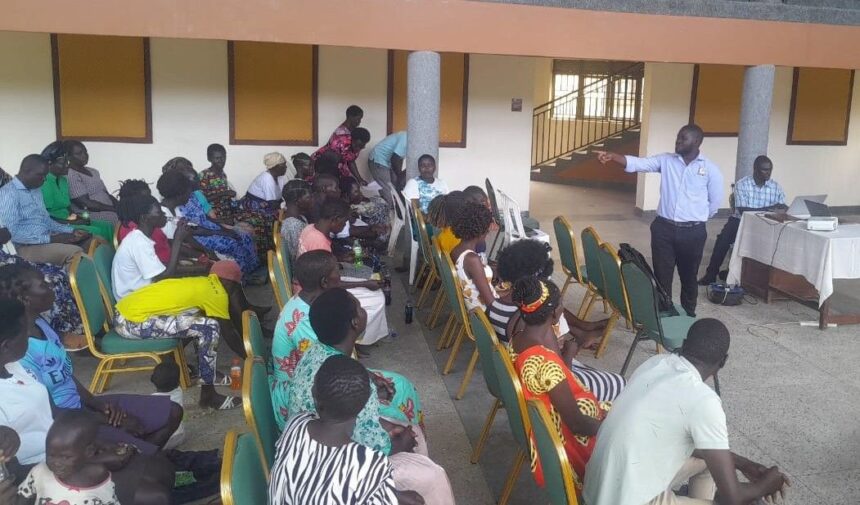
The concerns were raised during an open baraza organized by the Inspectorate of Government at Katakwi District headquarters on Tuesday.
Joseph Blessing Muramuzi, an officer from the Inspectorate of Government and one of the facilitators, outlined key approaches used in combating corruption. These include promoting public awareness about constitutional values and the work of the Inspectorate, advocacy and policy influence, civic education, and monitoring government oversight systems.
Muramuzi revealed that the current progress in fighting corruption in Uganda stands at about 25 percent, which he described as relatively low.
He explained that Articles 225(1)(b) and 230(2) of the Constitution empower the Inspectorate of Government to investigate, arrest suspects, and recover misused government funds. Articles 225(1)(d) and 234 further mandate the enforcement of the Leadership Code of Conduct in public service.
Meanwhile, the Regional Head of the Inspectorate of Government, Stephen Ouma, said the Soroti regional office is currently handling about 200 backlog cases related to corruption, bribery, and other misconduct.
Ouma emphasized that citizens are often the primary victims of corruption and urged them to report any wrongdoing to the relevant authorities.
Christine Lamwaka, the Manager for Advocacy and Capacity Building at the Inspectorate of Government, said the meeting was organized following numerous complaints from whistleblowers.
“The complaints mainly involve poor service delivery, maladministration, incompetent contractors, and corruption in recruitment processes,” Lamwaka said.
She added that similar engagements are being conducted across the Eastern Region to educate communities on how to identify, report, and follow up corruption cases.
According to the 2024 Corruption Perceptions Index, Uganda scored 27 percent, lagging behind regional peers such as Rwanda and Botswana, which both scored 57 percent.
Despite the challenges, the Inspectorate of Government reported notable progress in 2024. Between January and December, the Inspectorate investigated and concluded 2,218 corruption cases.
Administrative sanctions, including interdictions and dismissals, were taken against 1,204 public officers across ministries, departments, agencies, and local governments.
In addition, 16 public officers were recommended for prosecution before the Anti-Corruption Division of the High Court, while 37 were referred to the Leadership Code Tribunal for ethical violations.
The Inspectorate also registered a 94.7 percent conviction rate in cases handled by both the Anti-Corruption Court and the Leadership Code Tribunal.
Lamwaka encouraged the public to report corruption through the Inspectorate’s toll-free line 0800 111 777 or via WhatsApp on 0707 721146.
The Inspectorate of Government’s Soroti regional office oversees 11 districts and urban centers including Katakwi, Kapelebyong, Amuria, Soroti, Kaberamaido, Kalaki, Soroti City, Kumi, Ngora, Serere, Kumi Municipality, and Bukedea.