
Summary:
- Farmers, who previously harvested honey twice a year, are now limited to just one harvest annually. This reduction has made it increasingly difficult for local beekeepers to meet the growing market demand for honey.
KABALE: The Senior Entomologist for Kabale District, Honest Tumuheirwe, has raised concerns about the negative impact of unpredictable rainy seasons on the district’s apiary farming, which has led to a significant decline in honey production.
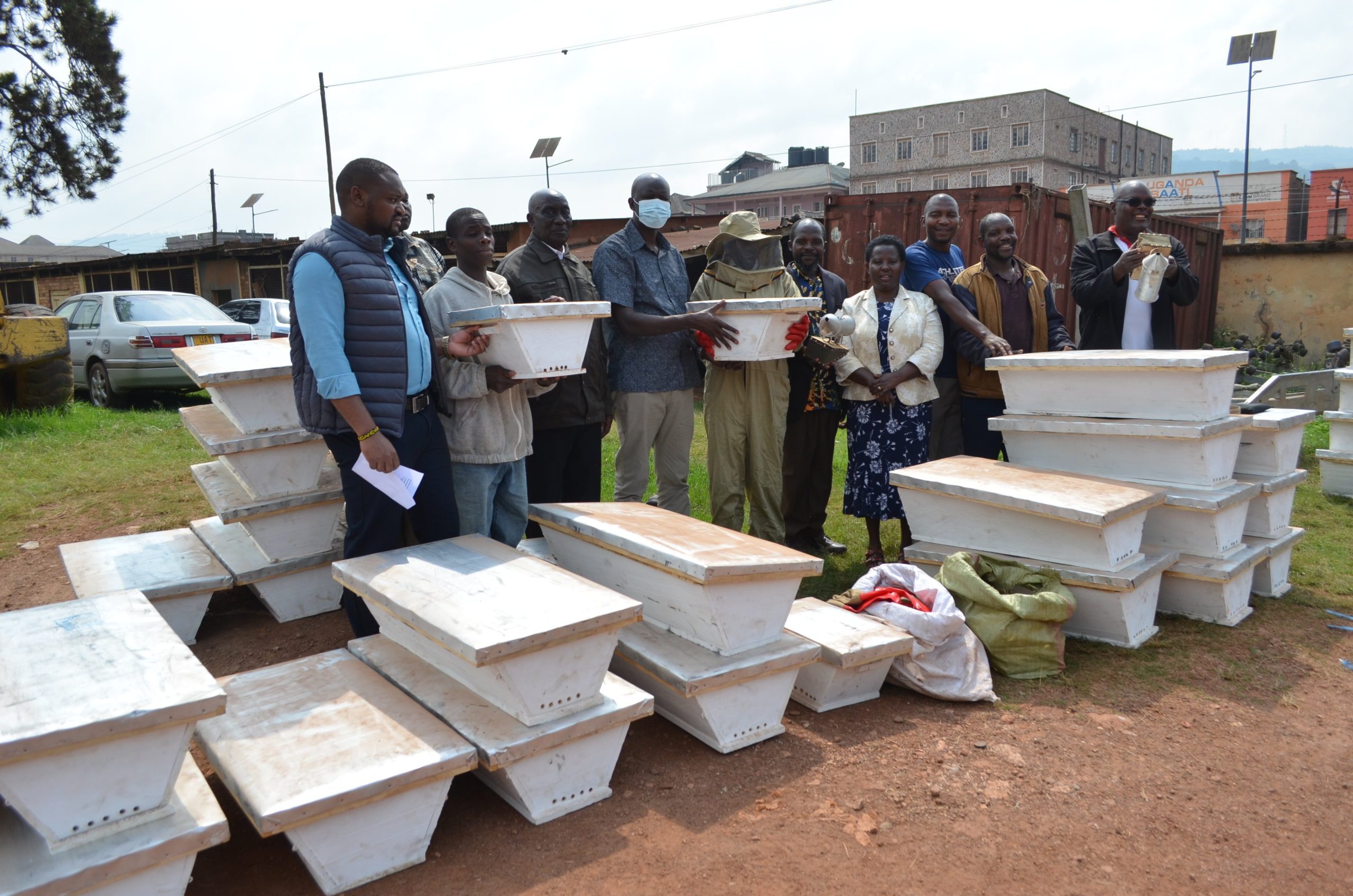
Tumuheirwe made these remarks on Friday during a handover ceremony at the Kabale District Yard in Kabale Municipality, where she presented apiary equipment to a group of selected farmers. The equipment, valued at 6 million shillings, included 45 Kenya Top Bar beehives, 5 overalls, 6 smokers, 5 pairs of gloves, and catcher boxes.
She explained that erratic weather patterns have disrupted the traditional beekeeping cycles. Farmers, who previously harvested honey twice a year, are now limited to just one harvest annually. This reduction has made it increasingly difficult for local beekeepers to meet the growing market demand for honey.

Kabale District is home to approximately 6,000 beekeepers, who collectively produce an estimated 2.5 million tons of honey each year. However, this figure is now under threat due to the shifting climate.

Speaking at the same event, Kabale District LC5 Chairperson Nelson Nshangabasheija commended the government for supporting the beekeeping sector.
He emphasized that beekeeping is an environmentally friendly practice, well-suited to the district’s rugged terrain, and urged residents to embrace it as a viable source of income.
Nshangabasheija also highlighted the growing market for bee products and encouraged locals to take advantage of this opportunity.
He pointed to the establishment of industrial hubs by President Yoweri Kaguta Museveni in the Kigezi region, which are designed to equip residents with essential technical skills.
Expressing concern over the importation of beehives from Kenya, Nshangabasheija questioned why local production could not meet the demand.
He urged the beneficiaries of the donated equipment to utilize it effectively to boost their household incomes and reduce reliance on imports.