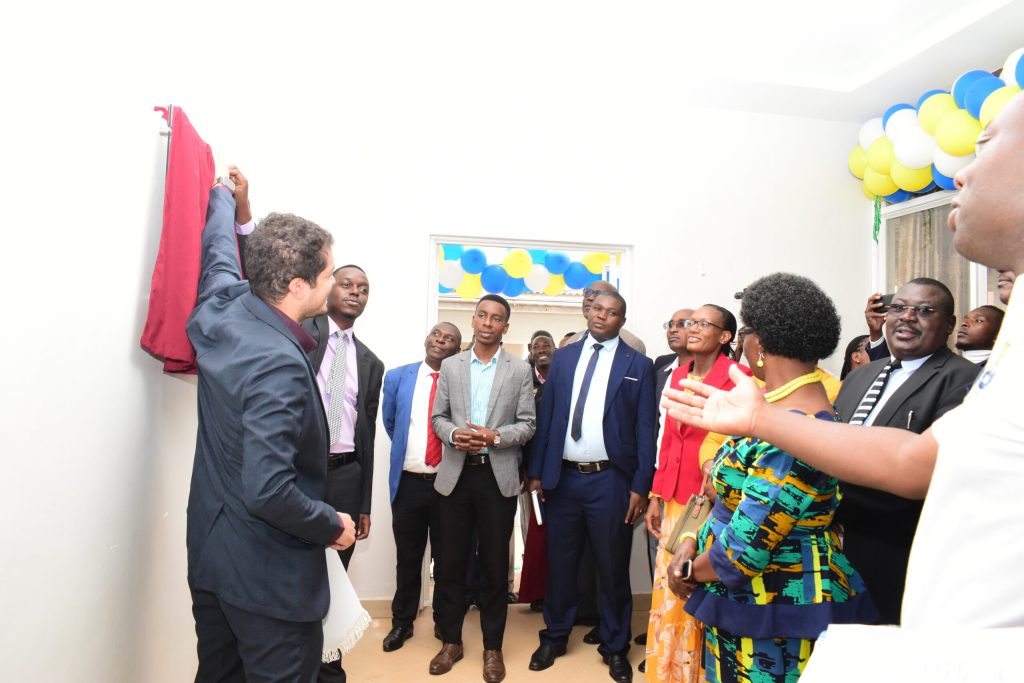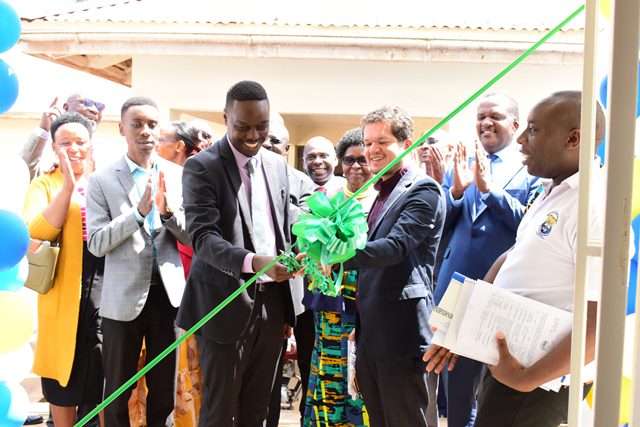

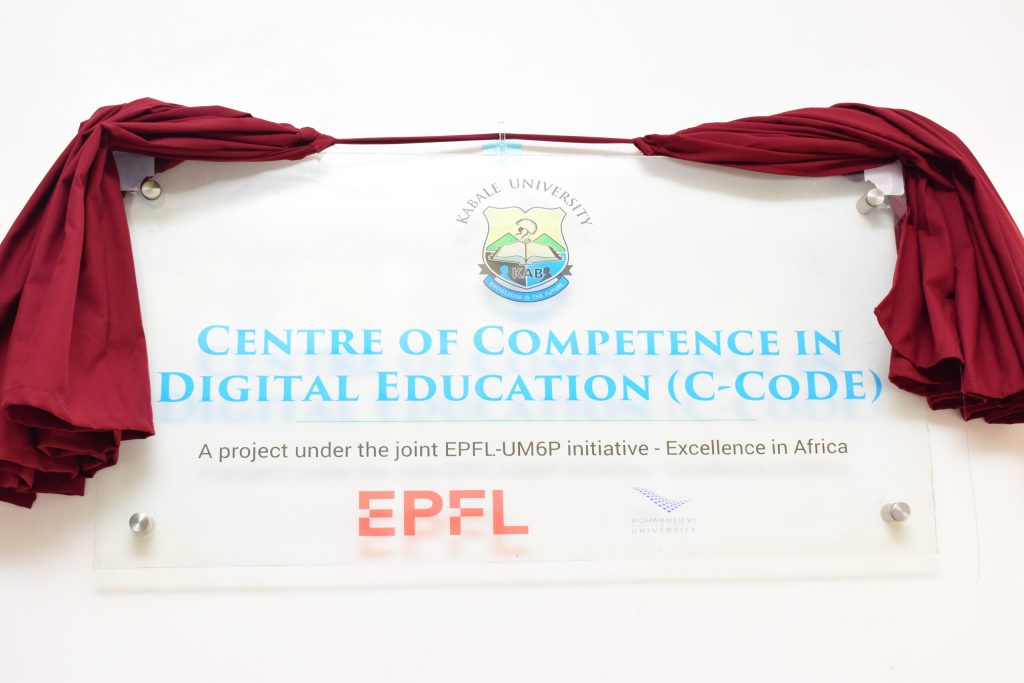
KABALE – Kabale University, situated in Southwestern Uganda, Kabale District on Wednesday inaugurated the “Centre of Competence in Digital Education (C-CoDE)” , a significant project valued at 40,000 Swiss Francs, equivalent to UGX 175.626 Million, aimed at bolstering digital learning and education in the region.
This initiative marks Kabale University as one of the six universities in Africa to forge a partnership with Switzerland-based Ecole Polytechnique Fédérale de Lausanne (EPFL) and Morocco-based Université Mohammed VI Polytechnique, with the shared objective of enhancing digital learning and education across the continent.
Dubbed the “Centre of Competence in Digital Education (C-CoDE),” the project was formalized through a memorandum of understanding signed by the involved parties on May 18, 2021. Despite 44 universities in Africa vying for this partnership, only six, including Kabale University succeeded.
The other beneficiaries of this collaboration are Nelson Mandela African Institution of Science and Technology from Arusha, Tanzania; Moi University from Kenya; University of Abuja in Nigeria; Ecole Supérieure Multinationale des Télécommunications from Dakar, Senegal; and Université Nangui Abrogoua from Abidjan, Ivory Coast.
Under the ambit of the “Centre of Competence in Digital Education” project, EPFL has set up an E-learning laboratory at Kabale University, complete with a multimedia studio and state-of-the-art Information Technology (IT) equipment. EPFL has also facilitated capacity building by training the University’s Information Technology staff in online pedagogical engineering skills, Digital Studio production, Open edX, and online course delivery techniques for professors.


Andres Gomez, an E-learning Specialist from Switzerland, expressed confidence during the project launch, anticipating its successful realization. Robert Tumusiime, senior E-learning Officer at Kabale University, emphasized the lab’s potential to streamline education for students, working professionals seeking further education, and university staff members involved in teaching.
CUE IN TUMUSIIME….ON THE PROJECT…..RR/ENG//
In their remarks, Professor Joy Constance Kwesiga, Vice Chancellor of Kabale University, and Dr. Nicholas Thaddeus Kamara, Kabale Municipality MP, highlighted the project’s benefits for learners, particularly primary school teachers mandated by the government to progress to higher grade levels despite limited salaries. They also underscored how the initiative would empower lecturers to disseminate recorded notes and explanations to students for improved comprehension, particularly in light of disruptions caused by the Covid-19 pandemic.
CUE IN PROF KWESIGA AND KAMARA…ON THE PROJECT…….RR,ENG//
Brian Masiga, CEO of Renu Mesh, representing Nicholas Mbonimpa, CEO of Research and Education Network for Uganda, as the chief guest, noted the remarkable enhancement in the university’s connectivity since partnering with Renu. Masiga expressed confidence that the project would narrow the digital divide in education and disclosed ongoing efforts to extend connectivity to students and staff off-campus.
CUE IN MASIGA….ON THE PROJECT…..ENG//