




Parliament will review the tax regime affecting private educational institutions to address concerns over multiple levies and the high cost of operating schools, Speaker Jacob Marksons Oboth has said.
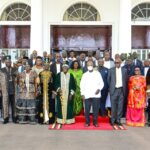
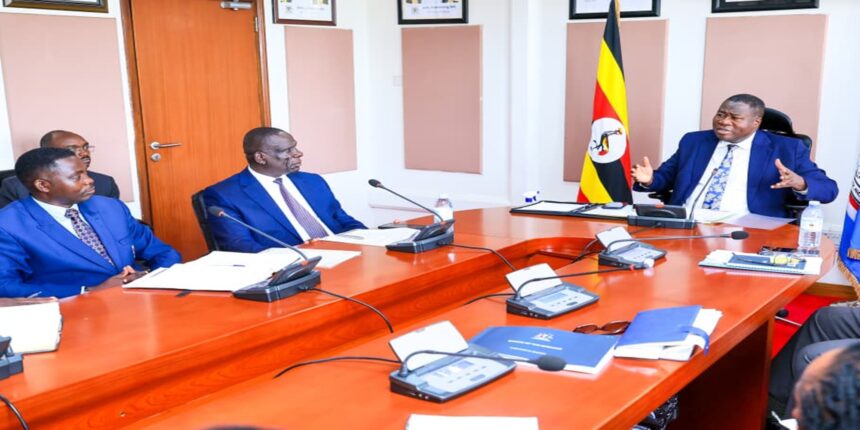
Oboth made the commitment while meeting a delegation from the National Private Educational Institutions Association–Uganda (NPEIA) on Wednesday, November 4, 2026.
The delegation, led by Igara East Member of Parliament Michael Mawanda, comprised association executive members, including its national chairperson, Hasadu Kirabira.
Oboth said private schools provide an essential public service and should not be treated purely as commercial ventures.
“You are not asking for money but you are asking for a conducive taxation regime. We could be private schools, but we are offering a public education service, which is one of the core components of human resource development in this country,” he said.

He said the concerns raised by the proprietors would be considered during forthcoming parliamentary and policy deliberations, adding that private education providers were seeking a predictable and supportive operating environment rather than financial handouts.

The Speaker also backed the association’s proposal for a single, streamlined tax system to eliminate overlapping levies imposed by central and local governments.
He directed NPEIA leaders to submit a detailed breakdown of the areas where private educational institutions face multiple taxation to enable Parliament to address the matter through its relevant structures.
While emphasising that regulatory oversight, including five-year operating licences, remains necessary to maintain education standards, Oboth said tax obligations should be fair and predictable.
He commended private school proprietors for expanding access to education and transforming lives despite the challenges facing the sector.
“I don’t want to imagine Uganda without private schools in education service delivery,” he said.
Presenting figures on the contribution of private institutions, Kirabira said the sector operates all pre-primary schools and more than 35,000 institutions serving approximately 2.16 million children.
He said private providers account for 73 per cent of primary schools, with an enrolment of 3.96 million pupils, and 75 per cent of secondary schools, serving more than 1.1 million students. The sector also includes 17 private universities.
Kirabira said the figures demonstrate that private education is a major pillar of Uganda’s education system and labour market, making the sector’s financial sustainability a matter of public interest.
He cited uncoordinated taxes and levies imposed by central and local governments, limited access to affordable long-term financing from the Uganda Development Bank (UDB), and high taxes on computers, laboratory equipment and chemicals as some of the challenges affecting school operations.
He added that the shortage of qualified teachers, compounded by difficulties in implementing the 2019 teacher policy, was putting further pressure on private institutions.
The association asked Parliament to champion four key reforms, including a harmonised Special Education Tax regime that recognises schools as social service providers rather than ordinary commercial entities.
It also proposed tax exemptions on educational inputs and relief for institutions with an operational surplus below Shs100 million.
Other proposals include establishing a ring-fenced, affordable credit facility through UDB to support infrastructure development, digital expansion and research, as well as reviving a national public-private partnership framework to strengthen infrastructure development and skills training.
The association further called for formal parliamentary dialogue on private education investment to ensure that government policies remain responsive to the sector’s needs.
Beyond taxation, Oboth urged NPEIA to work with government in developing reliable national education indicators, particularly to address the gap between primary school enrolment and completion.
He observed that public school enrolment figures could be distorted by capitation grant dynamics, while private institutions maintain accurate enrolment records that could help provide a clearer picture of the country’s education sector.