Female candidates have outshone their male counterparts at the principal level (A–E) in most Humanities subjects, as well as in Mathematics, Physics, General Paper, Subsidiary Mathematics, and Subsidiary ICT in the 2025 Uganda Advanced Certificate of Education (UACE) results, the Uganda National Examinations Board (UNEB) has said.
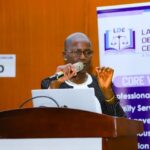
Speaking at the official release of results at State House Nakasero on Friday, UNEB Executive Director Dan Odongo noted that male candidates, however, performed better than females in top-level A grades in Mathematics and Sciences. He attributed this partly to lower female enrolment in Science and Mathematics, reflecting the overall trend of fewer female candidates in these subjects.
Odongo highlighted an overall improvement in performance compared to 2024, with 68.9% of candidates qualifying for the UACE certificate. “Under current regulations, a candidate requires a Subsidiary level pass in a Principal level subject to qualify. For university admissions to degree courses, a minimum of two Principal level passes is required. Based on this, 113,291 candidates (68.6%) qualify for admission, up from 92,273 candidates (65.5%) in 2024. This increase aligns with higher entries for the 2025 examination, indicating that an additional 21,018 university places may be needed,” he said.
For other tertiary institutions, including TVET institutions offering diploma-level programmes that consider one Principal and two Subsidiary level passes, 145,129 candidates (87.9%) are eligible.
Odongo also highlighted improvements in Mathematics, Chemistry, Agriculture, Geography, Economics, Biology, and Literature in English. Conversely, performance declined in Entrepreneurship Education, Christian Religious Education, Fine Art, and Physics. He noted that grades in Science subjects improved markedly compared to the Humanities.

Challenges persist in the Humanities, with many candidates struggling to interpret questions, demonstrate analytical skills, or apply relevant examples. History candidates, for instance, showed weak logical flow and evaluative ability. In Religious Education, connecting teachings from the Holy Books to real-life situations remained a consistent challenge.

In the Sciences, inadequate practical exposure affected performance. Common issues included misinterpreting experimental procedures, presenting data incorrectly, making deductions from observations, and errors in chemical equations. Many candidates also struggled to relate scientific concepts to real-life situations, while some teachers skipped key topics, such as in Physical Chemistry.
“Across all subjects, a consistent challenge is the failure to apply acquired knowledge to real-life situations,” Odongo said.
UNEB Chairperson Prof Celestino Obua said the results demonstrate the positive impact of continued investment in girl-child education. “However, subject clustering remains gendered, with more female candidates in the Humanities than Sciences. Broader participation in Science subjects will promote equity and balance in future professional fields,” he said.
Obua added that in 2025, UNEB assessed 1,402,434 candidates across the Primary Leaving Examination (PLE), Uganda Certificate of Education (UCE), and UACE, up from 1,294,731 candidates in 2024. UACE candidature alone rose by 17.2%, from 141,996 in 2024 to 166,400 in 2025, reflecting expanded access to post-O’ Level education and growing confidence in national assessments.
He assured that despite statistical fluctuations from increasing candidate numbers, grading standards remain consistent, and the proportion of registered candidates who did not sit for exams continues to decline, indicating improved completion rates and supervision at school level.
Of the 166,400 candidates registered for the 2025 UACE, 72,764 (43.7%) were female and 93,636 (56.3%) were male. Examination centres increased by 197, from 2,255 in 2024 to 2,452 in 2025. A total of 165,172 candidates sat the exams, including 72,374 females (43.8%) and 92,798 males (56.2%).
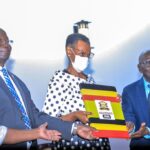
The results were officially released by the Minister of Education and Sports, Janet Kataaha Museveni.