
The Ministry of Finance has revealed that 55 of 66 externally funded government projects are behind schedule, with only five on track and six completed.
The findings, captured in the Performance of Externally Funded Projects Report covering December 2024 to May 2025, show that just 17% of projects are progressing well, while 83% face delays.
Among the 55 delayed projects, 10 (18%) have stagnated and 41 (75%) show slight improvement. The Integrated Transport Infrastructure and Services Programme accounts for 60% of the stagnated projects. Key obstacles include delayed procurements, slow loan approvals, right-of-way disputes, project rescoping, and requests for additional funding.
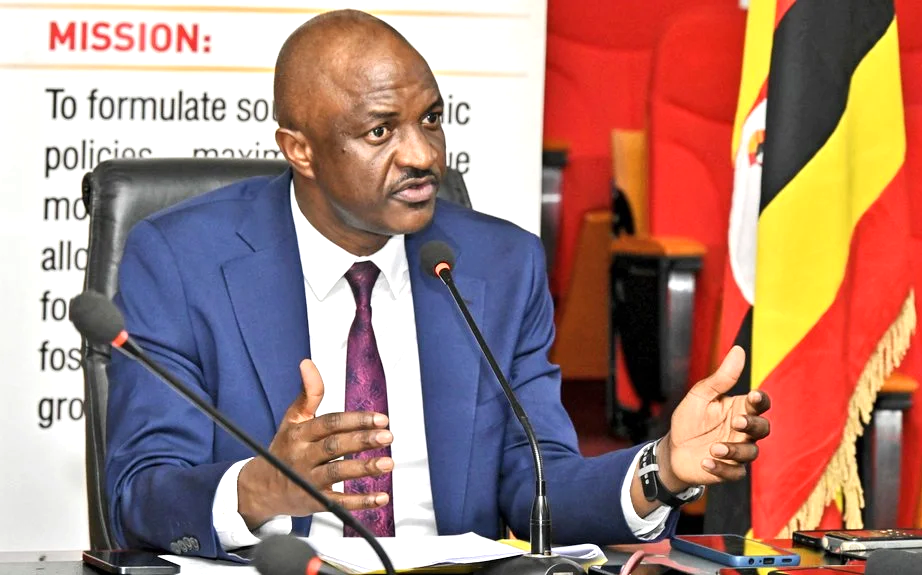
Secretary to the Treasury, Ramathan Ggoobi, urged accounting officers to urgently address these bottlenecks, warning that contract renewals will be tied to project performance.
“Project performance will remain a key criterion for contract renewals as we drive economic growth,” he emphasized.

Out of the 11 programmes with externally funded projects, five have all their projects delayed. The Natural Resources, Environment, Climate Change, and Land and Water Management Programme is the worst performer, with all 10 projects behind schedule.

The Integrated Transport Programme (21 projects) has 18 delayed, one on track, and two completed. The Human Capital Development Programme follows closely, with 12 of its 14 projects delayed.
Experts have raised alarm over the impact of these setbacks. Dr. Isaac Shinyekwa of the Economic Policy Research Centre (EPRC) called on Parliament to enforce stricter loan approval criteria, including feasibility studies, secured land, streamlined procurement, and counterpart funding.
“Approving loans without these prerequisites leads to delays. Parliament must prioritize objective criteria over political allegiances,” he warned.
Timothy Chemonges, Executive Director of the Centre for Policy Analysis, described the 83% delay rate as “alarming,” warning it undermines access to essential services such as roads, schools, and hospitals while inflating national debt.
“These delays erode public trust. Government must strengthen oversight, combat corruption, and ensure clear project plans before borrowing,” he said.
Former Leader of Opposition Winnie Kiiza emphasized the burden on taxpayers, who continue to service loans for projects that remain incomplete.
“Ugandans are paying interest on loans for undelivered services. Parliament must rigorously monitor loan usage to ensure value for money,” she noted.
Parliament’s Committee on National Economy also raised concerns. Vice Chairperson Robert Migadde criticized the absence of feasibility studies and land acquisition before loan approvals, while pointing to high commitment fees and cost overruns from delays.
He also noted that lenders often take up to two years to disburse funds, compounding the problem. Committee member Nathan Byanyima described the performance as “unpromising,” urging ministers and technical officers to accelerate project delivery.
The Ministry of Finance defended its monitoring efforts, pointing to a 2023 Cabinet mandate requiring semi-annual performance reviews by the Budget Monitoring and Accountability Unit (BMAU). The unit’s first comprehensive assessment was released in September 2024.
Stakeholders have now called for stronger oversight, streamlined processes, and stricter accountability to ensure externally funded projects deliver timely benefits, ease the debt burden, and restore public confidence in government.