There are appointments that surprise a nation. Then there are appointments that feel inevitable, recognitions so fitting, so earned, and so timely that even skeptics pause in quiet agreement.
On the evening of May 26, 2026, President Yoweri Museveni announced a sweeping Cabinet reshuffle for Uganda’s new 2026–2031 government term. Amid the flurry of names, transfers, and new appointments, one promotion stood out:
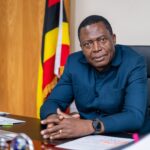
Hon. Henry Musasizi, the quiet, meticulous, and numbers-driven legislator from Rubanda East, was elevated from State Minister for Finance (General Duties) to full Cabinet Minister of Finance, Planning and Economic Development, replacing long-serving minister Matia Kasaija at the helm of Uganda’s most powerful economic ministry.
For those who have followed Musasizi’s work, behind the scenes, in parliamentary budget debates, and through years of financial oversight, this was not merely a promotion. It was the culmination of a career built on discipline, competence, and an unwavering commitment to public service.
This is the story of that rise.
Roots in Rubanda: Where It All Began
Henry Musasizi is a son of Rubanda, a district in the rolling hills of Kigezi in south-western Uganda, a region known for resilience, hard work, and determination.

Unlike many who rise through privilege or political networks, Musasizi’s journey appears rooted in discipline and preparation. He pursued education with focus and purpose. After completing his Uganda Certificate of Education (UCE) and Uganda Advanced Certificate of Education (UACE), he earned a Bachelor of Commerce degree from Makerere University between 2001 and 2005.

Determined to deepen his expertise, he completed the Certified Public Accountants of Uganda (CPAU) qualification between 2007 and 2009 before earning a Master of Business Administration (MBA) from Heriot-Watt University between 2010 and 2012.
This was not a man advancing on charisma alone. It was the careful construction of a professional foundation, brick by brick, for bigger responsibilities.
A Professional Grounding in Financial Stewardship
Before entering politics, Musasizi spent years in financial management roles in both the non-governmental and private sectors.
He worked as an accountant at CARITAS Kabale Diocese from 2006 to 2007, before joining AMREF Uganda, where he served first as Project Accountant and later as Regional Accountant. Between 2012 and 2015, he became a partner at AHMHE Associates, a certified public accountancy firm.
These experiences shaped his understanding of finance beyond theory. They exposed him to the realities of budgeting, accountability, and service delivery. Financial management, in practice, is never simply about numbers, it determines whether schools are built, medicines reach hospitals, and roads connect communities.
Such work helped shape Musasizi into a technocrat with practical experience in managing resources and understanding how public funds affect everyday lives.
Parliament: A Career Built on Oversight
In 2011, Musasizi was elected Member of Parliament for Rubanda East Constituency, a seat he has retained since.
His parliamentary career quickly became closely associated with financial oversight and economic governance. Between 2011 and 2016, he served on the Committee on Finance, Planning and Economic Development, one of Parliament’s most influential committees.
He also served on the Public Accounts Committee (Central Government), which scrutinises government expenditure and accountability.
From 2016 to 2021, he chaired the Committee on Finance, Planning and Economic Development, a role that placed him at the centre of budget scrutiny and fiscal policymaking. He later served on the Budget Committee and contributed as a member of the Presidential Advisory Committee on Budget.
In many respects, Musasizi became one of Parliament’s most visible figures on public finance, regularly engaging ministries and government agencies on spending, efficiency, and accountability.
His professional grounding as a certified accountant remained central to his public identity, reinforcing his image as a legislator comfortable with both policy and numbers.
Learning Government from the Inside
In 2021, President Museveni appointed Musasizi as State Minister for Finance, Planning and Economic Development in charge of General Duties, placing him inside the ministry he had spent years scrutinising from Parliament.
The transition provided him with an insider’s understanding of government financial management. As State Minister, he helped oversee budget implementation, fiscal transfers to local governments, and broader financial coordination.
Five years inside the ministry gave him practical exposure to Uganda’s economic machinery, how budgets are designed, implemented, and adjusted. It also exposed him to relationships with development partners, financial institutions, and domestic stakeholders.
His elevation in 2026, therefore, appeared less like an abrupt promotion and more like the next logical step.
Why the Appointment Matters
Musasizi assumes office at a consequential time for Uganda’s economy.
One of his earliest major responsibilities is expected to be overseeing the formulation and implementation of the 2026/27 national budget while balancing fiscal discipline against the priorities of a new government term.
Uganda faces complex challenges: expanding the tax base without overburdening businesses, managing public debt, financing infrastructure, and creating opportunities for a fast-growing youthful population.
Addressing such demands requires technical competence, institutional memory, and political judgment. Supporters of Musasizi argue that his blend of parliamentary oversight, accounting expertise, and ministerial experience positions him well for the task.
Equally important is continuity. Uganda’s fiscal reforms require consistency, and Musasizi enters office with familiarity of both policy and implementation.
A Tough Stance on Corruption
Those who have worked closely with Musasizi often describe him as deeply intolerant of corruption.
While addressing the Rubanda District Council on May 22, 2026, he reportedly vowed to fight the “selling of government jobs” and other forms of corruption in the district.
His position aligns with President Museveni’s repeated calls for stronger accountability within government. Speaking at the Kololo Ceremonial Grounds on May 25, 2026, the President warned that ministers who fail to tackle corruption or effectively implement government programmes could face dismissal.
Musasizi’s anti-corruption posture appears shaped by his professional background. As a certified public accountant, accountability is not merely an abstract ideal but a professional principle.
Public finance, at its core, demands transparency. Every allocation must be tracked. Every expenditure must be justified. Missing resources leave consequences, often affecting schools, health facilities, and public services.
For Musasizi, corruption appears not only inefficient but fundamentally incompatible with responsible governance.
Why This Matters for Uganda
Uganda’s struggle with corruption remains one of its most persistent development challenges. Lost revenue, weak implementation, and misuse of public funds continue to undermine service delivery and public trust.
For the Ministry of Finance, the stakes are particularly high. The ministry sits at the centre of government spending, revenue mobilisation, and development planning.
Musasizi’s appointment therefore carries both expectation and pressure.
If he succeeds, he could help strengthen confidence in Uganda’s economic management and reinforce accountability in public spending.
For those who will work with him, from public officials to contractors and institutions handling government resources, the message emerging from his leadership style appears straightforward:
Come with clean hands.