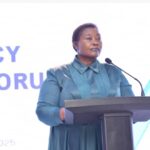








The Government of Uganda has responded to recent media reports alleging a prostitution ring involving Ugandan girls in Dubai, following a BBC documentary that sparked public outcry.
In a statement issued by the Ministry of Gender, Labour and Social Development at Uganda Media Center in Kampala on Tuesday, Minister of State for Labour, Employment and Industrial Relations Hon. Esther Anyakun Davinia expressed deep concern over the alleged exploitation of Ugandan women.
“If the reports are true, it is regrettable that some of our young people left Uganda in search of better opportunities only to end up in exploitative situations. Government will investigate the matter thoroughly, and if found guilty, the alleged culprit, one Abbey Mwesigwa, will be brought to justice,” she affirmed.
Uganda’s Labour Export Programme Clarified
The Ministry emphasized that labour externalization is not human trafficking and should not be confused with illegal migration.
Uganda’s Externalisation of Labour Programme, launched in 2005, was designed to:
- Create formal and safe employment pathways abroad.
- Ease unemployment among youth, with over 280,000 Ugandans placed in jobs abroad between 2016 and 2024, mostly in Saudi Arabia, UAE, Qatar, Bahrain and Kuwait.
Currently, 256 licensed recruitment agencies are authorised to process workers through official channels.

However, the Ministry noted that many of the victims highlighted in the documentary may have travelled illegally on visit visas or through unlicensed agents, bypassing government safety protocols.

Strong Safeguards Already in Place
To ensure migrant safety, the Ministry outlined key protections for officially cleared workers:
✅ Verified job contracts that guarantee wages, medical care, overtime pay and repatriation rights.
✅ Pre-departure training extended from 7 to 14 days to prepare workers culturally and legally.
✅ 24-hour Call Centre for distressed workers.
✅ Digital monitoring through the External Employment Management Information System (EEMIS).
✅ Bilateral Labour Agreements signed with Saudi Arabia, Qatar, Jordan and UAE to jointly enforce migrant rights.
The Ministry also highlighted success stories, noting that remittances from migrant workers reached USD 1.3 billion last year, contributing significantly to household welfare and national revenue.
Challenges Acknowledged — Crackdown Underway
Despite progress, challenges such as illegal recruitment, trafficking by rogue agents abroad, and lack of monitoring resources persist.
The Ministry called for joint responsibility between government, families, communities and security agencies to combat human trafficking and protect Ugandans abroad.
Final Call to Citizens
“We urge all Ugandans seeking employment abroad to use only licensed recruitment channels. Do not be deceived by middlemen. Safe migration is a shared responsibility.”