
Dr. Gilbert Mateeka, the Kabale District Health Officer, has urged journalists to prioritize their personal safety and uphold responsible reporting while covering disease outbreaks and public health emergencies.
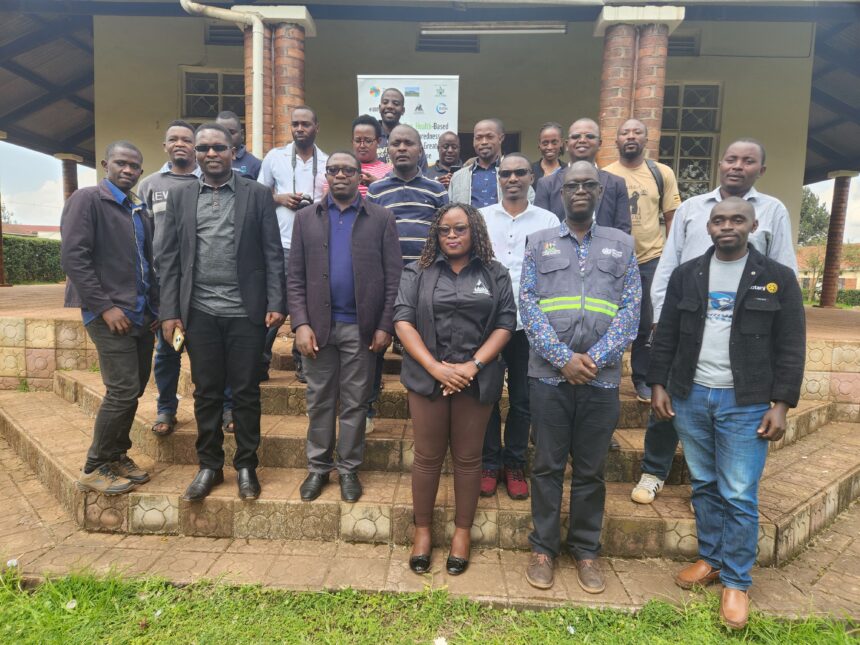
Speaking during a half-day media workshop aimed at strengthening One Health-based prevention, preparedness, and response in the Greater Virunga Landscape, held at Rukiiko Hall in Kabale District, Dr. Mateeka cautioned journalists against exposing themselves to unnecessary risks while pursuing breaking news, noting that the nature of their work places them at a higher risk of contracting and spreading infections.
The workshop was funded by the World Bank through the Pandemic Fund. The project is implemented by the Food and Agriculture Organization (FAO), World Health Organization (WHO), and the United Nations Children’s Fund (UNICEF), through a consortium of partners including the International Gorilla Conservation Programme (IGCP), Gorilla Doctors, the Greater Virunga Transboundary Collaboration (GVTC), World Wide Fund for Nature (WWF), and the International Union for Conservation of Nature (IUCN).
Dr. Mateeka explained that unlike health workers, who receive specialized training in infection prevention and control before entering high-risk environments, journalists may not have the same level of preparedness.
“Media personnel move a lot and are usually the first to rush to scenes where incidents are happening. While doing your work, kindly think about your own safety and make deliberate efforts to observe all Standard Operating Procedures (SOPs),” Dr. Mateeka said.

He warned that journalists can unknowingly become carriers of infectious diseases because of their constant movement between communities and locations, urging them to lead by example in observing preventive measures as they educate the public.

Dr. Mateeka also challenged journalists to play an active role in combating misinformation and misconceptions surrounding disease outbreaks, warning that inaccurate reporting and casual remarks made on air could negatively influence public understanding and response efforts.
He noted that mistrust and misinformation often cause communities to resist health interventions, stressing that the media has a critical responsibility to build public confidence in health systems through verified, balanced, and accurate reporting.
“The discussions on radio and the words spoken casually can shape public perception. Some comments may be misunderstood and create unnecessary fear or confusion in the community,” he said.
Dr. Mateeka further urged journalists to use public health terminology correctly, particularly when reporting on disease surveillance and outbreak response.
He clarified the distinction between a suspected case, a confirmed case, and a contact, cautioning against language that could trigger unnecessary panic among the public.
“A person with a fever is not automatically a confirmed case. It could be malaria or another illness. We should avoid causing alarm by misusing terms,” he explained.
He encouraged journalists to rely on information from trusted sources and support ongoing public health response efforts through factual, responsible, and solution-oriented reporting aimed at safeguarding communities.
CUE IN DR. MATEEKA…ON JOURNALISTS…ENG//
Meanwhile, Angello Rutaremwa, a Health Educator at Kabale Regional Referral Hospital, urged journalists to play a frontline role in combating misinformation and promoting accurate public health information during disease outbreaks, warning that rumors often spread faster than deadly viruses such as Ebola.
Rutaremwa challenged media practitioners with a thought-provoking question: “What spreads faster in an Ebola outbreak, the virus or the rumor?” He noted that in most cases, misinformation spreads more rapidly, fueling fear, confusion, and unsafe behaviors within communities.
He emphasized that journalists and information disseminators bear a critical responsibility in shaping public understanding during health emergencies, urging them to avoid spreading unverified information and instead become champions of disease prevention.
“As journalists and informants, we are responsible for what spreads fast and what we communicate to society,” Rutaremwa said. “It is our responsibility not to spread rumors, not to spread the virus, but to be responsible in preventing disease.”
He called on journalists to be mindful of the information they share with communities, stressing that media professionals are trusted voices whose reporting can either strengthen or weaken public confidence during outbreaks.
Rutaremwa urged journalists to prioritize public education by providing accurate, researched, and evidence-based information to communities.
“People trust your voices,” he said. “In times like these, let us be vehicles of the right information.”
He also highlighted the importance of quickly countering misinformation, noting that communities are often more attracted to rumors than factual information.
“People tend to listen to what their ears want to hear, and they often love rumors more than accurate information. But it is our responsibility to resist spreading rumors and instead spread facts,” he said.
Rutaremwa further encouraged journalists to promote preventive health measures, particularly handwashing, which he described as one of the proven interventions capable of interrupting the spread of Ebola and other infectious diseases.
On responsible reporting, he advised journalists to carefully consider the content, timing, method, and target audience of their reporting to avoid causing unnecessary panic or confusion.
He underscored that journalists are more than news gatherers during disease outbreaks, describing them as essential partners in risk communication, public awareness, and disease prevention.
“Journalists are not just news reporters during an outbreak. They are essential partners in risk communication, community awareness, and disease prevention,” Rutaremwa said, expressing confidence that through responsible reporting and public cooperation, Uganda can effectively combat Ebola and safeguard communities from future outbreaks.
CUE IN RUTAREMWA….ON JOURNALISTS…ENG//
Janet Nagasha, Ecosystem Health Project Officer at the International Gorilla Conservation Programme (IGCP), said the training aimed to strengthen the capacity of media practitioners in Kabale District to accurately report on Ebola Virus Disease (EVD), support risk communication and community engagement efforts, and contribute to disease prevention, preparedness, and response by promoting factual information while debunking misinformation and disinformation related to Ebola.