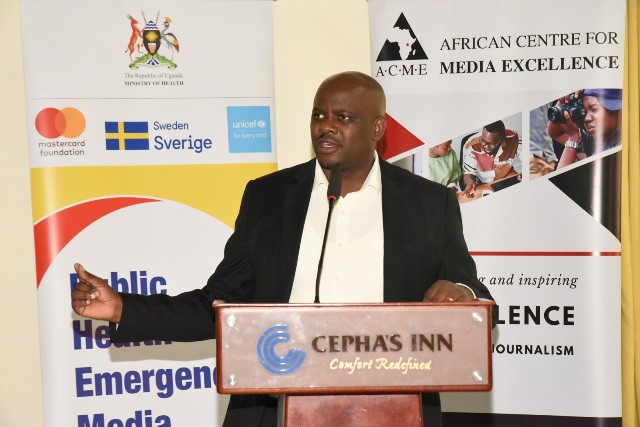

Emmanuel Ainebyoona, the Ministry of Health’s Senior Communications Officer and member of the National Strategic Communication Committee, has called on journalists in the Kigezi Sub-region to prioritize accuracy, ethics and preparedness when covering public health emergencies.
Speaking during a one-day media orientation workshop at Cephas Inn in Kabale Municipality on Tuesday, Ainebyoona emphasized the critical role of journalists as frontline communicators during health crises. He warned that careless or sensational reporting can cause unnecessary panic, erode public trust, and undermine government efforts to contain outbreaks.
“Your words carry weight. Inaccurate reporting can lead to fear and confusion. We count on you not just to inform, but to educate the public with verified facts, context, and clarity,” he said.
He reminded journalists that the authority to declare a public health emergency lies solely with the Minister of Health, not the media or individuals. Ainebyoona urged them to stick to ethical journalism standards, verify sources, avoid speculation, and ensure fair, balanced coverage.
Echoing this message, Yves Willemot, Chief of Communications, Advocacy, Resource Mobilization and Partnerships at UNICEF Uganda, urged media practitioners to view themselves as partners in public health response. He encouraged journalists to go beyond the headlines and contribute to behavioral change through informative and empowering reporting.

“Health emergencies demand more than just coverage, they require commitment to public education. Your reporting should inspire preventive action, not fear,” Willemot said.

He also stressed the importance of maintaining relationships with health professionals and being prepared with accurate information before a crisis unfolds.
The workshop offered journalists insights into the ethical and technical aspects of reporting during health emergencies and allowed them to reflect on past experiences. It also featured updates on the status of health service delivery in the Kabale region.
Organized by the Ministry of Health in collaboration with the African Centre for Media Excellence (ACME), the workshop was supported by UNICEF, the Mastercard Foundation, and the Government of Sweden.