
- Summary:
- Reports suggest that Mpuuga, along with other NRM Parliamentary Commissioners, was accused of improperly allocating themselves 1.7 billion shillings under the pretext of “Service Awards” during a meeting chaired by Speaker of Parliament, Ms. Anita Among
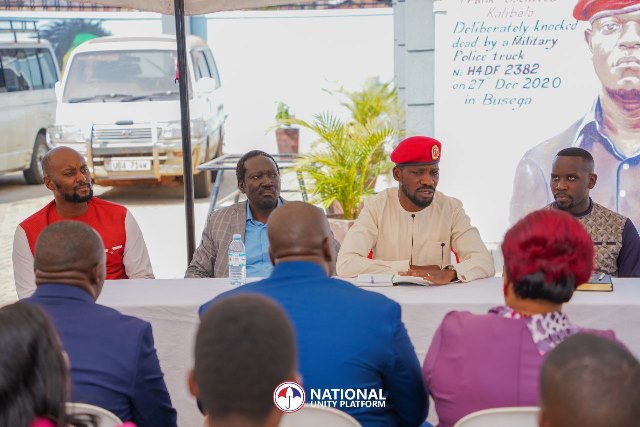
KAMPALA: The leader of the National Unity Platform party, Robert Sentamu Kyagulanyi on Tuesday charged the party’s Members of Parliament to take a strong stance against corruption and the misuse of public funds.
He emphasized the importance of individual and collective action to prevent any doubts or criticisms from Party Supporters.
Kyagulanyi conveyed this message during a gathering at the party headquarters in Makerere Kavule, located in Kampala’s Kawempe division. He underscored to the MPs that their commitment to moral principles would be the defining factor setting them apart from the incumbent regime they aim to replace.
However, notably absent from the gathering was Mathias Mpuuga, the former Leader of the Opposition who is currently under scrutiny for alleged involvement in corruption and abuse of office.



Reports suggest that Mpuuga, along with other NRM Parliamentary Commissioners, was accused of improperly allocating themselves 1.7 billion shillings under the pretext of “Service Awards” during a meeting chaired by Speaker of Parliament, Ms. Anita Among.
In response to these allegations, the National Executive Committee of the National Unity Platform made the decision to relieve Mathias Mpuuga of his role as Parliamentary Commissioner. Zaake Francis Butebi, the MP for Mityana Municipality, was appointed as his replacement.
Dr. Lina Zedriga Waru, acting President of the Party, clarified that Mpuuga’s removal stemmed from his failure to provide a satisfactory explanation for his actions, despite being given the opportunity to do so. She reiterated that his conduct was in direct contradiction to the party’s mission, values, and objectives.
Zedriga further elaborated that Zaake’s selection was influenced by his previous dismissal from the role in March 2022, which was suspected to have been orchestrated to facilitate dubious dealings within the Parliamentary Commission.