








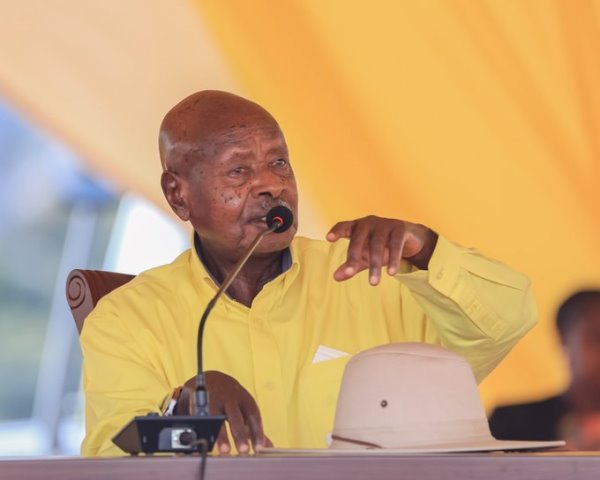

President Yoweri Museveni has defended Stephen Nuwagaba, a young man at the centre of recent public debate, saying he was taken under State House protection after allegedly being tortured and maimed by rogue elements within Uganda’s security forces.
In a lengthy statement issued on Monday, Museveni dismissed claims made by journalist Andrew Mwenda regarding Nuwagaba, accusing him of diverting public attention from what he described as the real challenge facing the country—corruption and criminality within some security agencies.
The President said Nuwagaba, whom he described as being in his mid-twenties, sought refuge after allegedly being subjected to torture, threats to his life and severe physical injuries.
“I had to send him to hospitals in Uganda and abroad to save his life. He has improved, although some of the injuries remain,” Museveni said.
According to the President, some of the security personnel accused of torturing Nuwagaba are already facing court proceedings, adding that he ordered quiet investigations into the matter.

Museveni said torture, extra-judicial killings and maiming are against the principles for which the National Resistance Movement (NRM) fought during the liberation struggle.

“In the last 56 years I have been fighting, I have never tortured or ordered anybody to torture an opponent,” he said, warning that security agencies should combat impunity without violating human rights.
The President argued that Uganda’s biggest challenge is not Nuwagaba but corruption within public institutions, citing alleged theft of public resources, corruption in the Parish Development Model (PDM), irregularities in road projects and the sale of government jobs.
He accused some security officers of blocking information from reaching the country’s leadership in order to protect criminal networks.
Museveni also criticised Mwenda for focusing on Nuwagaba instead of investigating corruption and abuse of office, saying the journalist was helping to shift attention away from more pressing national issues.
The President used the statement to recount experiences from the liberation struggle, arguing that the NRA relied on disciplined intelligence gathering rather than torture and stressing that security agencies should uphold professionalism and patriotism.
He concluded by reiterating that while Nuwagaba may have personal shortcomings that should be addressed through the law, the country’s priority should remain rooting out corruption, impunity and criminality within state institutions.



