








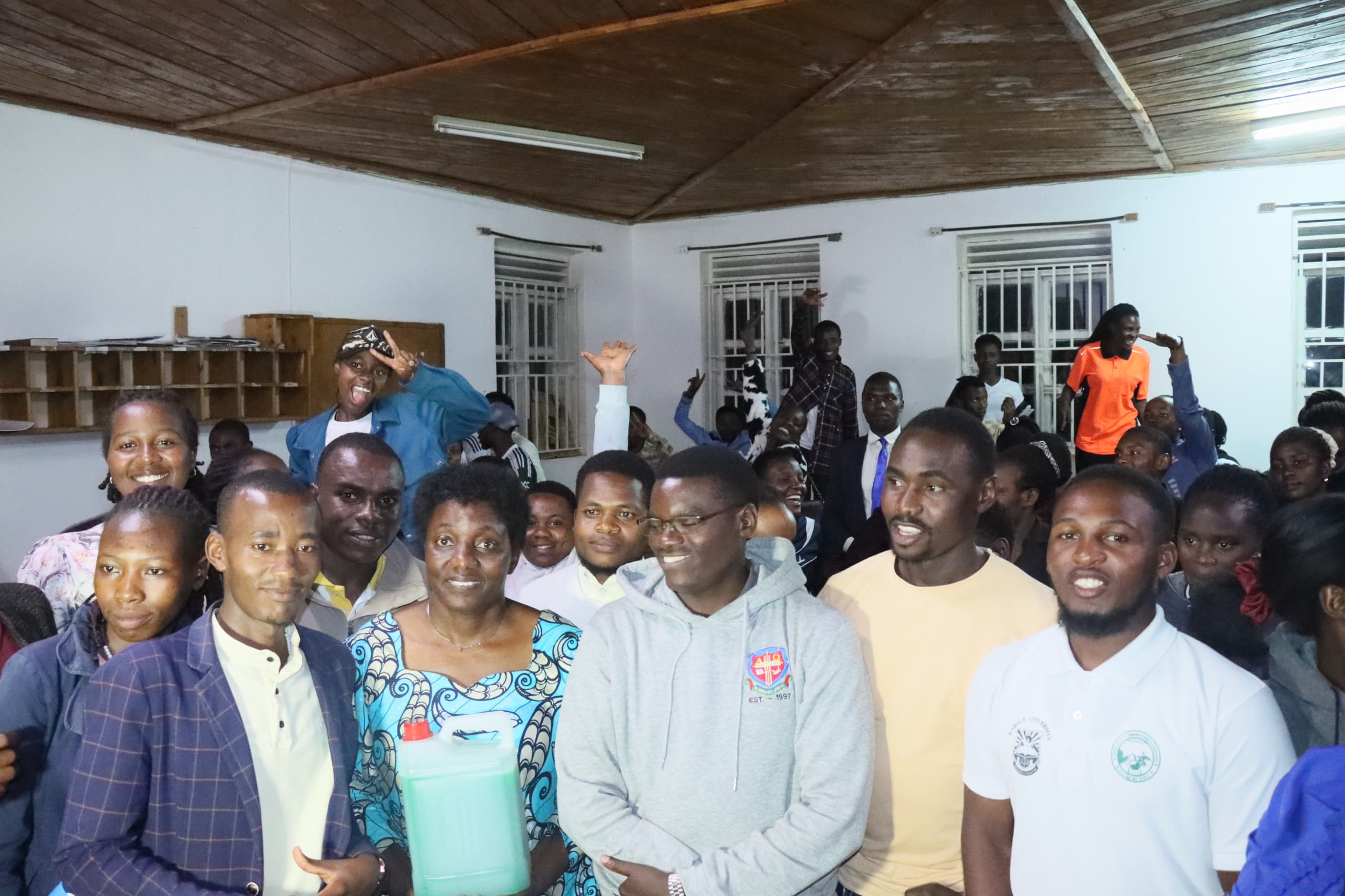

A group of university students from Rubanda District, under the Rubanda Bishop Barham University Students Association (RBBUSA), has found a creative way to fight financial hardship, by turning liquid soap making into a thriving enterprise that supports fellow students struggling to pay tuition.
What started as a simple idea to unite students from Rubanda studying at Bishop Barham University College (BBUC) has evolved into a self-sustaining social business model promoting financial inclusion, empowerment, and entrepreneurship among youth.
According to Lawrence Akampurira, the association’s team leader, the project was inspired by the financial struggles that most students faced during their time at university.
“We realized that many students were going through serious financial challenges beyond what our initial goal of unity could address,” Akampurira explained. “So, we decided to find a sustainable solution.”
The group of 35 pioneering members each contributed Shs 5,000, pooling together Shs 200,000 as start-up capital for soap production. They began small, buying basic materials and experimenting with different formulas for liquid soap.

However, success didn’t come immediately.

“For about four months, we were stuck with our products. We didn’t know how to break into the market,” he said.
Finding the Market: Their breakthrough came when the university granted them permission to promote and sell their products on campus. Each member became a marketer, carrying samples and approaching potential customers.
“We even donated five litres of soap to the university,” Akampurira recalled. “After testing our product, they loved it and became our first official customer.”
From there, word spread quickly. Community members began buying the soap, appreciating its quality and affordability. Today, the association earns around Shs 300,000 every month, a significant milestone for a student-led initiative.
The association channels its profits into a student welfare fund that assists peers facing tuition challenges.
“We open applications every semester for students who can’t complete their school fees,” Akampurira said. “From over 20 applicants, we usually select three students who receive Shs 150,000 each.”
Selection is based on clear criteria, including the student’s consistency in association activities, their financial need, and their program’s tuition rate.
Beyond tuition support, the association also extends condolence support when a member loses a parent. Representatives visit the bereaved family, offering comfort and a Shs 20,000 token, along with transport facilitation.The Association now boasts 135 registered members.
Despite their success, the students face challenges common to most grassroots enterprises. Internal divisions occasionally arise, with some non-members accusing leaders of favouritism or mismanagement. Rival student groups, such as the Kabale Students Association and the Rukiga Students Association, sometimes express resentment towards RBBUSA’s self-sustaining model, as their associations depend mainly on member subscriptions and visitor contributions.
Another persistent hurdle is time management. Balancing academic responsibilities, coursework, and business operations requires discipline and teamwork. Financial constraints also remain, as even the modest Shs 3,000 membership fee is difficult for some students to raise.
“We sacrifice a lot, but we’re proud of what we’ve built,” said Akampurira. “We’ve shown that students can create solutions for themselves instead of waiting for handouts.”
Looking forward, Akampurira dreams of meeting President Yoweri Kaguta Museveni to share the association’s achievements and seek support for expansion.
“My main request would be financial support, because every project needs funding to grow,” he noted. “We have innovative ideas that align with the President’s vision of empowering youth through small and medium enterprises.”
He also hopes the association can secure a dedicated working space outside the university premises to increase production, ensure safety, and operate efficiently. Their next big goal is establishing a “Printery station project”, envisioned as a permanent base for production, training, and sales.
The association’s efforts have not gone unnoticed. Ms Evelyne Ninsiima Kikafunda, Rubanda District Woman MP candidate, commended the students for embodying the entrepreneurial spirit encouraged by President Museveni.
“These students are learning valuable skills, skills that go beyond the classroom,” she said. “You don’t have to wait until you graduate to start earning or making an impact. You can begin right where you are, in your communities.”
Ms Kikafunda applauded the soap-making project as a “brilliant initiative” that demonstrates creativity, self-reliance and leadership among young people. She urged the students to continue raising their visibility on campus and in the community.
“How many student associations can say they run a project like yours?” she asked. “That Shs 300,000 you earn every month is not just income, it’s a statement that you have a dream, a plan and a future.”
She also encouraged them to consider symbolic community activities like tree planting to promote visibility and legacy.
For Akampurira and his team, the liquid soap project is more than just a business, it’s a platform for empowerment, leadership, and unity. It shows that when young people organize around shared goals and creativity, they can turn small contributions into life-changing opportunities.
“We started with only Shs 5,000 each,” Akampurira said proudly. “Now we are changing lives.”
Their journey, from pooling coins to producing soap, funding tuition, and inspiring others, stands as a shining example of how university students can blend innovation, enterprise, and social impact to build a better future for themselves and their communities.




