








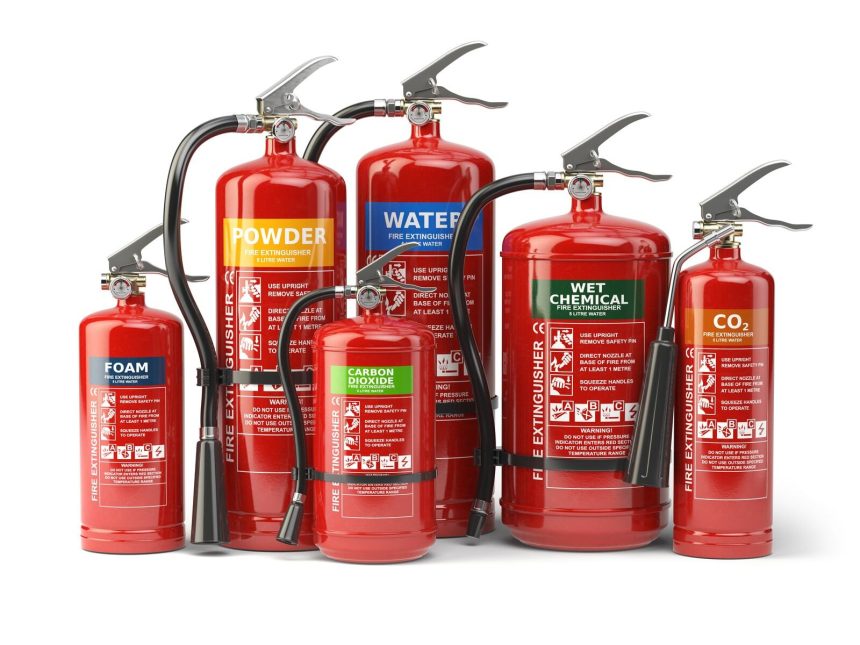

The South Kivu provincial government in the Democratic Republic of Congo has made it mandatory for households, businesses and motorists to have certified and functional fire extinguishers as part of measures to prevent fires and minimise loss of life and property.
The directive is contained in Provincial Order No. 26/048/GP/SK, signed in Bukavu on September 17 by South Kivu Governor Busu Bwa Ngwi Nshombo Patrick.
The order applies to residential houses, offices, administrative buildings, commercial premises and motor vehicles operating on public roads across the province.
Under the directive, every residential house or plot must have at least one suitable and functional fire extinguisher.
Offices, administrative buildings, organisational headquarters, shops, stores, commercial galleries and market spaces are also required to install fire extinguishers in accessible locations.

Motor vehicles, including private cars, public transport vehicles, taxis, buses, pick-ups and heavy trucks, must also carry fire extinguishers while operating on public roads in South Kivu.

According to the order, the equipment must comply with applicable technical standards and be suitable for the type of fire risk involved. Recommended extinguishers include ABC dry-powder and carbon dioxide (CO2) types.
Governor Nshombo said the measure follows an increase in deadly fires and extensive destruction of property in homes, commercial galleries, public establishments and means of transport across the province.
He said the directive is intended to strengthen civil protection, fire prevention and first-response measures against electrical, domestic and mechanical fires.
“The extinguishers installed in buildings, offices and commercial galleries must be placed in visible, accessible and unobstructed locations, preferably near emergency exits or areas with higher fire risks such as kitchens and electrical panels,” the order reads.
Property owners, tenants, business operators and vehicle drivers are responsible for maintaining the extinguishers, checking their charge and ensuring they are serviced or recharged at least once a year by authorised service providers.
The provincial Civil Protection Brigade and other authorised security services will inspect compliance during safety inspections in public and commercial buildings, as well as through road checks targeting vehicles, according to the order.
The directive provides for administrative fines for non-compliance.
Motorists found without the required equipment face fines ranging from $10 to $25 and temporary immobilisation of their vehicles until they comply.
Residential premises face fines of between $20 and $50, while offices, shops and commercial galleries could be fined between $50 and $200. Repeat offenders may also face temporary closure of their establishments.
Residents, traders and motorists have been given a 15-day grace period from the date of promulgation of the order to acquire and install the required equipment.
The order took effect on September 17, the date it was signed.



