
Summary:
- According to State Minister of Finance Henry Musasizi, the Cabinet decided during its meeting on December 16, 2024, to halt the establishment of additional administrative units due to the significant funding they require.
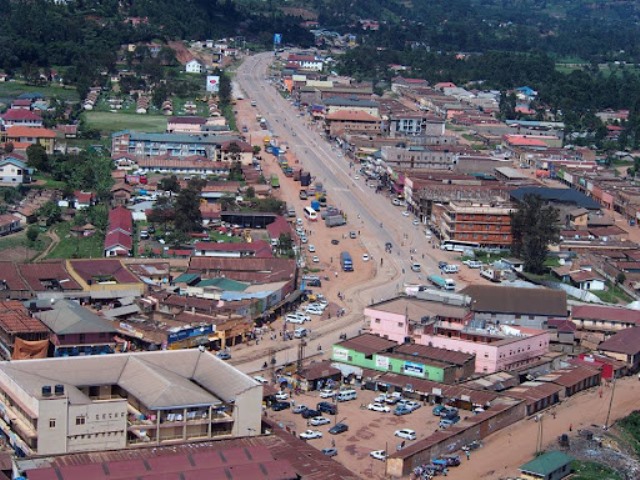
KABALE: Kabale’s aspirations for city status have been dashed, as Local Government Minister Raphael Magezi announced that it, along with four other proposed regional cities, will not be operationalized in the 2025/2026 financial year.
This decision affects the five regional cities approved by Parliament in 2020: Kabale, Moroto, Wakiso, Nakasongola, and Entebbe. Leaders and residents of Kabale Municipality had urged the government to expedite the operationalization of Kabale City, but financial constraints have delayed the process. Minister Magezi clarified that the delay is a postponement, not a cancellation.
CUE IN MINISTER MAGEZI……ON CITIES……..ENG//

According to State Minister of Finance Henry Musasizi, the Cabinet decided during its meeting on December 16, 2024, to halt the establishment of additional administrative units due to the significant funding they require. He emphasized that these resources are needed for essential services such as road construction and maintenance, schools, health facilities, and poverty alleviation programs like the Parish Development Model.

“We have defined the government’s priorities for the coming financial year and the medium term. These include agro-industrialization, oil, gas, minerals, tourism, science and technology, defense and security, irrigation, key roads, and electricity, alongside social services,” Minister Musasizi said.
Musasizi, who is also the Rubanda East County Member of Parliament, highlighted that the budget framework paper presented to the Cabinet includes expenditure adjustments, including a halt to the creation of new administrative units such as districts, sub-counties, municipalities, and cities.
“Because of resource constraints, we presented a budget framework paper to the Cabinet, which Parliament will consider in January 2025. It recommends that, in the medium term, expenditures such as the creation of new districts, sub-counties, cities, and municipalities should be deferred,” he explained. He stressed that creating new administrative units is not currently a government priority.
“We want to first focus on areas that build the base of our economy. Our goal is to grow the economy tenfold by 2040, targeting a GDP of $500 billion in the next 15 years. Expenditures that do not align with our strategy should wait. This is not the time to create more cost centers in an already constrained resource envelope,” he added.
Musasizi also noted that even the already established cities and municipalities are underfunded and struggling to operate within budgets that existed before their upgrade. “For instance, cities like Mbarara and Soroti are still operating within pre-upgrade budgets. This has led to conflicts over resources, such as in Mbarara, where the old district is at odds with the city over asset ownership and operational space,” he remarked.
He added, “After thorough consideration, and with guidance from President Yoweri Kaguta Museveni, the Cabinet decided to postpone these expenditures until we have adequate resources. This decision applies universally and is not specific to Kabale, Entebbe, or any other proposed city.”
CUE IN MINISTER MUSASIZI…..ON ADMINISTRATIVE UNITS……RR/ENG//
The Kabale Municipality Member of Parliament, Hon. Dr. Nicholas Kamara, expressed optimism about Kabale City becoming operational once other cities like Nakasongola and Entebbe are functional. However, he acknowledged the need to address political and logistical challenges first.
“For us who were not immediately operationalized, we had the chance to plan through our councils. However, various interests and suspicions must be addressed through dialogue. Political noise must settle before the city can be realized. For now, let us plan and dialogue; after the elections, the city will come, likely by July 2026,” he said.
However, Lawyer Kiconco Katabaazi Patrick, an economist and public policy analyst, argued that creating more administrative units would be a wise investment. He warned that failure to invest now would lead to higher costs in the future.
“Urbanization that is not properly planned becomes more costly to reorganize, as we’ve seen with Kampala. If the government lacks resources this financial year, it should develop a realistic plan to allocate funds in subsequent years,” Katabaazi said. He added that organized urbanization, with the benefits of city infrastructure, would position areas like Kabale as regional economic hubs.
“While these costs may appear high in the short term, they are investments that unlock business potential in the long term,” he said.
CUE IN COUNSLE KATABAAZI……ON URBANISATION……..ENG//
Other operational regional cities, including Soroti, Lira, Gulu, Arua, Hoima, Fort Portal, Mbarara, Masaka, Jinja, and Mbale, reportedly struggle to meet city standards due to insufficient funding from local revenue and central government releases.